A visitor, a housemate leaving or a period away can change household electricity use. Dividing the bill by the number of people may seem fair, but some loads remain when nobody is home and others depend on activities rather than head count. Record occupancy as context before using it as a denominator.
Keep energy and money separate at first. This method supports household observation, not a legally binding bill allocation or a claim about an individual's responsibility. Discuss any shared-cost arrangement directly and use the relevant agreement or advice where needed.
Define which occupancy information serves the question
Choose a modest record such as nights present or clearly defined person-days. State the convention before collecting data. Two people present for part of a day do not automatically equal one full person-day unless that is the explicitly chosen approximation.
Avoid collecting detailed personal schedules unnecessarily. A household comparison usually needs aggregate presence and major activity changes, not a surveillance log. Keep the information private and agree on how it will be used, especially in a shared home.
Record work-from-home changes, extended guests and periods away separately where they materially affect the question. Someone sleeping in the home may spend most of the day elsewhere, while another person uses equipment for long daytime hours. Head count alone cannot represent those different activities. Keep the limitation visible rather than attempting to assign precise energy responsibility from presence.
Put electricity periods on a consistent basis
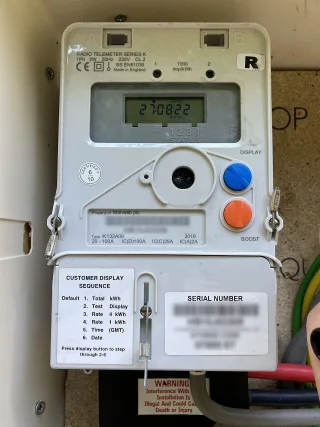
Copy service dates, billed days, kWh and actual or estimated status. Normalize total energy to kWh per day before comparing occupancy. EIA — Measuring Electricity distinguishes accumulated energy from power, so keep the energy unit attached to the record rather than mixing a live watt reading with a period total.
Check that occupancy dates cover the same interval as the electricity data. A monthly guest calendar does not align automatically with a utility cycle beginning mid-month. Use the actual service boundaries or clearly state an approximation when exact alignment is unavailable.
Portland General Electric — Understanding My Bill explains how an estimated electricity period can later be corrected for its customers. Mark provisional energy data accordingly. Occupancy detail cannot make an estimated kWh total precise. If a correction spans several periods, use a reliable actual-to-actual interval where appropriate and preserve uncertainty about the internal daily allocation.
- Align aggregate occupancy counts with the bill’s actual service interval.
- Report household kWh per day before adding a consistently defined person-day ratio.
- Retain continuing-load and activity notes, and keep payment agreements distinct from consumption attribution.
Identify loads that do not scale with people
List major continuing services such as refrigeration, necessary networking and other equipment that remains in ordinary operation. Do not disconnect essential equipment to create a zero-occupancy baseline. Follow manufacturer guidance and keep safety-related functions intact.
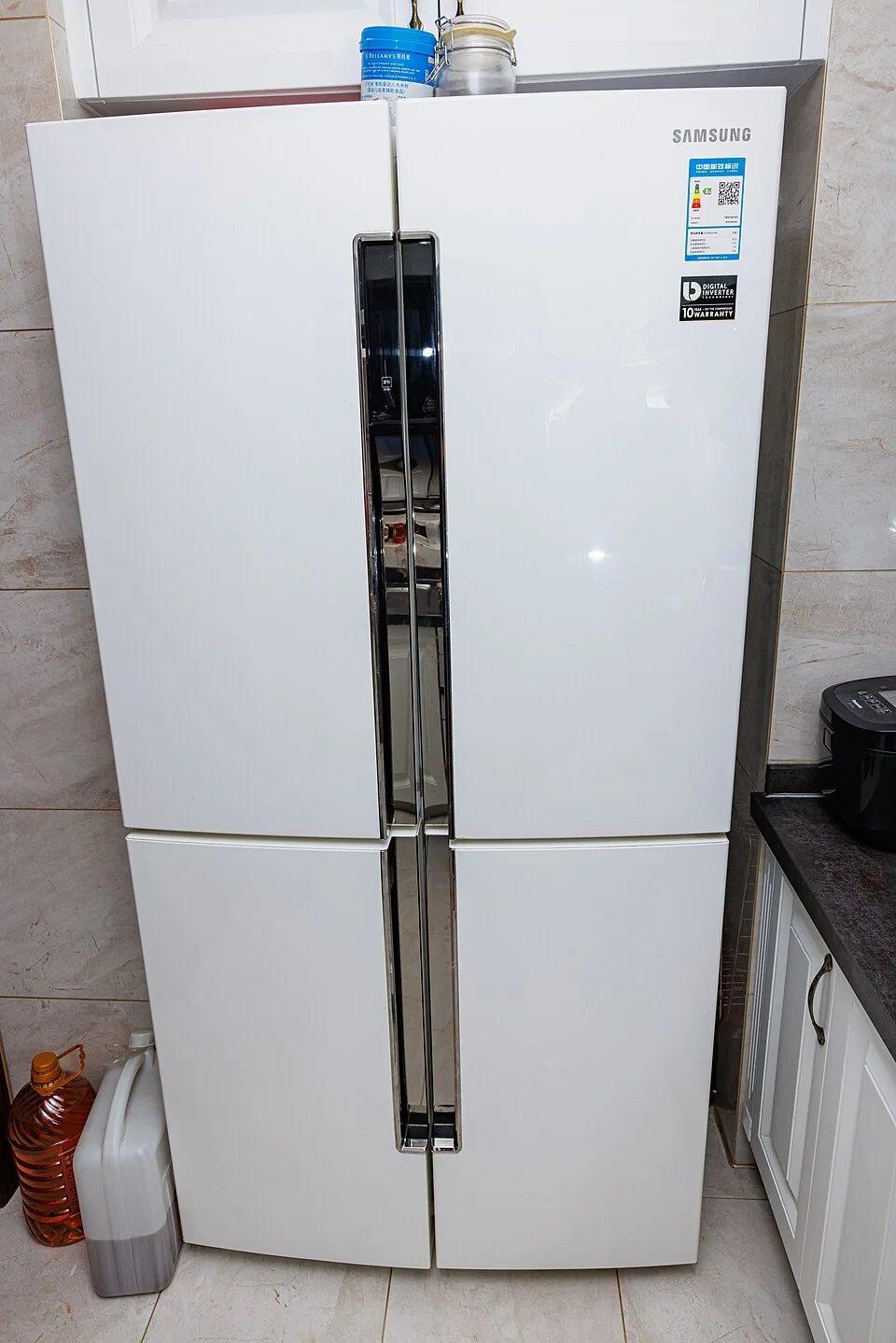
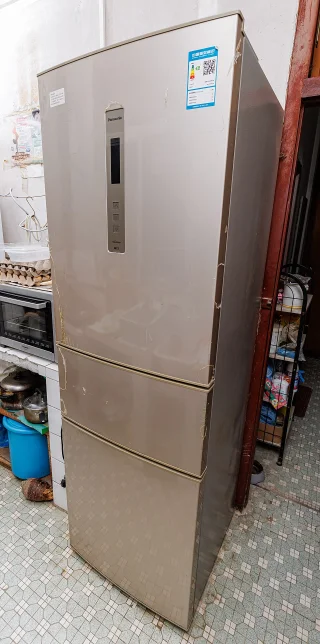
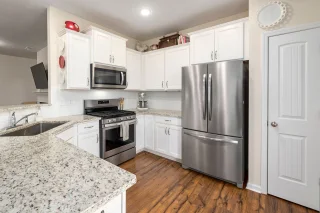
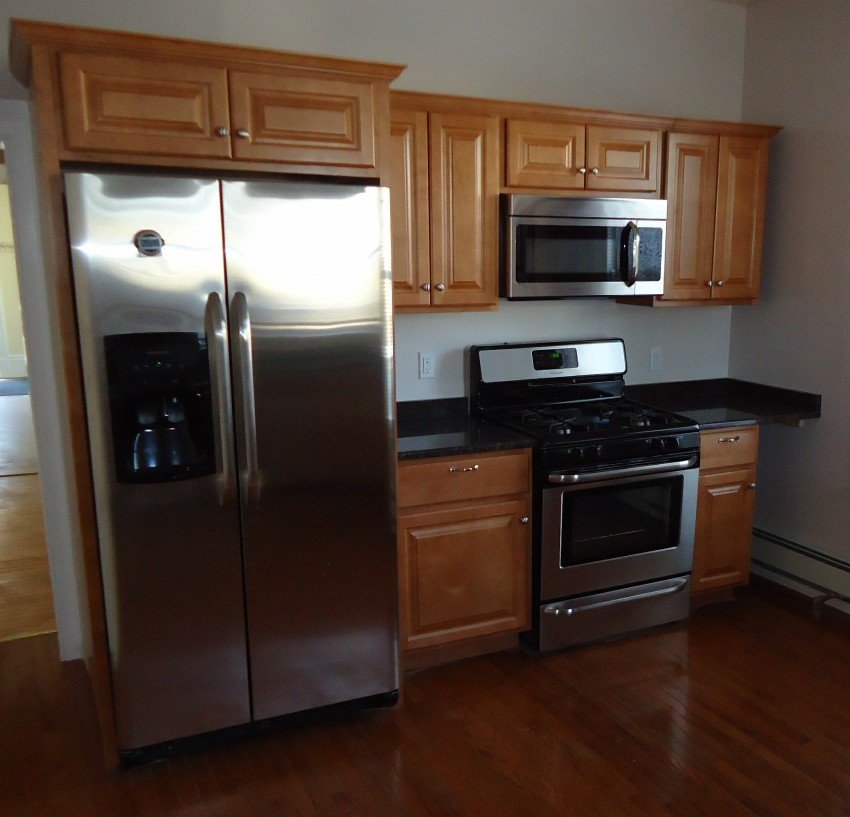
The refrigerator illustrates a service that can remain in ordinary operation as household occupancy changes. Record continuing equipment alongside activity-driven tasks such as cooking and laundry. A closed appliance view supplies no measured base load or per-person consumption, so keep any numerical allocation tied to documented evidence.
Photo & usage
Dinkun Chen · CC BY-SA 4.0 · Source. Display copies resized and encoded as WebP; no instructional details were fabricated or removed.
Separate activity-driven loads where practical: additional laundry, cooking sessions, entertainment use or changed heating and cooling routines. These notes explain why people and energy may move together without proving an exact per-person amount. A visitor can also change shared activity patterns rather than simply add one independent bundle of consumption.
Avoid subtracting a guessed base load and presenting the remainder as measured personal use. If a base scenario is useful, label it clearly and state how it was chosen. The household total alone cannot identify every continuing load or distinguish one person's contribution from shared equipment operation.
Compare an illustrative pair of occupancy periods
All figures here are illustrative. Period A lasts 30 days, uses 300 kWh and contains 60 person-days under a defined convention. Its energy rate is 10 kWh per household day and 5 kWh per person-day.
Period B also lasts 30 days, uses 360 kWh and contains 90 person-days. Its household rate is 12 kWh per day, while its person-day ratio is 4 kWh. Household energy rose 20 percent, but energy per person-day fell 20 percent. Neither number proves which person caused the change.
To illustrate the influence of a continuing load, suppose a clearly labeled scenario assigns 180 kWh to shared baseline use in each period. The remaining scenarios are 120 ÷ 60 = 2 kWh and 180 ÷ 90 = 2 kWh per person-day. This is an assumed decomposition, not a measurement. It shows why a fixed household component can alter the raw ratio.
Choose ratios that retain their meaning
Use kWh per household day as the primary period-length normalization. Add kWh per person-day only when the occupancy convention is consistent and useful for the question. Display both rather than allowing a favorable ratio to conceal a larger total.
Do not compare a nearly empty home with a fully occupied one as though all services scale linearly. A refrigerator and necessary background equipment can make the low-occupancy ratio look high without indicating waste by the remaining person. Record the continuing-service context before drawing a behavioral conclusion.
If presence is uncertain, use a range or keep the comparison descriptive. A precise denominator created from incomplete memories can make the resulting ratio less reliable than the simpler household-day measure. The useful record distinguishes what is known from what is estimated and does not reward false precision.
Check reading changes before explaining an occupancy effect
PSE&G — Meter Reading describes actual and estimated readings in its billing process. If the period with guests is estimated and the following period contains a catch-up, the apparent occupancy relationship may be distorted by billing allocation. Clarify that sequence before attributing the difference to visitors.
Check weather, equipment changes and rate changes separately. Money per person can change because prices changed, even if electricity per person did not. Keep any USD calculation downstream of the energy comparison and use consistent tariff assumptions for a controlled cost scenario.
If a specific activity needs investigation, use a suitable task or device record rather than attempting to infer its consumption from the household ratio. Preserve equivalent service and safe operation. A whole-home comparison can identify a question, but it generally cannot assign a precise appliance or individual contribution without further evidence.
Agree what the record can justify
Write a conclusion that matches the evidence: household daily use increased during higher occupancy, person-day energy fell under the stated convention, or estimates prevent a reliable comparison. Avoid claiming that a particular person used a measured amount unless the data actually supports that allocation.
For shared payments, discuss the chosen method separately from the analytical ratios. A household may prefer a simple agreed split for practical reasons. That agreement should not be disguised as a scientific measurement of personal consumption, and this guide does not establish tenancy or billing rights.
Keep the original bills, occupancy convention and aggregate counts together. Note any assumptions and the date of the discussion. Another household member should be able to reproduce the ratio without accessing unnecessary details about someone else's movements or private activities.
Complete the comparison when its limits are visible
Recalculate the person-day totals and confirm their dates match the energy interval. Check both household-day and person-day results. If corrected consumption arrives, update the comparison while preserving the original provisional record and the reason for the revision.
Use the findings to choose a focused next question, not to assign blame. It might concern an additional activity, a changed schedule or simply the persistence of shared background loads. A clear context note can be sufficient when no practical decision depends on greater precision.
Completion means occupancy adds useful context without pretending that every household kWh belongs equally to each person present. Keep the record proportionate to its purpose and revisit it only when circumstances or a real decision changes.
THE REFERENCE FILE
Sources & scope
Documentation reviewed 1 Nov 2026. Examples are illustrative; this article does not claim hands-on product testing. Follow the instructions for your actual material, model and location.