Choose a routine that can actually change order
Some household tasks happen close together naturally, while others have fixed timing or different hygiene needs. Before proposing that hot-water tasks be grouped, identify the specific routine and whether changing its order is practical. A theoretical sequence is unhelpful if it delays meals, disrupts care or conflicts with appliance instructions.
Observe the current routine without adding extra draws. Record which fixtures or appliances are involved and when each task starts. Keep any task that requires a prescribed process outside a casual rearrangement.
EPA's hot-water publications discuss distribution design and recent-use effects, providing context for why starting conditions can matter. They do not establish that grouping any household's tasks produces a particular saving. The comparison here remains a record of ordinary waits and completed tasks.
Define what stays constant
Keep the tasks, equipment and intended outcomes the same where practicable. A comparison between washing a few cups and a full kitchen cleanup is not a task-order comparison. Record changed quantities or conditions as limitations.
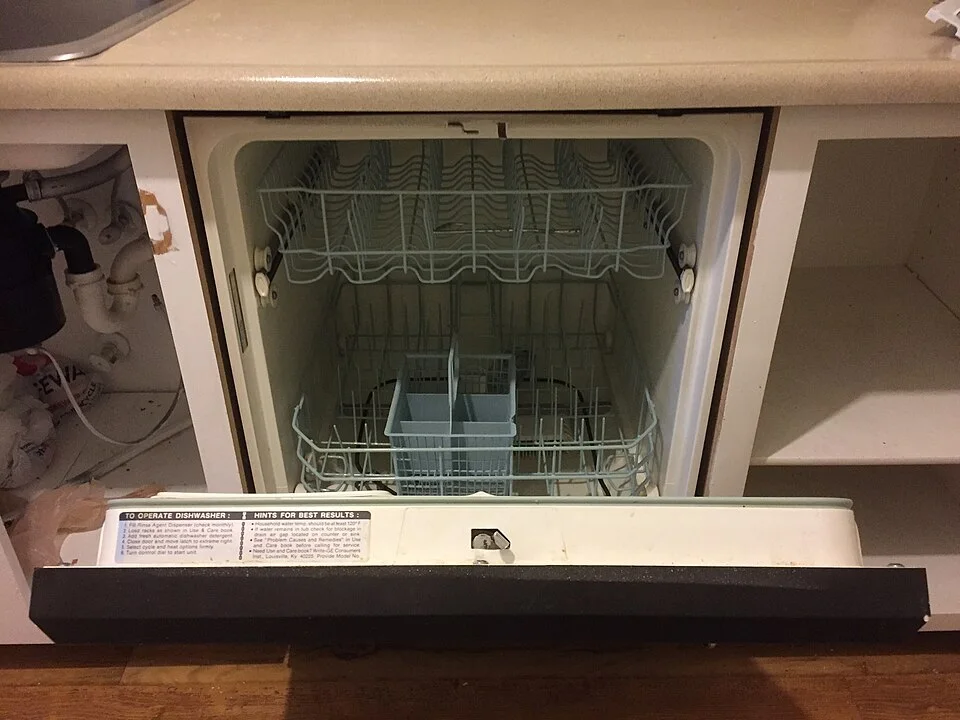
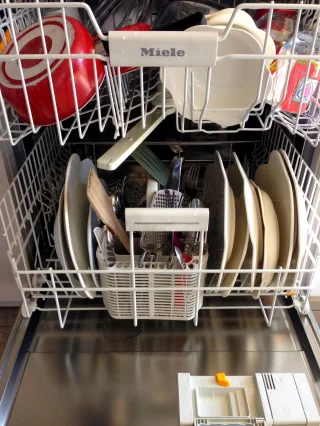
The dishwasher’s racks and printed operating notes illustrate an appliance task with its own programme, load and product requirements. Keep those requirements constant when logging hot-water task order. This reference does not show the supply connection or establish whether this model uses externally heated water, so confirm that detail in the actual manual.
Photo & usage
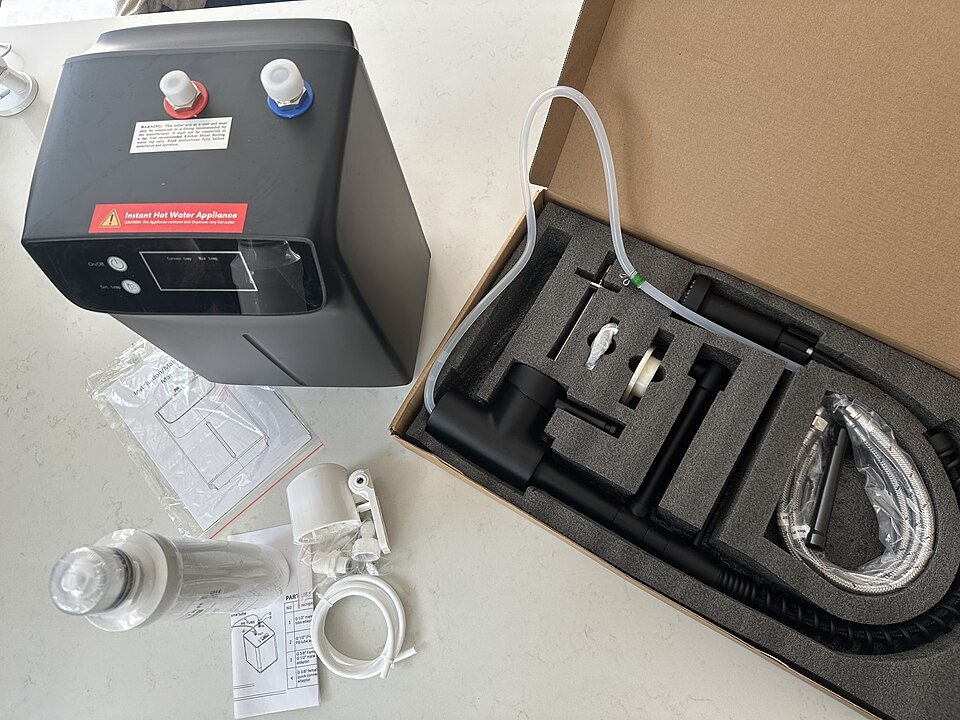
Steven Pavlov · CC BY-SA 4.0 · Source. Display copies resized and encoded as WebP; no instructional details were fabricated or removed.
Do not change heater settings, appliance connections, plumbing controls or cleaning temperatures for the exercise. Follow appliance and product instructions. CDC's home-water guidance addresses microbial considerations, which reinforces that water-system operation should not be simplified into a timer-based household rule.
Do not postpone necessary hygiene or cleaning to create a more convenient sequence. A task may have a legitimate timing boundary that outweighs any observed waiting difference. Write that boundary into the plan before selecting an alternative order.
Record waits and useful task time separately
For each ordinary event, note start time, approximate prior hot-water use and any wait before the task proceeds under the household's usual safe routine. Avoid skin testing, extra running or deliberate exposure to hotter water.
Record task completion time separately from the wait. A shorter initial delay may be offset by a longer setup or an awkward transition between rooms. If someone must carry equipment or interrupt another activity, note that practical cost.
Mark unknown starting conditions. If another person used hot water without being recorded, the observation can remain useful context but should not be treated as a matched comparison. Household logs are imperfect, and the limitation should stay visible.
Compare two invented routine records
This illustrative comparison covers three otherwise comparable tasks. In sequence A, recorded pre-task waits are 30, 25 and 35 seconds, totalling 90 seconds. In sequence B, the waits are 30, 10 and 15 seconds, totalling 55 seconds.
The observed waiting difference is 35 seconds. If a separately justified common flow assumption of 6 litres per minute applied throughout those waits, the estimated volume difference would be 6 × 35 ÷ 60 = 3.5 litres. That assumption must be stated; the times alone do not measure volume.
If sequence B adds five minutes of household setup or creates an impractical interruption, the shorter waits do not automatically make it preferable. The example supplies a comparison method, not evidence that a particular routine saves energy or suits every household.
Try an alternative only during normal use
Choose an ordinary occasion when the same tasks are needed and the alternative order respects all instructions. Do not create extra washing or running water to obtain a second dataset. Note differences in quantities, occupancy and starting state.
Keep the initial and later draws identifiable. A later task may benefit from recent use under one condition but not another. Avoid averaging first-use and recently-used observations into one figure that conceals the sequence.
Ask the people performing the routine whether the change is easier or harder. Specific feedback about carrying, access and timing is more useful than a general preference for efficiency. A household system must work for its users, including those with limited mobility or fixed schedules.
Do not infer system performance from task order alone
A shorter observed wait does not reveal pipe volume, heater efficiency or the suitability of recirculation equipment. EPA's design guide concerns system assessment and design choices; a household task log cannot replace that work.
Keep heating-energy claims separate. Water volume at an outlet, mixed temperature and heater input are not interchangeable measures. Without appropriate data and a valid method, do not translate the waiting difference into kilowatt-hours or guaranteed annual savings.
Likewise, do not treat a routine change as a response to a fault. If hot-water delivery has suddenly become unreliable or unsafe, report the symptom through the appropriate service route. A convenient sequence should not conceal an unresolved equipment problem.
Choose a routine on combined practical evidence
Keep an alternative only if the intended tasks are completed properly, the routine is practical and the observed benefit is meaningful to the household. The decision may favour the original order despite a slightly longer wait.
If observations vary widely, state that the evidence is insufficient for a reliable numerical conclusion. A simple habit that suits the household can still be chosen, but do not attach an unsupported saving claim to it.
Record the conditions under which the routine works, such as a particular meal schedule or shared bathroom arrangement. Avoid presenting it as a permanent rule when occupancy changes. The same task order can have different consequences when several people use fixtures at overlapping times.
Close the comparison with a modest record
Save the task list, original and alternative sequences, raw waits and practical observations. Keep any conditional volume arithmetic separate from measured data. A short note is sufficient if the comparison produced no clear numerical result.
Review after a significant appliance, household or plumbing change. Preserve the old record as context without assuming its timings remain valid. Follow any new professional operating instructions.
The task-order review is complete when the household has chosen a workable routine and understands what the observations establish. It should support ordinary planning while leaving hygiene requirements, equipment controls and system design to their appropriate sources.
Record the gap between tasks as part of the sequence
Two routines can have the same task order but different gaps. Note whether tasks follow immediately, after a meal or after a long interruption. A sequence name such as kitchen-then-laundry is incomplete if the second task occurs two hours later on one occasion and five minutes later on another.
Keep those gaps descriptive rather than turning them into a universal cooling-time rule. Pipe material, layout, insulation, controls and starting conditions can differ, and the household log does not measure them all. Do not infer a system constant from one pair of observations.
If the alternative order creates waiting for another person or appliance, record that as part of the practical outcome. A shorter outlet wait may be offset by a longer household delay elsewhere. The decision should include completed tasks and workable timing, not only seconds at the tap.
Where a routine has no comparable occasions during the observation period, close the numerical comparison as inconclusive. Keep any useful qualitative finding, such as a conflict over sink access. There is no need to manufacture extra tasks or repeat hot-water draws to finish a table.
A future ordinary occasion can supply another observation, but it should retain its own conditions rather than being retrofitted to make the original sequence appear successful.
Keep task priority visible if two users need the same sink. A sequence that reduces one recorded wait but delays another person’s essential task has shifted the inconvenience rather than necessarily improving the household routine.
THE REFERENCE FILE
Sources & scope
Documentation reviewed 1 Nov 2026. Examples are illustrative; this article does not claim hands-on product testing. Follow the instructions for your actual material, model and location.