Indoor water deserves a different response from intended drainage
Air conditioning can produce condensate as moisture leaves air at a cold coil. That does not make every puddle near an indoor unit normal. Start by recording where water is visible: an intended drain outlet, the indoor casing, a wall below the unit or a ceiling near ducted equipment. Do not assume that a pipe outside belongs to this appliance simply because it is nearby.
If indoor water threatens electrical equipment, a ceiling is sagging or leakage is active, stop using the equipment through its normal controls when safe and arrange appropriate urgent assistance. Do not open a live cabinet or climb into an attic to find the drip. Follow the model's instructions for any shutdown step.
Trane: Central AC Maintenance lists condensate drain and pan inspection among professional maintenance tasks. Use that as the service boundary. This guide helps describe the symptom; it does not authorize clearing hidden drains, handling refrigerant or bypassing a water-level safety device.
Record the model and resident controls
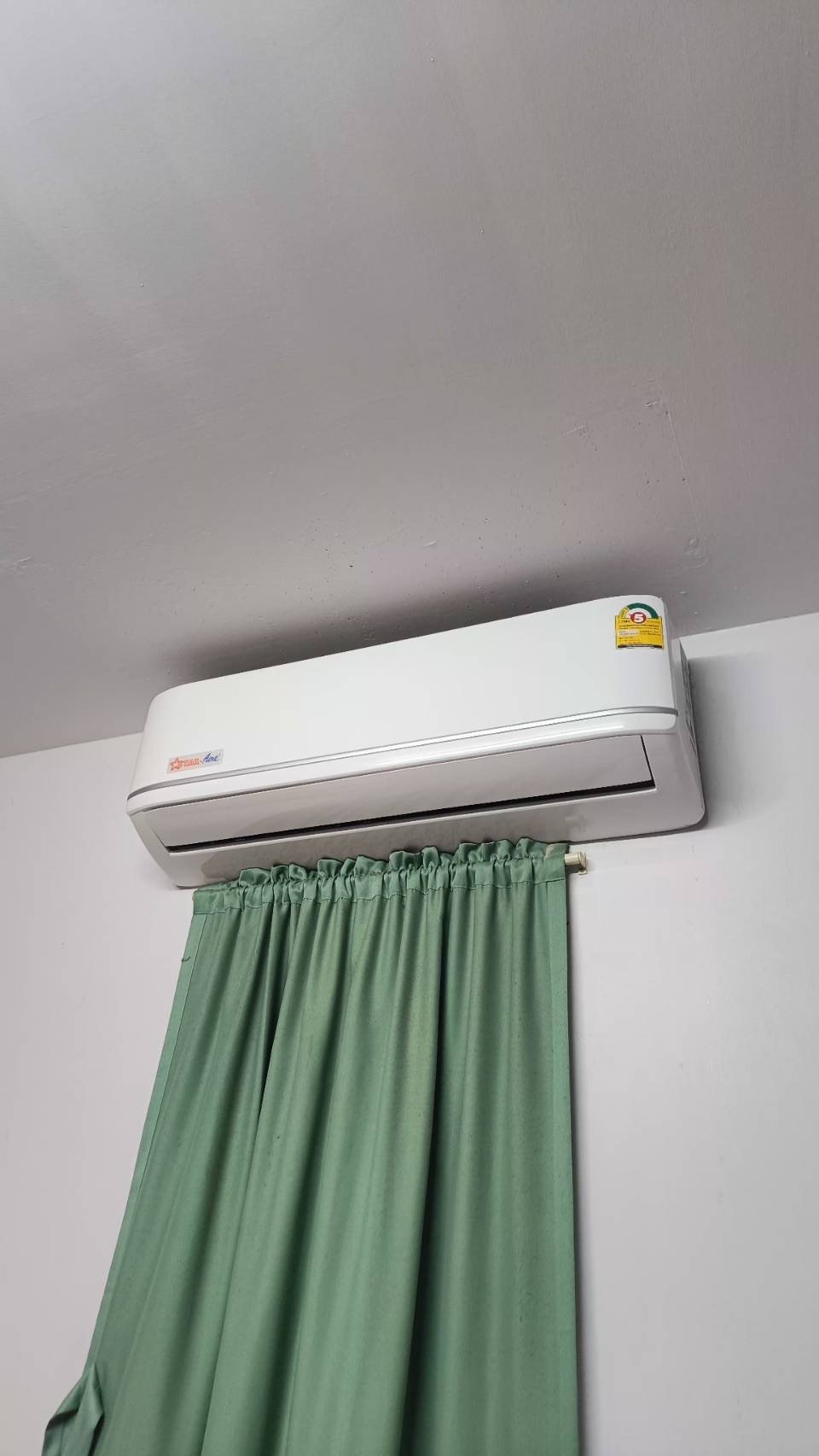
Find the model identity from an accessible label, manual or installation record without removing a panel. Note whether the system is central, a wall-mounted split, a window unit or another type. Their condensate arrangements differ. Advice about one installation should not be generalized to another.
Write the ordinary mode, setpoint, fan setting and operating period. Copy any displayed error exactly and note when it appeared. Do not cycle the power repeatedly to see whether the message disappears. A cleared display can hide a recurring fault without fixing it and may make the service history less useful.
If a user-accessible filter needs attention, follow that model's isolation and maintenance instructions separately. Do not remove service panels or attempt coil cleaning because a general maintenance page mentions filters. The correct filter location, cleaning method and replacement interval depend on the equipment. Keep the evidence record distinct from maintenance you actually performed.
Use timing without forcing the fault to recur
Record whether water first appeared during cooling, after shutdown, during rain or while the unit was idle. Include the duration of ordinary operation and any visible ice from a safe external viewpoint. These clues help an assessor, but none identifies a blocked drain or low refrigerant by itself.
Health Canada: Guide to addressing moisture and mould indoors includes associations between odours and fan-driven heating or cooling operation among clues for investigation. If a musty smell accompanies startup, describe it without placing your face at an outlet or repeatedly running a suspect system. Known or suspected contamination requires appropriate professional advice about operation.
Do not pour chemicals into a drain or apply compressed air as a universal household treatment. Installation details, pumps, traps and drain routing vary. Do not tilt a fixed unit, detach a hose or defeat a float switch to test a theory. Preserve the normal-use sequence and seek service when unexplained indoor water appears.
Compare the timing with the location
All observations below are illustrative and invented. They represent separate hypothetical cases, not a diagnostic chart that can assign a repair. The unit type and installation would need to be considered by the service professional.
| Operating context | Water location | Report wording |
|---|---|---|
| Cooling active | Indoor casing edge | New indoor drip during ordinary cooling |
| Unit idle; driving rain | Wall near installation opening | Rain-linked wetness near unit |
| Cooling active | Confirmed intended exterior outlet | Condensate discharge observed at known outlet |
The first row warrants service assessment without proving a drain blockage. The second keeps a building water-entry question open. The third may be expected operation, but it does not establish that every indoor component is sound. Report the exact location and sequence rather than writing the air conditioner leaks in every case.
Treat the room damage as its own task
Move ordinary belongings away from the wet area if safe and arrange suitable protection that does not create an electrical or trip hazard. Dry accessible clean-water surfaces appropriately and record what was wiped. Do not cover an outlet or place a bucket where it can contact equipment. If water contamination is uncertain, obtain the right assistance.
EPA: A Brief Guide to Mold, Moisture and Your Home emphasizes prompt control and drying of water-damaged areas. An AC repair can stop new water while a wall, ceiling or cabinet still needs assessment and restoration. Ask about both tasks. A room RH reading cannot certify that construction around the unit has dried internally.
Keep photographs of the wider affected area, not just the dripping point. Note material changes such as swelling, blistering or a spreading mark without poking or peeling the finish. If the equipment is above a bed or valuable storage, tell the service provider so access and protection can be planned appropriately.
Ask for assessment before prescribing parts
Send the model identity, normal settings, first observed time, operating context, water location and exact error text. Include accessible photos and any recent maintenance or installation work. State which actions you took, such as stopping cooling through normal controls or removing belongings, without claiming a repair you did not perform.
Ask the technician to investigate the source and the relevant condensate arrangement, and to explain the appropriate user maintenance for the actual model. The work may involve a drain, pan, pump, coil, installation opening or another issue. Do not order a specific component merely because an online example resembles the stain.
For rented or shared systems, use the property manager's service route. Do not alter common drainage or ventilation settings. Preserve access to the equipment and follow any professional instruction about keeping it off. A household observation record is complete enough for service when it clearly describes the problem; it need not reproduce the fault on demand.
Make access practical before the appointment
Clear ordinary belongings from the safe working approach without moving the unit, opening its casing or disturbing wet finishes. Tell the service provider if access is above fixed furniture or if the visible water is near electrical fittings. This lets them plan appropriate equipment and precautions. A household should not climb or dismantle storage to provide an internal photograph that a technician can obtain during the assessment.
Check the original symptom under instructed normal use
After service, retain the findings, repair description and operating instructions. If the professional permits normal operation, revisit the original water location during ordinary use and note whether it remains dry. Do not open a panel to verify the technician's internal work. Ask for clarification if the repair explanation or resident maintenance instruction is unclear.
Continue the agreed drying or restoration plan for affected room materials. A disappearing drip and a fully recovered ceiling are separate outcomes. Recheck rain-linked symptoms during relevant weather if that was the original association, rather than relying only on a dry-weather cooling cycle.
Close with an accurate result: the water source was assessed and repaired, the observed symptom did not return under the stated follow-up, or further work remains. Avoid claims about cooling efficiency, refrigerant condition or indoor-air safety that the household record cannot establish. The goal is a precise service handover and a verified practical outcome.
THE REFERENCE FILE
Sources & scope
Documentation reviewed 1 Nov 2026. Examples are illustrative; this article does not claim hands-on product testing. Follow the instructions for your actual material, model and location.
FROM THE EDITORIAL DESK
Ceetv Editors
Original home and living guidance, prepared from primary documentation with AI-assisted research and drafting. We distinguish proposed checks from actual tests.
How we prepare our guides →