
A monthly home maintenance checklist earns its place when it helps you notice a change and get the right person to act. A page of unchecked repairs quickly becomes background noise. Build yours around a short route through the home, a few repeatable observations, and a separate place for work that needs booking.
The useful question is not simply “Did I check the bathroom?” It is “What did I see, what happens next, and how will I know the issue is finished?” Start with the home you actually occupy, including the spaces you can safely reach.
Give each item an address before giving it a date
Walk through once with a notebook, a phone camera and the manuals you already have. This first visit is for building the list. Record the locations of alarms, accessible filter compartments, sinks and visible appliance water connections. Name identical items by location: “hallway smoke alarm” and “bedroom smoke alarm” need separate entries.
Gather model numbers from paperwork or accessible exterior labels. Save the relevant manual pages together. If a label requires moving a heavy appliance or opening an equipment casing, leave it unread and ask the service provider. Include the plumber, heating contractor or property manager contact you would actually use.
For each item, answer three questions: Does it exist here? Can I safely check it? Who arranges repairs? A flat with communal heating needs a different list from a detached house. Mark shared or inaccessible equipment as “managed by building team,” with a contact and a review date.
Keep this setup record separate from the monthly page. You need the filter specification when ordering a replacement, but you do not need to copy it twelve times.
Separate monthly checks, scheduled work and new symptoms
Use three small lists. The monthly list holds observations you repeat. The scheduled list holds tasks due according to the equipment manual or service arrangement. The symptoms list holds new problems that cannot sensibly wait for your next calendar reminder.
This prevents “inspect filter” from turning into “replace every filter every month.” It also keeps an annual appointment visible without presenting it as twelve overdue jobs. Each scheduled task needs its next due date and the person responsible for booking it.
- Monthly: repeat the agreed route and record what changed.
- Scheduled: check which manual-based tasks or appointments fall due before the next review.
- When noticed: act on a failed alarm, active leak or new equipment fault promptly.
Choose a recurring calendar slot that usually finds someone at home. If it is missed, move that occurrence to a definite date; keep the original interval visible. Completion dates matter more than an unbroken row of decorative ticks.
Start the route with a named alarm record
The U.S. Fire Administration recommends monthly smoke-alarm testing and replacement at ten years from manufacture. Follow the model’s test instructions and record each alarm separately. Hardwired installation belongs with a qualified electrician.
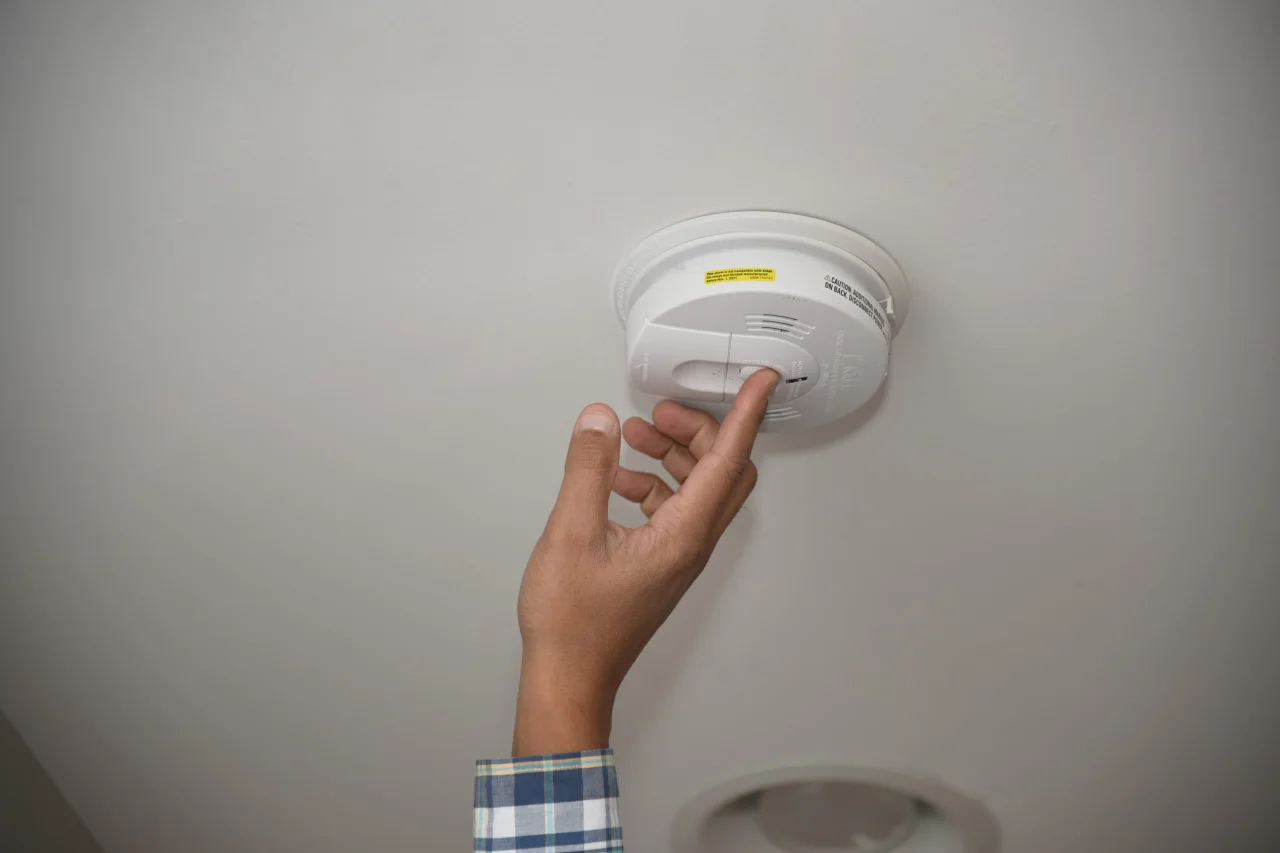
The USFA reference photograph shows a hand operating an alarm’s test control. Identify the control and test procedure in your own model’s instructions; do not remove covers or copy a different model’s button sequence.
Photo & usage
US Fire Administration / FEMA · USFA free-use imagery · Source. Display copies resized and encoded as WebP; no instructional details were fabricated or removed.
The CPSC also recommends monthly CO-alarm tests. Keep its replacement date from the manufacturer alongside the test record. Tell household members before a planned test; for monitored systems, establish the approved test procedure with the provider first.
Record “expected test response heard” rather than “home safe.” The CPSC’s CO fact sheet explains that a test button checks circuitry, not sensor accuracy. If an alarm fails its prescribed test, arrange prompt correction using its instructions or qualified help. If access is unsafe, arrange assistance.
A real CO alarm ends the maintenance visit: move everyone outside, call emergency services and remain outside until responders permit reentry. Do not search for its source. Keep this emergency response separate from reminders about low-battery or end-of-life signals.
Follow the water route and compare like with like
Visit accessible sink cupboards, toilet bases and visible appliance connections. Use a light to look for droplets, pooling or new water marks; do not pull appliances forward or tighten fittings as part of the check. Record the exact location of any change. EPA WaterSense’s home-maintenance guidance supports regular leak checks and prompt attention to identified leaks.
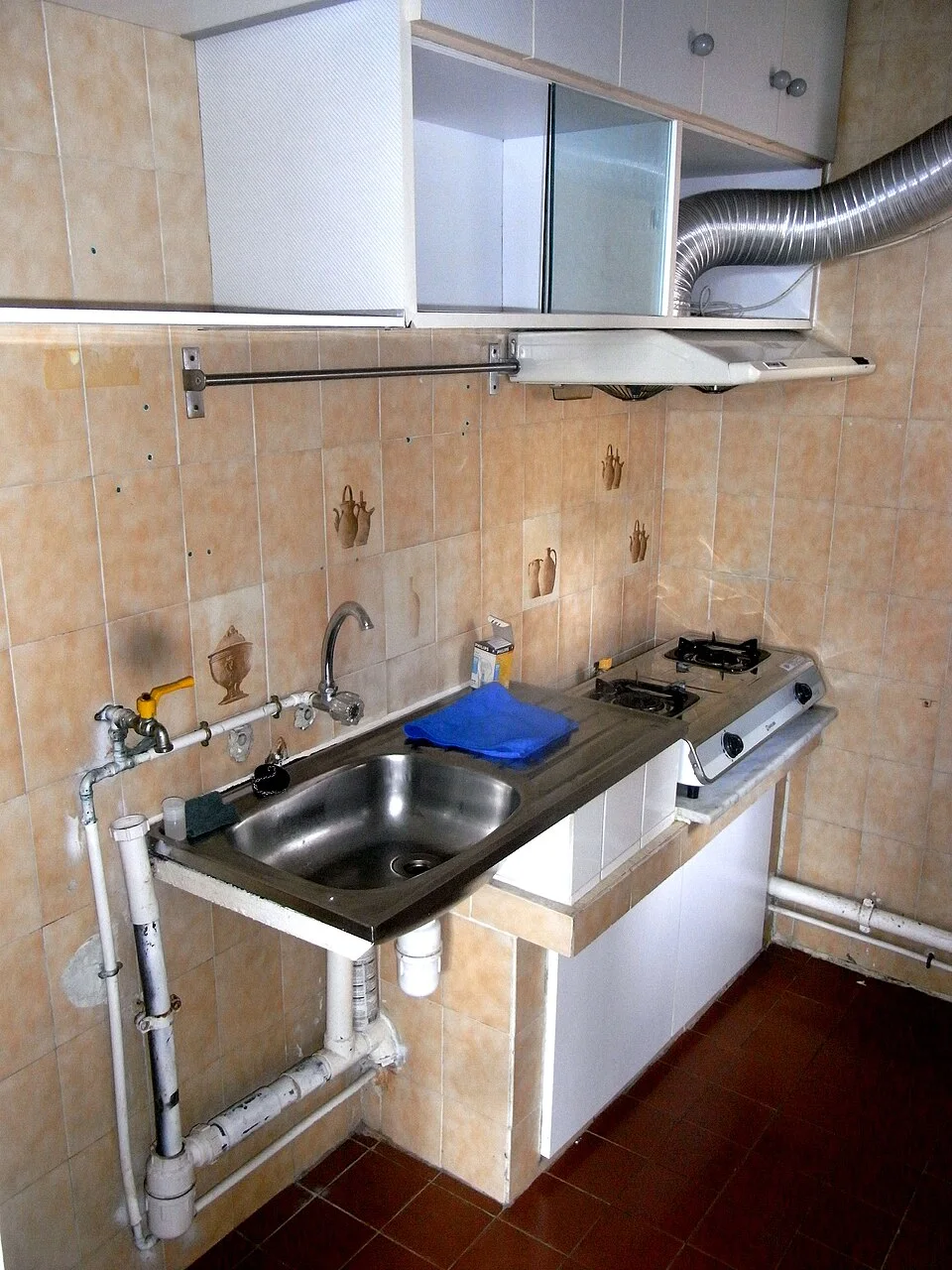
The exposed drain below the sink and the supply pipework above provide visible landmarks for recording accessible connections. During the monthly review, follow only the normally visible route and note the exact joint or fixture if a symptom is observed. Do not turn unfamiliar valves or dismantle fittings; this photograph establishes neither a leak nor the condition or compliance of the installation.
Photo & usage
Wu Samkors · CC BY-SA 3.0 · Source. Display copies resized and encoded as WebP; no instructional details were fabricated or removed.
Compare water consumption, not just the bill total, with a comparable period. Note guests, irrigation and different billing-period lengths. If unexplained use suggests a leak, EPA describes comparing meter readings two hours apart while no water is used. Only do this with a safely accessible meter serving your home; account for automatic water users. Ask the utility for help with uncertain access or shared meters.
A hypothetical result might be: “Kitchen cupboard dry last month; fresh droplet below waste connection today; plumber contacted today.” That is more useful than “plumbing bad.” Photograph the location without handling the fitting. An active leak needs prompt attention, rather than another monthly observation.
Leave the entry open after the visit is booked. Add the repair date and a follow-up observation during normal use before calling the issue resolved.
Check the spaces that hide maintenance
Continue through the storage and utility areas. Can you reach the user-serviceable filter compartment without unloading a cupboard? Have boxes hidden the place where you previously noticed moisture? Has a basket become the permanent home of unread service paperwork? These are checklist design problems you can fix by relocating ordinary stored items.
ENERGY STAR recommends monthly filter inspection, cleaning or replacement for central heating and cooling equipment. Use your equipment manual to identify the filter and the permitted method. If you cannot identify a safely accessible user-serviceable filter, ask the contractor to demonstrate it. Keep electrical connections, refrigerant and combustion checks with professionals.
Write the instruction your household can follow: “Inspect the accessible return-air filter using the manual; record condition and whether replacement is due.” Keep the specified filter details in the setup record. Do not assume a disposable filter can be washed.
Finish any permitted filter task by confirming the filter and user-access cover are correctly refitted according to the manual. For the storage part of the route, confirm you can still reach each check location after putting belongings away. A tidy photograph is less useful than reliable access next month.
Make the monthly page carry unfinished work
Use a table you can copy into a notebook or ordinary document. The following entries are hypothetical examples, not inspection results or universal maintenance intervals.
| Location and check | Observation | Next action and owner | Closure evidence |
|---|---|---|---|
| Hall smoke alarm: manual test | Expected test response | Alex: next monthly test | Test date recorded |
| Kitchen cupboard: visible leak check | New droplet at waste connection | Sam: contact plumber today | Awaiting repair and recheck |
| Accessible return filter: inspect | Replacement due under manual | Alex: obtain specified filter | Awaiting fitting confirmation |
| Heating service: review booking | Appointment confirmed | Sam: retain confirmation | Service still pending |
Use plain statuses: checked, action open, booked, resolved, or not accessible. “Booked” is progress, but it does not mean a fault has disappeared. Every open action needs an owner and a next contact date.
If the route is too long, shorten the administration first. Use the same location names and keep old records together. A photograph can supplement an observation, but give it a date and an address so it remains intelligible later.
THE WORKING FILE / LEDGER
A completed inspection is not a completed repair
Imagine ten items inspected this month. Eight show no new issue, one under-sink joint has a recurring water mark, and one appliance requires a documented service. Counting ten checked items as ten finished jobs conceals two open decisions. Give each exception an owner and a next action.
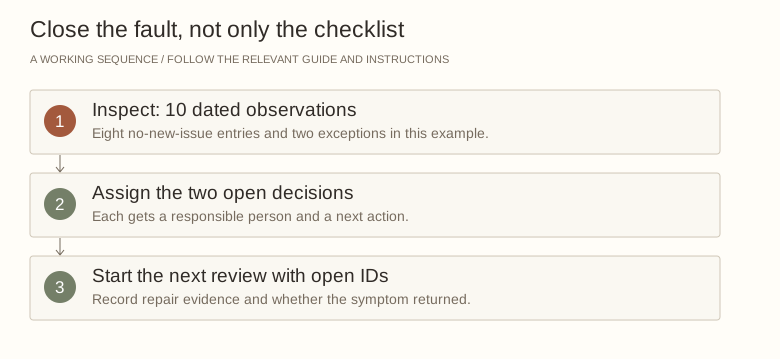
| Status | Illustrative count | What happens next |
|---|---|---|
| Checked, no new issue | 8 | Retain the dated observation |
| New or recurring symptom | 1 | Protect against further damage and arrange appropriate assessment |
| Scheduled service outstanding | 1 | Confirm appointment or documented follow-up |
| Total inspections | 10 | Two action items remain open |
Read the result
On the next review, begin with the two open IDs before repeating the full route. Record whether the underlying work was completed and whether the original symptom returned. A monthly page is a review cadence, not permission to postpone a leak, warning alarm or other urgent fault. Equipment tests and replacement intervals still follow the relevant instructions rather than an invented one-month rule.
Your ledger record Blank worksheet
Carry unresolved faults forward with a responsible person, not just another tick.
- Item ID / location
- ________________________________
- Instruction and due date
- ________________________________
- Observation date
- ________________________________
- What changed
- ________________________________
- Urgency
- ________________________________
- Responsible person
- ________________________________
- Next action
- ________________________________
- Action date
- ________________________________
- Finish evidence
- ________________________________
- Carried forward
- ________________________________
Before closing the file
- Open items appear first next month.
- A person and next action are assigned.
- A finish check verifies the original symptom.
Close the review by deciding what happens next
Before finishing, read only the open actions. Confirm that urgent concerns have been handed to the appropriate service, appointments have dates, and inaccessible checks have someone assigned to arrange access. Never mark an unperformed check as passed.
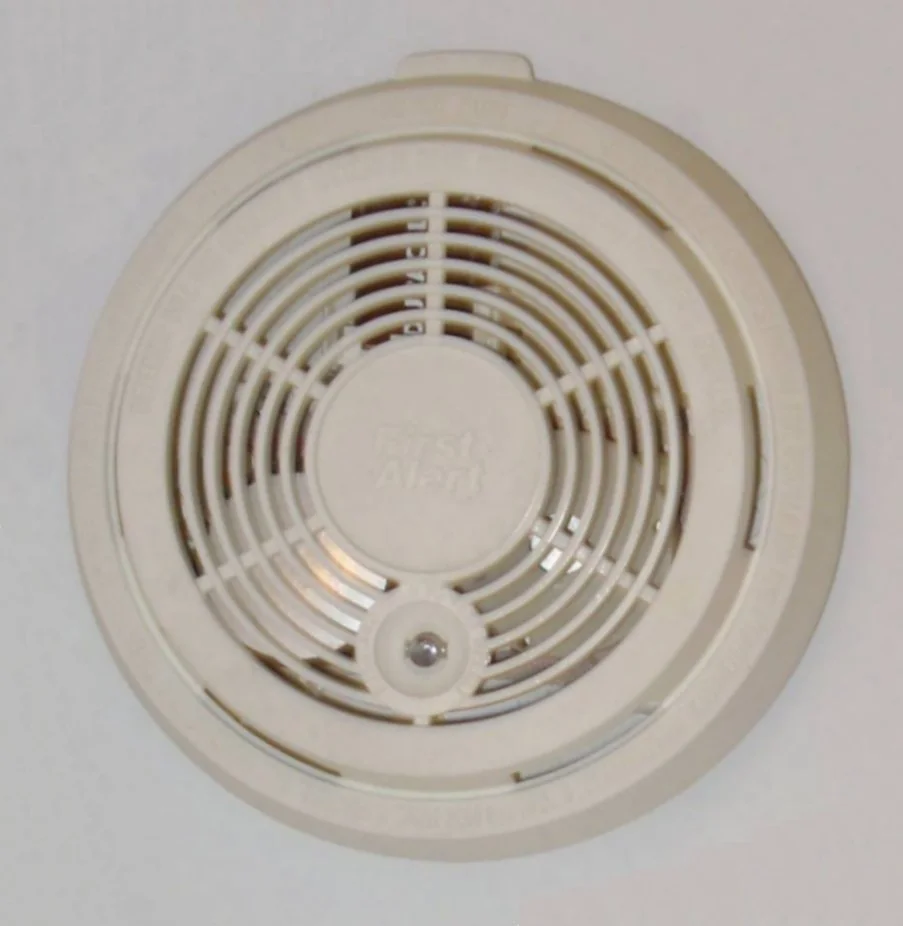
A recognizable fixture gives an open checklist action a specific subject. Record its actual location, the observation and who will arrange any unperformed check, using the exact equipment instructions and suitable access. The alarm’s appearance here does not show a successful test, remaining battery life or a completed inspection; do not mark an unresolved entry as passed.
Photo & usage
Oleg Alexandrov · Public domain · Source. Display copies resized and encoded as WebP; no instructional details were fabricated or removed.
Carry unresolved entries into the next page with their original discovery dates. After work is completed, record what was done and the agreed finish check. A recurring symptom deserves a renewed call with the previous record attached, rather than a fresh entry that loses its history.
Finally, prepare the next monthly page and review upcoming scheduled work. Your checklist is working when another household member can pick it up, find the right location, understand the observation and take the next action without reconstructing the story.
THE REFERENCE FILE
Sources & scope
Documentation reviewed 1 Nov 2026. Examples are illustrative; this article does not claim hands-on product testing. Follow the instructions for your actual material, model and location.