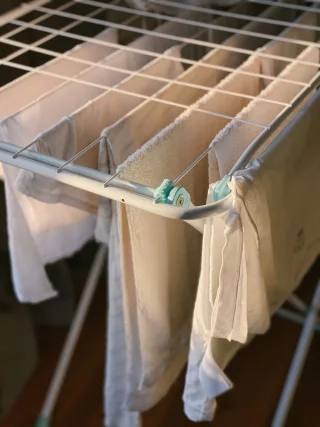
A linen cupboard can look orderly while half its contents are on beds or in the wash. The real test arrives when everything comes back clean: towels get wedged sideways, pillowcases lose their partners and the door needs a push. Organise for that moment, rather than for a photograph of partly empty shelves.
The aim is to give each usable set a recognisable home and enough room to return without dismantling another pile. Start with the linen and shelves you already have. Buy containers only after a full laundry return has shown what needs containing.
Follow three everyday requests
Before emptying anything, try three ordinary tasks: find a towel, gather a complete change for a particular bed, and put away a clean pillowcase. Notice where you hesitate, move unrelated items or hold up a stack. Write down the obstruction in plain language: “cannot distinguish fitted sheets” or “guest bedding blocks bath towels.” These are the problems your layout must solve.
Gather a tape measure, paper, a pencil and temporary labels. Clear a clean, dry sorting surface and keep the route to the cupboard open. Work one shelf at a time if emptying the whole cupboard would cover the bed you need tonight.
Look at accessible shelf supports and edges without dismantling them. A visibly bowed shelf, split board or loose support needs assessment before reloading; ask a competent repairer or the property manager. This project should redistribute ordinary contents, not increase an unknown shelf's load.
Check the empty areas for damp patches, staining or a persistent musty smell. Stop restocking an affected area until the cause is addressed. The EPA's guide to mould and moisture emphasises correcting water problems and drying items completely. Suspected hidden mould calls for an experienced professional rather than exploratory removal of panels.
Count what will come back, not just what is here
Make a short inventory by destination: main bed, single bed, guest bed, bathroom and table. Include pieces currently in use, drying or awaiting washing. Note the components actually needed for each bed; a household using duvet covers has a different set from one using flat top sheets.

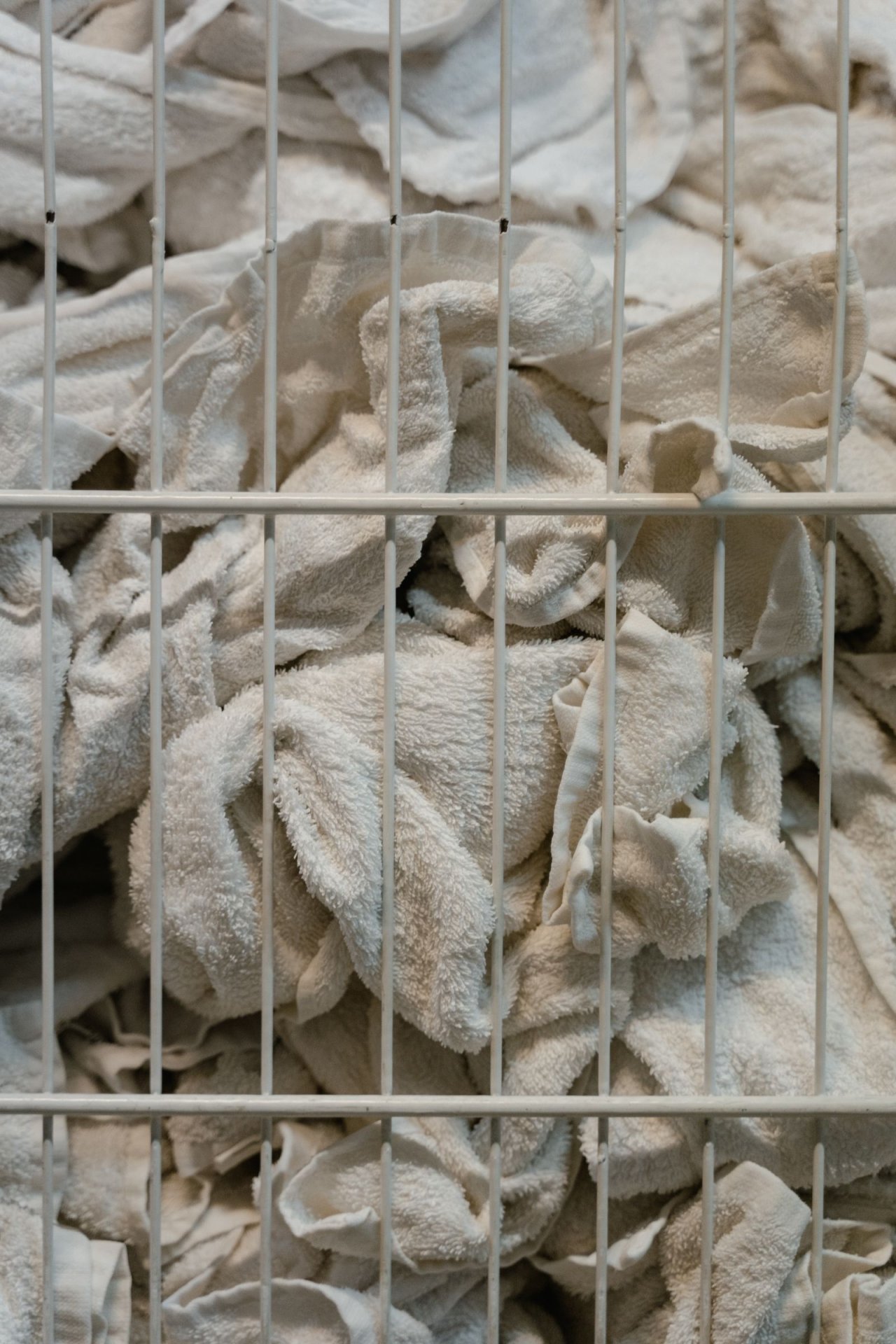
The display separates folded towels into visible stacks. Use that grouping principle for a household inventory, including items in use and in the laundry before allocating cupboard positions. These retail stacks illustrate categories to count, not recommended domestic quantities, a suitable shelf load or a complete set of bed linen.
Separate complete sets, compatible loose spares and unresolved pieces. Read existing labels, compare known pieces and check fit on the intended bed when necessary. Nominal size names alone may not distinguish fitted sheets for mattresses of different depths. Put uncertain pieces aside with a specific question instead of returning them to the main stack.
Here is a hypothetical count: a home has two regularly used beds and three complete sets for each. Two sets are on the beds, one is in the wash and three are in the cupboard. Once laundry finishes, four sets need cupboard space. If all six sets must be stored during a move or an extended absence, plan a separate temporary destination for that larger maximum.
Choose how many sets to retain around your actual laundry turnaround and spare requirements. There is no universal correct number. Keep an emergency spare if you need one, but identify it explicitly. Unmatched pieces should earn their space through a real use, rather than remaining an indefinite puzzle.
Give each request a place within comfortable reach
Assign the easiest shelves to the requests you make most often. Use the comfortable reach of the people who actually retrieve and return linen, including anyone with limited bending or shoulder movement. A shelf that suits one adult may be awkward for another household member.
Keep regularly used bed sets beside one another by destination. Give bath towels and small washcloths separate places so retrieving a small item does not disturb a heavy pile. Reserve less convenient space for lightweight, infrequent items only when they can still be retrieved safely.
Comcare's storage-access guidance advises against lifting above your head and warns about hidden objects falling from stacks. If reaching requires climbing, use suitable access equipment according to its instructions, on a stable surface, maintaining three points of contact. Relocate a bundle that cannot be handled that way; do not make awkward overhead retrieval part of the routine.
Keep a visible boundary between everyday linen and guest supplies. A guest set can be complete and easy to locate without occupying the position needed for daily towels. Avoid a front row of unrelated items hiding a second row that nobody remembers.
Trial one shelf before buying organisers
Measure the usable opening as well as the shelf. Hinges, a door frame and the door's swing can prevent a container fitting even when its width is smaller than the shelf. Record usable depth and vertical clearance, then measure an ordinary folded bundle without compressing it.
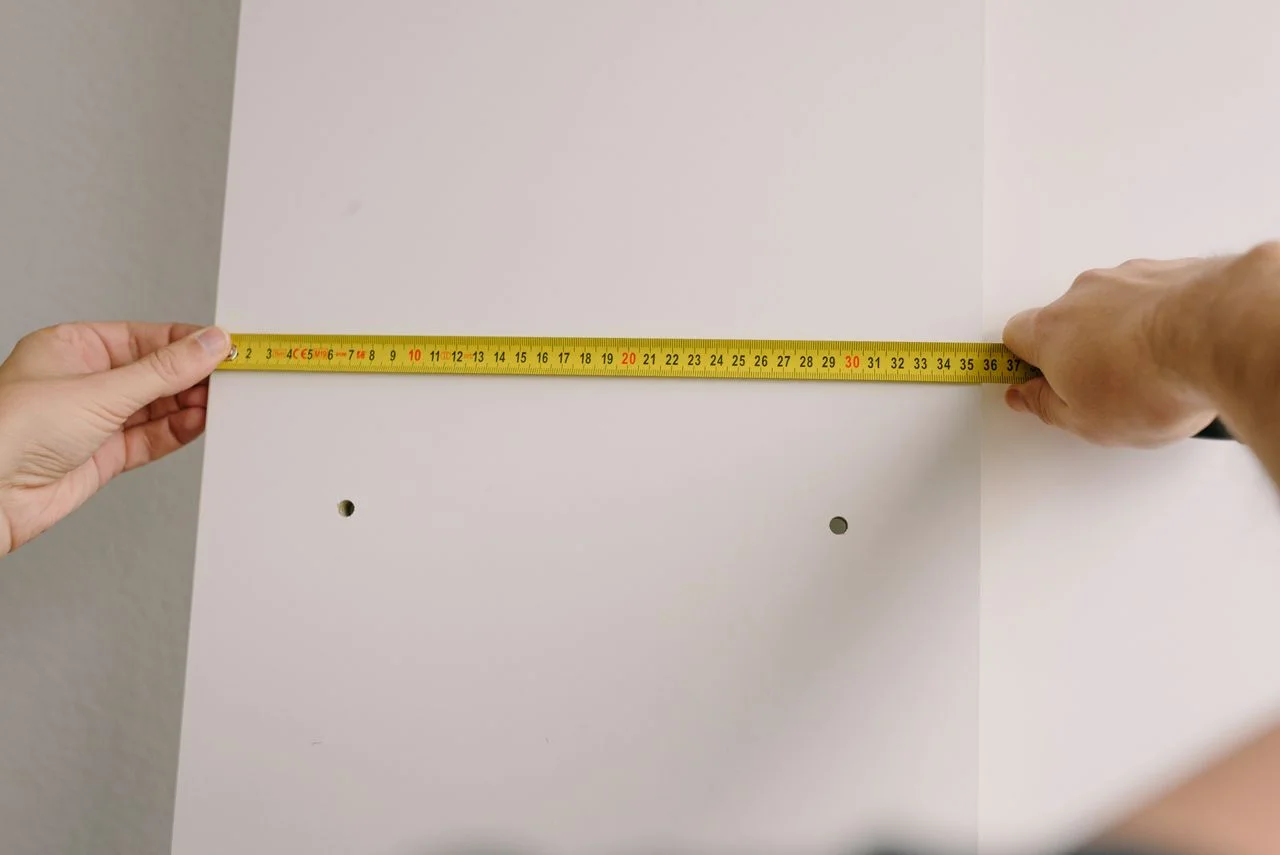
Hold the tape straight between the usable boundaries, as in this close reference. Then trial a complete folded set in the actual cupboard, allowing for hinges, projections, reach and the space needed to remove it.
Photo & usage
Ksenia Chernaya · Pexels License · Source. Display copies resized and encoded as WebP; no instructional details were fabricated or removed.
In a hypothetical trial, the opening is 24 inches (61 cm) wide and the shelf is 16 inches (41 cm) deep. A bed bundle measures about 10 inches (25 cm) across and 13 inches (33 cm) deep. Two bundles might sit side by side, but those dimensions alone do not prove they are easy to remove. Try the actual bundles with the door open and leave hand room.
Test three actions: slide out one bundle, return it without lifting its neighbour, and close the door freely. If any fails, change the fold or reduce the number in that position. Do not treat squeezing as extra capacity.
Use an existing smooth-sided basket to trial loose washcloths or pillowcases. Check that fabric does not snag and that the loaded basket is manageable. A basket adds walls and weight, so it can reduce useful capacity. Leave broad folded towels on the shelf if they already behave well there.
Make sets readable without making them elaborate
For each everyday bed set, fold the larger pieces to a similar footprint and tuck the matching pillowcases within the bundle. Alternatively, use one of the set's pillowcases as a loose envelope. Choose whichever method lets everyone recognise and replace the set without a folding lesson. Leave an identifying edge or label visible.
Label the destination and any distinguishing fit: “main bed, deep fitted sheet” is more useful than “large.” Put labels on shelf edges or removable container tags, using a method suitable for the cupboard finish. Avoid adhesive directly on textiles. Keep compatible loose pillowcases together rather than scattering them among complete sets.
Do not force an heirloom quilt or fragile embroidered tablecloth into the everyday bundle system. The Canadian Conservation Institute's textile guidance, written for heritage collections, recommends fewer folds, padded folds where needed and limited stacking. Treat valuable or weakened pieces as a separate preservation task and seek a textile conservator's advice before changing their storage.
Reserve the space that clean laundry needs
Now simulate the cupboard at its normal fullest point, using your inventory. If some linen is still in use or washing, reserve its position with a temporary note. Do not fill the apparent gap with another category. The empty position is doing a job.
In the hypothetical two-bed household, allocate room for the four stored sets identified earlier. If the fourth will not fit, reconsider what shares the cupboard before buying dividers. A seasonal throw might have a suitable dry home elsewhere; an unused duplicate might leave the household. Taller piles should not be the automatic answer.
Return only fully dry linen, checking folded layers, hems and thick towel borders before bundling. Damp pieces return to their permitted drying method. If moisture or mustiness recurs in the cupboard despite dry contents, pause storage there and arrange investigation of the moisture source. A closed container does not resolve a damp cupboard.
THE WORKING FILE / COMPARISON
An empty shelf is not necessarily spare capacity
Suppose a household owns six bed sets: two in use, one in the wash and three in the cupboard. The shelf holds four complete sets in a comfortable, stable trial. Organising only the three visible sets suggests one spare position; returning all six at once reveals a deficit of two positions.
| Inventory position | Complete sets | Storage implication |
|---|---|---|
| In the cupboard now | 3 | Visible stock only |
| On beds | 2 | Will eventually return |
| In laundry | 1 | Return space needed soon |
| Whole household total | 6 | Compare with four tested positions |
Read the result
Assign all six sets a home or deliberately reduce the inventory before buying baskets. The maximum simultaneous return matters even if it happens only during a seasonal change. Trial one full set using the same folding method that will be used later. A container label is not capacity; the set must be retrievable without pulling down the stack above it.
Your comparison record Blank worksheet
Allocate storage for every set, including items currently on beds or in the laundry.
- Bed / set size
- ________________________________
- Sets on beds
- ________________________________
- Sets in laundry
- ________________________________
- Sets stored
- ________________________________
- Maximum return
- ________________________________
- Tested shelf positions
- ________________________________
- Dry storage check
- ________________________________
- Retained / relocated / donated
- ________________________________
Before closing the file
- Items outside the cupboard are counted.
- A full return fits without compression.
- Each set can be retrieved from a stable position.
Judge the arrangement on the next laundry return
Before finishing, repeat the original three requests with the cupboard loaded. Ask another regular user to find a specified bed set from its label. Check that removing a towel leaves its neighbours in place, the door closes freely and no bundle requires an overhead lift.
Let the next normal laundry return expose any remaining friction. If pillowcases accumulate outside their bundles, simplify the bundling method. If towels migrate to a different shelf, reconsider which position is easiest to reach. Change the location or grouping that failed before adding another organiser.
Keep the inventory only for unresolved pieces and unusual spares once the layout is familiar. The useful finish is a cupboard whose contents can leave and come back repeatedly, with each returning item still having somewhere to go.
THE REFERENCE FILE
Sources & scope
Documentation reviewed 1 Nov 2026. Examples are illustrative; this article does not claim hands-on product testing. Follow the instructions for your actual material, model and location.