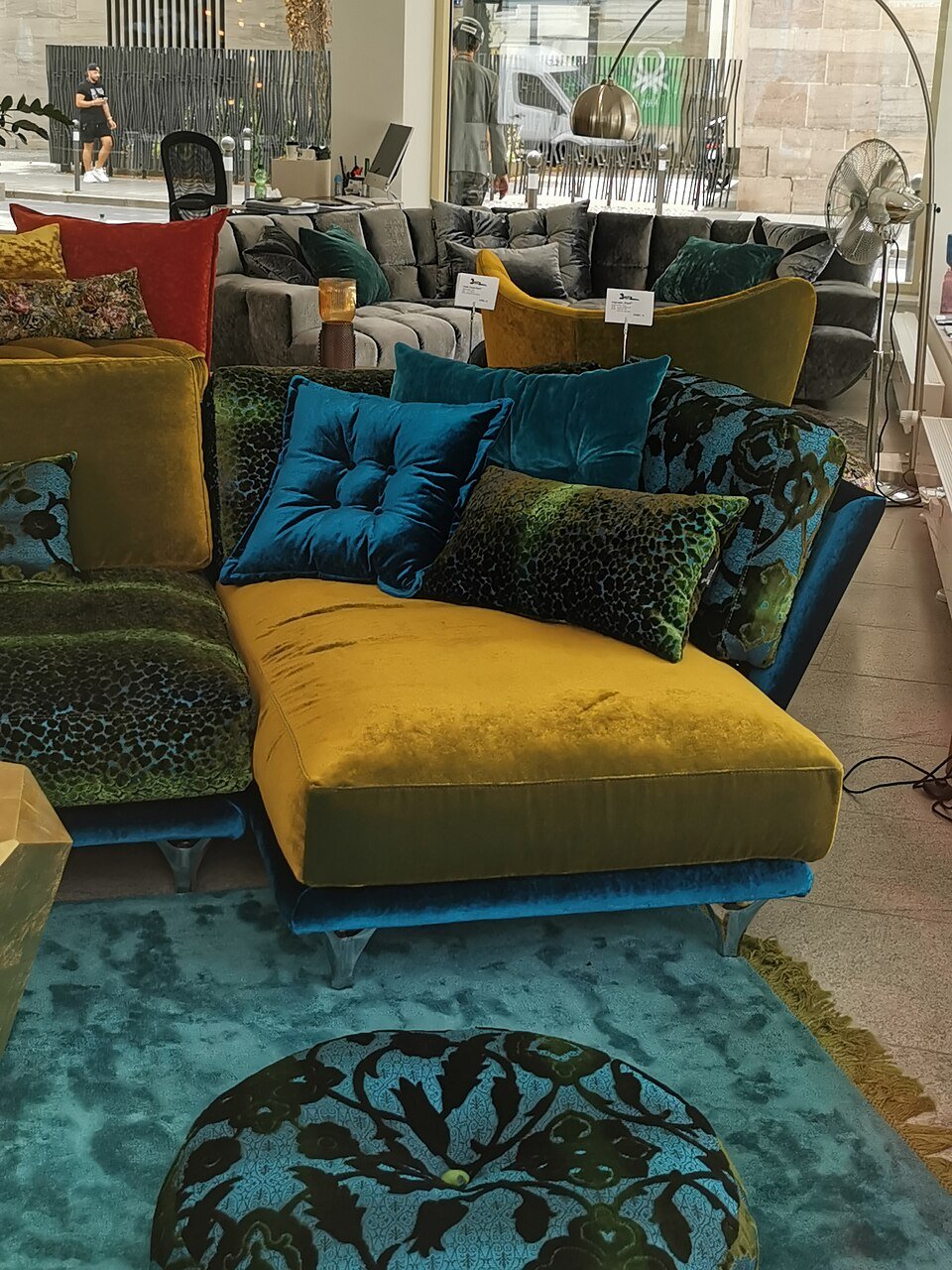
A dark patch on velvet can look alarming from one side of the room and nearly disappear from the other. Velvet's pile changes the way it reflects light. Pressure, brushing and seating can alter that reflection without depositing a stain. Adding cleaner immediately can turn a temporary appearance change into a damp mark or a permanently disturbed patch.
Begin with observation, fabric identification and gentle permitted maintenance. This guide concerns upholstery velvet, including the distinction between pile effects and actual spills. It does not assume that all velvet has the same fiber content or accepts steam. The furniture's exact care instructions decide the treatment, even when another brand demonstrates a successful technique on a similar-looking sofa.
Identify the velvet and the whole cover
Find the furniture label and fabric name. Velvet describes a pile construction rather than a single fiber: different products may contain cotton, viscose, polyester or blends. Record the cleaning code and any special pile instructions. Piping, backing and contrasting fabric can restrict what an otherwise familiar velvet tolerates.
IKEA's velvet care booklet explains characteristic reflection and pressure marks for the products it addresses. Pottery Barn's fabric guide lists separate textile constructions and care directions. Carl Hansen & Son's textile guidance includes its own restrictions, including on steam. Taken together, these documents demonstrate why a technique must remain tied to its product. Do not transfer a steam permission from one booklet to furniture whose care sheet prohibits it.
Change your viewpoint before changing the fabric
Look at the dry mark head-on, from each side and with the room light at a different angle. Notice whether the patch reverses from light to dark as your position changes. Compare it with nearby seating pressure marks and the direction of the pile. Photograph more than one view, because a single image can exaggerate or hide a reflection effect.
Record any spill history separately. A known coffee spill should not be dismissed merely because the surrounding velvet also changes color with angle. Conversely, a hand-shaped dark patch after moving a cushion may reflect pressure rather than liquid. Do not wet the fabric to reveal the difference. Water changes both reflection and fiber behavior, adding a new variable before the original observation is understood.
Remove dry loose debris gently
Use the furniture-approved soft nozzle and suction setting, checking the attachment for rough edges and grit. Follow any stated pile direction. Keep the tool moving lightly instead of pressing the nozzle into the same patch. Avoid forcing it over buttons, fringes or open seams. Support loose cushions only in ways permitted by their construction.
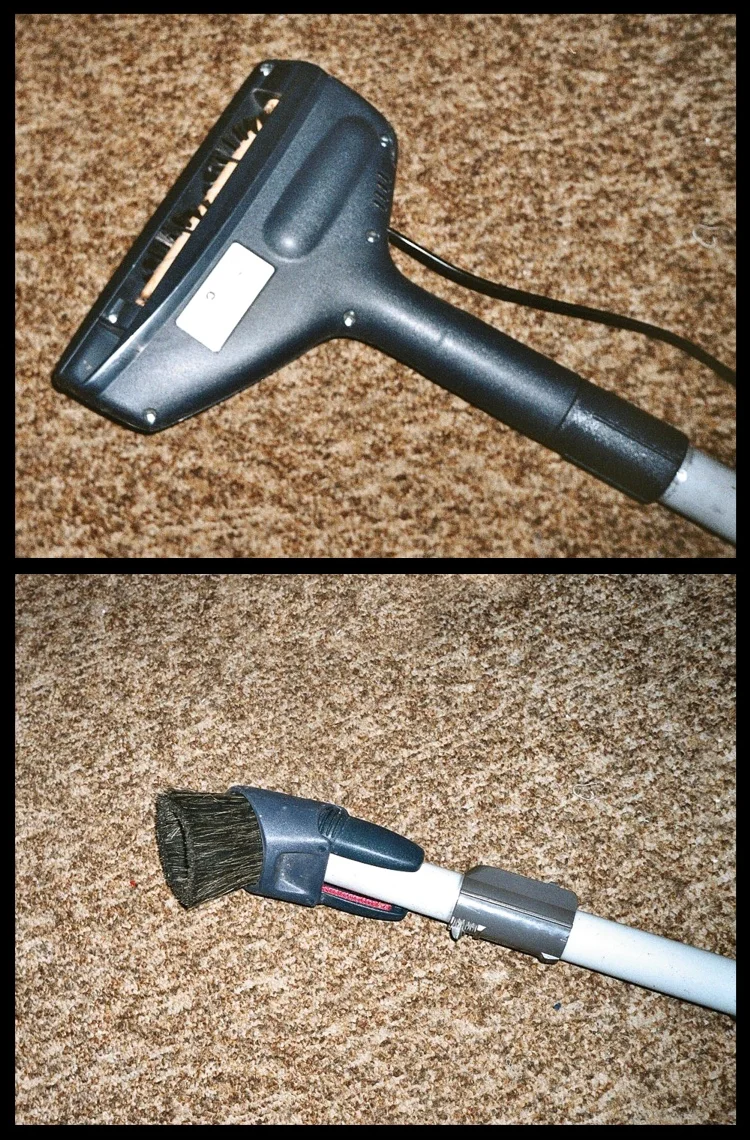
The exposed bristles and nozzle edges make contact faces visible for checking trapped grit, loose tufts or damage before use. Select only the attachment and suction setting approved for your actual upholstery, following any pile-direction instructions. These accessories illustrate inspection points; their appearance does not establish that either tool is suitable for your velvet.
Photo & usage
original by User:Markus Schweiss, crops and changes by user:JD · CC BY-SA 3.0 · Source. Display copies resized and encoded as WebP; no instructional details were fabricated or removed.
For lint, use only the method the maker allows. An adhesive roller suitable for one velvet can leave residue or pull fibers on another. A clothes brush mentioned in a specific care guide should not become permission for a stiff upholstery brush on every pile fabric. Stop if fibers pull out unusually, color transfers or the surface develops a roughened appearance. Keep loose fibers separate from adhered food when describing the condition.
Observe pressure recovery without forcing it
After ordinary use has stopped, give the pile an opportunity to settle under the conditions the maker describes. If gentle stroking in the pile direction is expressly permitted, use a clean dry hand or approved soft brush with minimal pressure. Compare the result under the same light rather than brushing until every reflection matches.
Do not press an iron onto the face, place a heavy object over the patch or use a hot hair dryer to accelerate recovery. Heat can affect fibers, backing and adhesives, while pressure can create a new mark. If the care guide supplies a product-specific steam technique, follow its distance, side and application restrictions exactly. Where it does not, or where another instruction prohibits steam, ask the maker before introducing it.
Treat known spills through the cleaning code
Blot a fresh spill with a clean undyed absorbent cloth, pressing and lifting rather than scrubbing. Remove loose solids carefully without dragging them through the pile. Confirm the fabric's permitted product before adding anything. W, S and other codes define different cleaning boundaries; velvet's appearance does not override them.
Test the complete approved method on an inconspicuous representative area and inspect after full drying. Include any pile-restoration step actually required by the maker. Stop if the test causes a ring, dye transfer, stiffness or a direction change that does not settle. A successful spot treatment also does not authorize soaking a panel or removing a zippered cover for laundering. Treat the cover as removable for cleaning only when the furniture instructions say so.
Compare the observations in a practical table
| Observation | Working interpretation | Next decision |
|---|---|---|
| Patch changes from pale to dark as viewpoint moves | Pile reflection contributes to appearance | Check permitted dry pile care |
| Crumb or sticky residue is visible regardless of angle | Deposited material is present | Use the identified fabric's spill route |
| Mark remains flattened after permitted gentle care | Persistent pressure or pile change is possible | Ask the maker about recovery |
| Ring appears after a wet attempt | Residue movement or material change may be involved | Stop repeating the wet treatment |
The comparisons are invented examples. A real patch may combine two categories, such as pressure from a damp cup. Report both the contact history and the light-direction behavior. That gives a cleaner a clearer question than simply saying the velvet has changed color.
Make an observation record that can be repeated
For an illustrative comparison, choose three viewing positions: directly in front, one step left and one step right. Record light, dark or unchanged at each position before and after the authorized dry maintenance. These are descriptive categories, not instrument readings or proof of stain removal. Keep the room lighting and cushion orientation consistent.
If you rotate a loose cushion between photographs, note the rotation; otherwise the changed pile direction may be mistaken for improvement. Do not attach tape markers to the velvet. A simple sketch of the cushion and camera position is enough. This small record helps establish whether an apparent change follows viewing geometry, use or an actual treatment, without inventing numerical cleaning performance.
Know when the job belongs to a specialist
Widespread soil, an unidentified fabric, a spill into padding or a persistent ring after an unsuccessful attempt are good reasons to seek upholstery-specific advice. Give the cleaner the exact velvet and furniture names. Ask how their proposed method complies with both the fabric and assembly instructions, especially around buttons, trims and mixed panels.
Disclose steam, solvent, protector or deodorizer already used. A cleaner needs that history to interpret a sheen or texture difference. Do not ask them to guarantee that every pressure mark can return to a new appearance; some changes can be persistent. Discuss a small representative treatment and acceptable outcomes before committing the whole visible piece.
Finish with consistent pile and a dry panel
Judge the furniture only when it is fully dry under the relevant care instructions. The removable debris should be gone, the pile should not have new roughness or bald areas, and the panel should retain its normal softness. Keep it out of use while any directed drying period remains.
A velvet sofa will still show characteristic light and dark variation as people move around it. That can be normal behavior rather than incomplete cleaning. Record an unresolved spill or persistent flattened patch separately, and retain the successful care method. Completion means that deposited soil has been handled appropriately and the pile has been preserved, not that every viewing angle produces an identical color.
THE REFERENCE FILE
Sources & scope
Documentation reviewed 1 Nov 2026. Examples are illustrative; this article does not claim hands-on product testing. Follow the instructions for your actual material, model and location.