Give each wet area a separate name
Water on a shower screen, a ceiling corner and the wall behind the basin may have different origins even when it appears after the same shower. Start with a simple room sketch. Mark the shower's direct spray area, the surfaces people touch with wet hands and any remote droplet pattern. Describe locations instead of labelling everything steam.
Observe from floor level and do not stand on the bath rim to inspect a ceiling. Keep your face away from suspect growth or a damp opening. If a ceiling is sagging, leaking near electrical fittings or visibly deteriorating, arrange appropriate help promptly instead of continuing a household comparison.
Health Canada: Guide to addressing moisture and mould indoors lists both everyday moisture and building or plumbing water entry as possible causes of dampness. That is the useful starting principle: the time relationship to bathing narrows the questions, but it does not identify the cause automatically. A pipe leak can coincide with use, and condensation can collect far from the spray.
Look before the next normal shower
Before anyone bathes, record which marked surfaces are dry, damp-looking, stained or actively wet. A historical stain should not be described as a new leak merely because it remains visible. Equally, a surface still wet before the shower should not be counted as fresh splash afterward. Photograph the same accessible view if that helps distinguish changes.
Note room temperature and RH at a repeatable location away from direct water. Use installed extraction as intended. Record whether the room was recently cleaned, because a wet cloth or sprayed cleaner introduces water before bathing starts. Keep cleaning separate from the observation period where practical rather than pretending it did not happen.
Choose a small set of descriptions the household can repeat. Droplets, runs, a wet edge and unchanged staining are clearer than very damp. Do not draw on delicate finishes or apply adhesive labels to wet paint. Put the location identifiers on the paper sketch.
Use timing and geometry together
After a normal shower, compare the mapped areas. Direct splash often follows the spray's reach, screen gaps or a wet user's movements. Condensation can form on cooler surfaces outside that reach. The distinction is a working explanation rather than proof: water can run from an upper edge, and a leak can emerge at a distant joint.
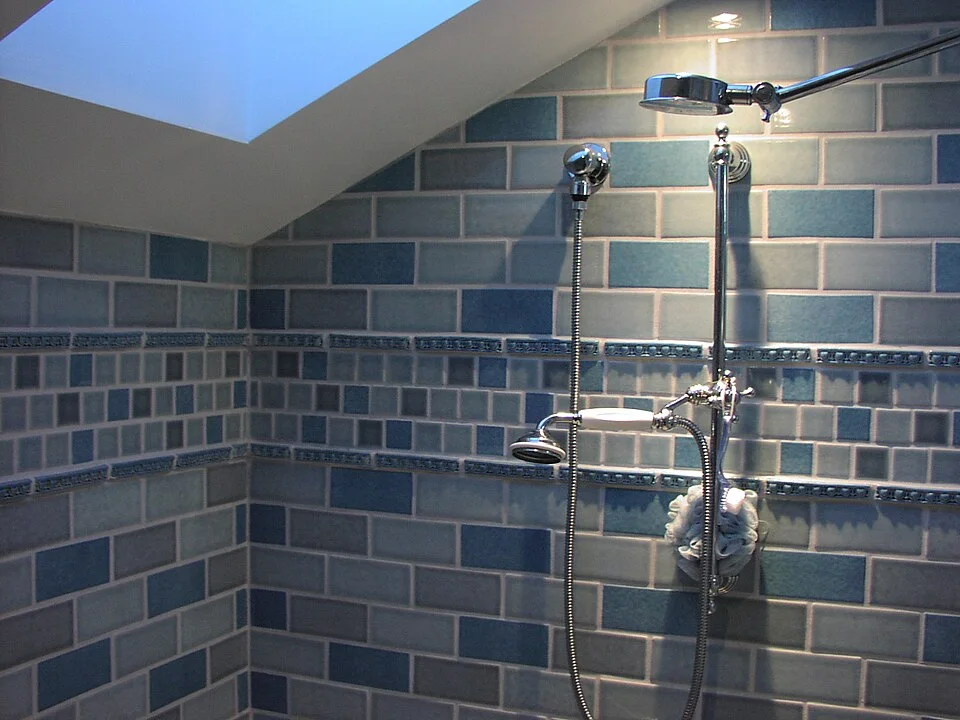
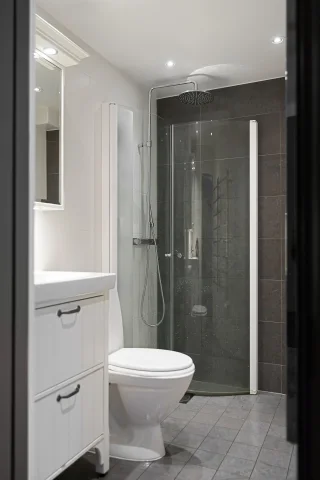
The showerheads, wall and sloping upper surface provide distinct locations to include on the observation map. After ordinary showering, note when each accessible area becomes wet and whether water continues arriving afterward. The photograph shows no active droplets or test result; do not redirect spray at joints or assume that every mark beyond the visible head is condensation.
Photo & usage
andrechinn · CC BY 2.0 · Source. Display copies resized and encoded as WebP; no instructional details were fabricated or removed.
Record when each pattern becomes visible and whether it continues after bathing ends. A screen edge that becomes wet only when water strikes it raises a different question from ceiling droplets appearing across a broad cool area. Do not redirect the shower at joints or seals to challenge them. That creates an artificial exposure and may cause damage.
EPA: A Brief Guide to Mold, Moisture and Your Home advises acting promptly on condensation and water problems. You can observe the initial pattern and then wipe accessible ordinary water using a suitable method. Record what you removed. Leaving water in place for hours is unnecessary and makes the investigation less useful as a care routine.
Compare three wet areas after one shower
These observations are illustrative and invented, and the interpretations are questions to pursue. They are not diagnoses or findings from a tested bathroom.
| Mapped location | Before shower | After shower | Useful next question |
|---|---|---|---|
| A: lower screen edge | Dry | Wet during use | Is ordinary splash escaping at the edge? |
| B: ceiling corner away from spray | Dry | Fine droplets after use | Is a cool surface collecting condensation? |
| C: stain above basin | Already damp | Still damp | Is there another ongoing water source? |
The meaningful comparison is not which patch looks worst in a close-up photograph. Area C was wet before the event, so the shower cannot explain the start of that particular wetness. Area B's location supports investigating condensation and extraction, but a qualified assessment may still be needed. The table deliberately preserves uncertainty instead of assigning a repair to every row.
Describe the normal moisture exit
Identify the installed fan or ventilation system and how its control is meant to operate. Keep permanent openings clear. PNNL Building America: Bathroom Exhaust Fans says bathroom extraction should discharge outdoors rather than into enclosed building spaces. If the route is unknown, ask the owner or installer; a ceiling grille does not show where the duct ends.
Record the fan's use during the shower and its normal run-on, plus any unusual noise or failure to start. Do not interpret noise as measured airflow. A clearing mirror also cannot establish whether the remote ceiling corner received enough drying air or whether the duct is intact.
Where the source appears to be direct splash, improve ordinary containment only within the product's instructions. Adjusting a correctly fitted screen's normal position may be straightforward; resealing, drilling or dismantling an enclosure needs the right method for that product. Do not cover drainage openings with sealant because a wet edge has been mistaken for a failed joint.
Know when a map becomes a repair request
Request assessment when droplets recur on a remote surface despite intended extraction, when a patch remains wet between uses, or when the finish softens, blisters or develops growth. Share the before-and-after map and normal-use timing. The professional can then investigate the relevant surface, plumbing or ventilation without relying on a photograph taken only after the room was saturated.
If a pattern tracks rain or an upstairs fixture rather than your shower, add that association. Do not accuse a particular pipe or neighbour without evidence. Water can travel through construction, and the visible exit is not always the entry. Avoid opening cavities to settle the question yourself.
A normal room RH reading does not rule out a wet ceiling or a leak. It measures air at the instrument, not the material above. Likewise, a temporary high reading after bathing does not prove that every stain is condensation. Keeping these boundaries clear prevents the log from sending the repair work in the wrong direction.
Finish with the same locations under ordinary use
After a practical adjustment or professional repair, revisit A, B and C under comparable normal use. Check the pre-shower condition first, then the post-shower pattern and the next ordinary visit. A surface that looks better immediately after wiping has not yet demonstrated that the source stopped recurring.
Completion means the original unexplained wetness no longer returns, accessible materials recover appropriately and any damaged finishes have received suitable attention. Keep the final location map with the repair note. If the pattern changes, preserve that detail rather than declaring the original explanation correct because some water disappeared.
The best outcome may be several small conclusions: direct splash contained at the screen, remote droplets needing ventilation assessment, and a separate stain assigned for plumbing investigation. A bathroom does not need one single cause to make the record useful. It needs observations specific enough to support the next appropriate action.
THE REFERENCE FILE
Sources & scope
Documentation reviewed 1 Nov 2026. Examples are illustrative; this article does not claim hands-on product testing. Follow the instructions for your actual material, model and location.