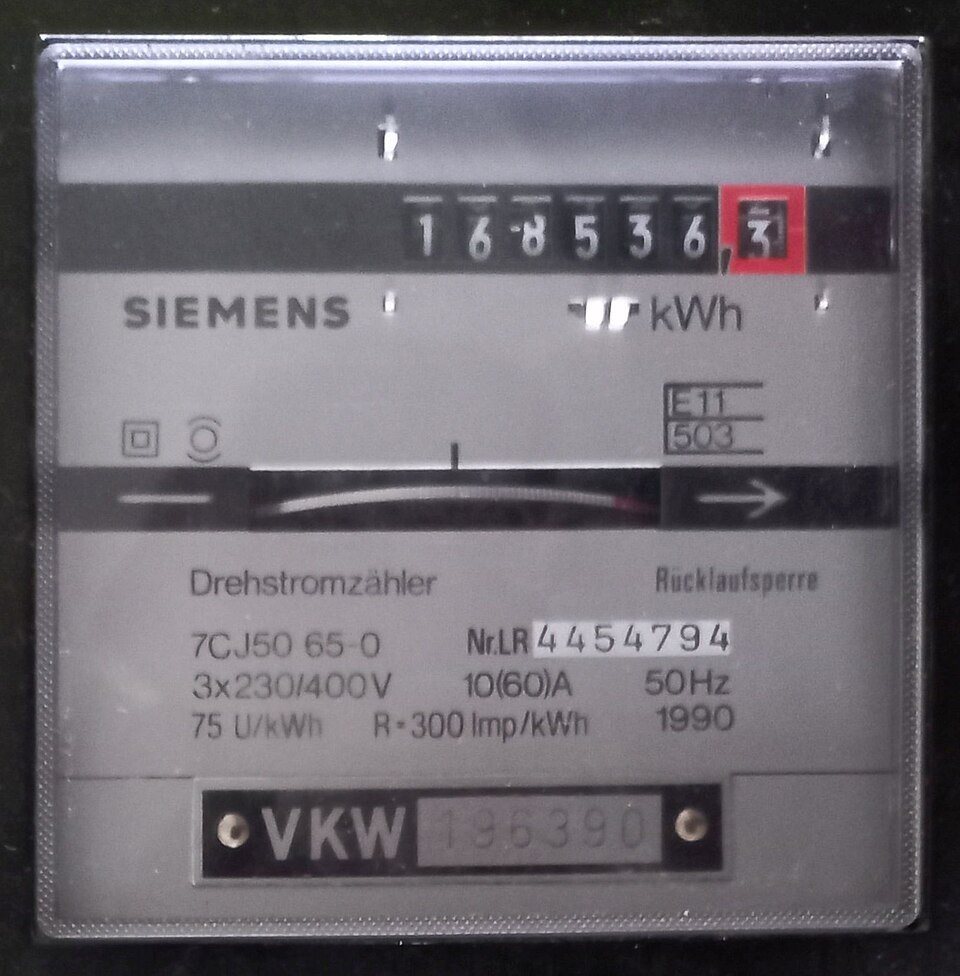
A tiered tariff gives different prices to different portions of consumption. When a household reduces use, the avoided units may come from the higher-priced portion first under a simple increasing-block structure. A bill-wide average can therefore misstate the value of the change.
Read the exact plan before calculating. Not every allowance or credit behaves like the simple two-tier example in this guide, and billing-day or seasonal rules can change the boundary. The purpose is to document a particular tariff calculation, not recommend a plan or claim a universal saving.
Identify whether the plan is actually tiered
Find the official plan name and applicable schedule. Check whether the bill uses increasing consumption blocks, a baseline credit, time-of-use periods or a combination. Similar terms do not guarantee identical arithmetic. Record the mechanism in plain language before entering numbers.
PG&E — Baseline Allowance explains the factors used for PG&E's baseline allowance. It is a supplier-specific example, not an allowance to apply elsewhere. Use your own territory, service type, season and account eligibility where those are relevant to the actual tariff.
Do not infer the threshold from a single bill's quantity in the first rate line without checking the rules. A short period or mid-cycle change may produce a prorated amount. Save the dated schedule or official explanation so a later comparison can reproduce the boundary rather than relying on memory.
When copying a daily allowance, retain its unit as kWh per day and the number of eligible days beside it. A threshold entered without those inputs is difficult to audit when the next bill has a different length.
Establish the period-specific allowance
Record the billed days and any daily allowance used to form the threshold. If the tariff specifies a daily quantity, multiply by the correct eligible days, preserving separate seasonal or rate segments where required. Do not use a thirty-day month automatically.
PG&E — Electric Rule 9: Rendering and Payment of Bills illustrates that billing intervals and proration can require utility-specific treatment. The current account's official rules control the calculation. If the bill's allowance differs from your simple multiplication, ask about the stated basis rather than immediately declaring the supplier wrong.
Keep actual and estimated energy status visible too. A precise allowance does not make an estimated period's total consumption precise. When a catch-up correction reallocates earlier use, the tier treatment may need a separate explanation. Preserve final statement versions and avoid pricing a correction as though it all occurred in the latest period.
- Copy the applicable daily or cycle allowance from the exact account’s official rules.
- Calculate each scenario’s quantities below and above the relevant boundary separately.
- Verify that block quantities reconcile to total kWh and that two cost-difference methods agree.
Define the baseline and proposed total
Use one consistent period and scope for both scenarios. The baseline is the consumption without the proposed change; the comparison is the consumption after it under the same tariff assumptions. A different number of billed days changes both use opportunity and potentially the allowance.
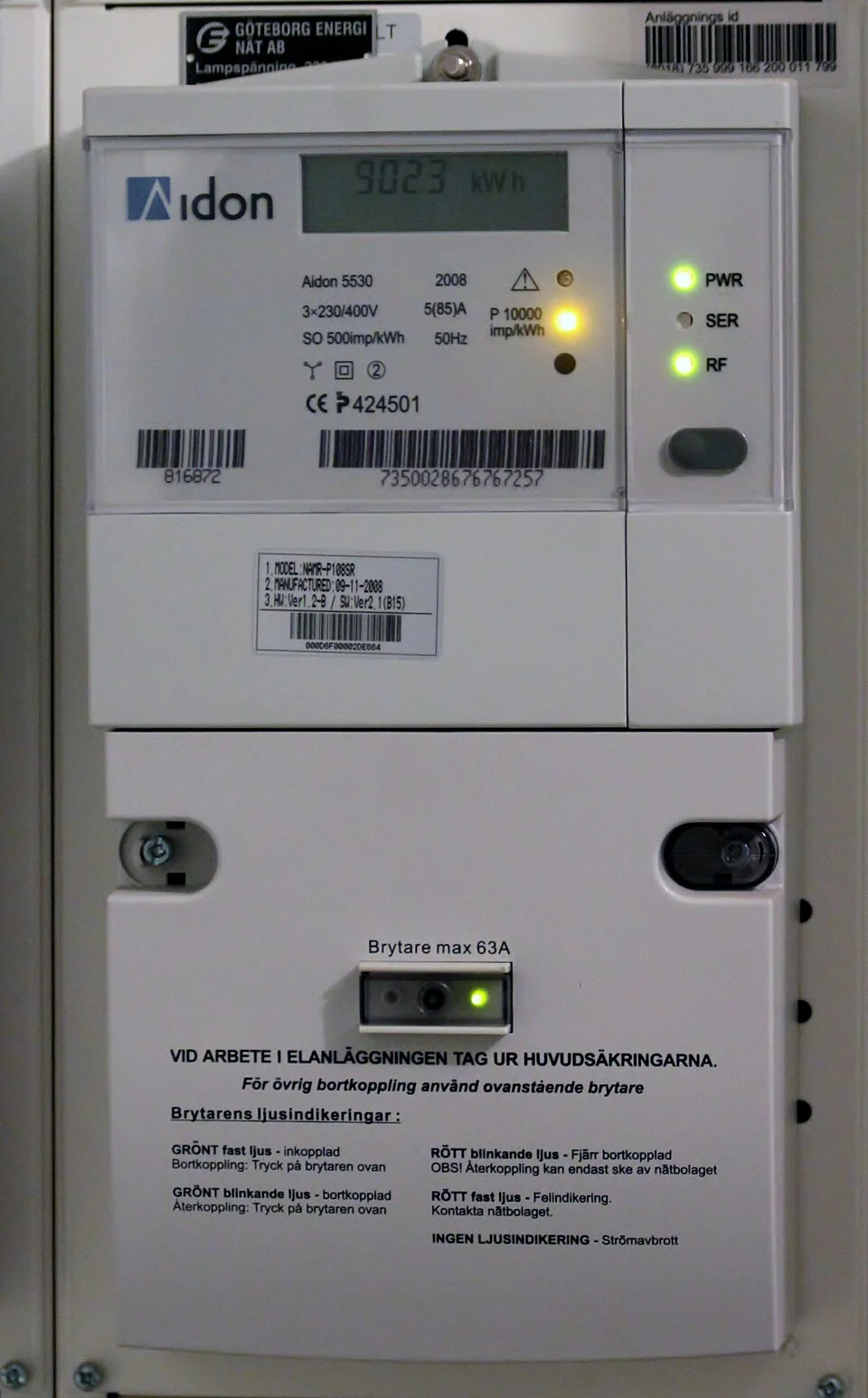
The LCD labels the displayed quantity in kWh, providing an energy-unit reference for the baseline and proposed totals. Preserve the observation period and source of any reduction estimate. Tariff thresholds, fixed charges and the allocation of consumption among blocks come from the applicable account rules, not the meter face.
Photo & usage
Gegik · CC BY-SA 3.0 · Source. Display copies resized and encoded as WebP; no instructional details were fabricated or removed.
Write the reduction in kWh and how it was established. It may be measured, estimated or illustrative. Do not mix an annual appliance-label difference with a monthly threshold without explaining the time allocation. A simple annual average cannot establish which specific month's tier would be affected.
The PG&E — Understand Your Bill glossary distinguishes several billing concepts that can coexist on one statement. Keep fixed charges, credits and timing effects separate from the tier calculation unless the relevant rules are explicitly included. A complete bill prediction may require more than the two energy prices used in this workshop.
Calculate an illustrative reduction across the boundary
All quantities and USD prices here are illustrative. The first 300 kWh cost USD 0.18 each and additional kWh cost USD 0.28. At 380 kWh, the energy charge is 300 × USD 0.18 + 80 × USD 0.28 = USD 54 + USD 22.40 = USD 76.40.
A 100 kWh reduction brings use to 280 kWh, costing 280 × USD 0.18 = USD 50.40. The difference is USD 26. Of the reduction, 80 kWh avoid USD 0.28 and 20 kWh avoid USD 0.18: USD 22.40 + USD 3.60 = USD 26.
Multiplying all 100 kWh by the higher rate would predict USD 28 and overstate the example by USD 2. Multiplying by the original blended rate of about USD 0.2011 would understate it. The correct simple result follows the boundary. It assumes no other tariff feature changes and does not describe any actual supplier's current prices.
Check additions as carefully as reductions
For an added appliance or activity, allocate new consumption from the baseline upward. If baseline use is below the threshold, some added units may use the lower rate before later units enter the higher block. Do not automatically price every additional kWh at the highest listed rate.
Document whether the threshold itself changes between scenarios. A service or eligibility change may alter the rules, and that is a different comparison from adding one appliance under unchanged conditions. Keep such scenarios separate so the result remains understandable.
Where time-of-use pricing also applies, identify how the allowance or credit interacts with the time periods. The simple increasing-block example may no longer reproduce the actual bill. Obtain the supplier's method rather than inventing an order that seems intuitive. State when your calculation is only a simplified screening estimate.
Use a range when future consumption is uncertain
A household close to a threshold may fall on either side in different months. Compare plausible baseline quantities under the same verified tariff rather than claiming one exact annual saving. Keep each scenario labeled and show which assumptions place the change in each block.
Do not treat a short observation as proof of a full year's consumption. Weather, occupancy and seasonal equipment use can alter the baseline. If the proposed change is small, uncertainty about the starting position may matter more than extra decimal places in the rate.
Use the result to decide whether better data would change the practical decision. If all plausible scenarios support the same modest conclusion, further precision may add little. If the choice depends on crossing the boundary, gather more representative records before committing money based on the most favorable scenario.
Check a daily allowance against the actual period length
A daily allowance changes the block boundary when billed days change. In an illustrative tariff allowing 10 kWh per day, a 28-day period creates a 280 kWh threshold while a 33-day period creates 330 kWh. The difference is 50 kWh even though the assumed daily rule is unchanged.
At 310 kWh, the shorter illustrative period places 30 kWh above its threshold, while the longer period leaves all 310 within its threshold. This comparison does not imply the household changed behavior or that the longer period is a better plan. Its average daily use and the actual tariff conditions still need separate examination.
When a season changes inside the cycle, preserve the appropriate days and quantities for each segment if the official rules require that treatment. Do not select whichever single daily allowance makes the bill look most favorable. The source of each threshold belongs in the record so a later correction or different cycle length can be recalculated consistently.
Complete the tier record with a reconciliation
Add the block quantities and confirm they equal the total consumption in each scenario. Add the block charges and confirm the difference matches the independently priced changed units. This double check catches many boundary and subtraction mistakes.
Save the plan, period days, threshold basis, rates and evidence for the changed kWh. Keep fixed and other charges outside the result unless modeled explicitly. State the conclusion as an energy-charge comparison under those conditions, not a guaranteed change in the next payment.
Completion means every changed unit has a clear price assignment and the boundary can be reproduced from primary tariff information. Revisit the calculation when rates, allowance rules or baseline consumption changes. The reliable decision record follows the tariff's structure instead of replacing it with an average.
THE REFERENCE FILE
Sources & scope
Documentation reviewed 1 Nov 2026. Examples are illustrative; this article does not claim hands-on product testing. Follow the instructions for your actual material, model and location.