A wood-look kitchen, a dull hallway and a polished stone entrance may all need cleaning, but they do not need the same treatment. Before choosing a bottle or machine, establish what surface the dirt is sitting on. A cleaning method must suit the existing finish, its condition and the joints around it.
Use the following process to make a separate decision for each floor. The useful result is a small care record: identified surface, approved product, permitted application method and a clear reason to stop.
Find the finish before choosing the cleaner
Start with paperwork: an installation invoice, leftover carton, product code or refinishing receipt. A flooring brand alone is insufficient because one manufacturer may sell several materials. Record the exact range and, for refinished wood, the coating applied most recently. Ask the installer or previous owner whether anything has been added since installation.
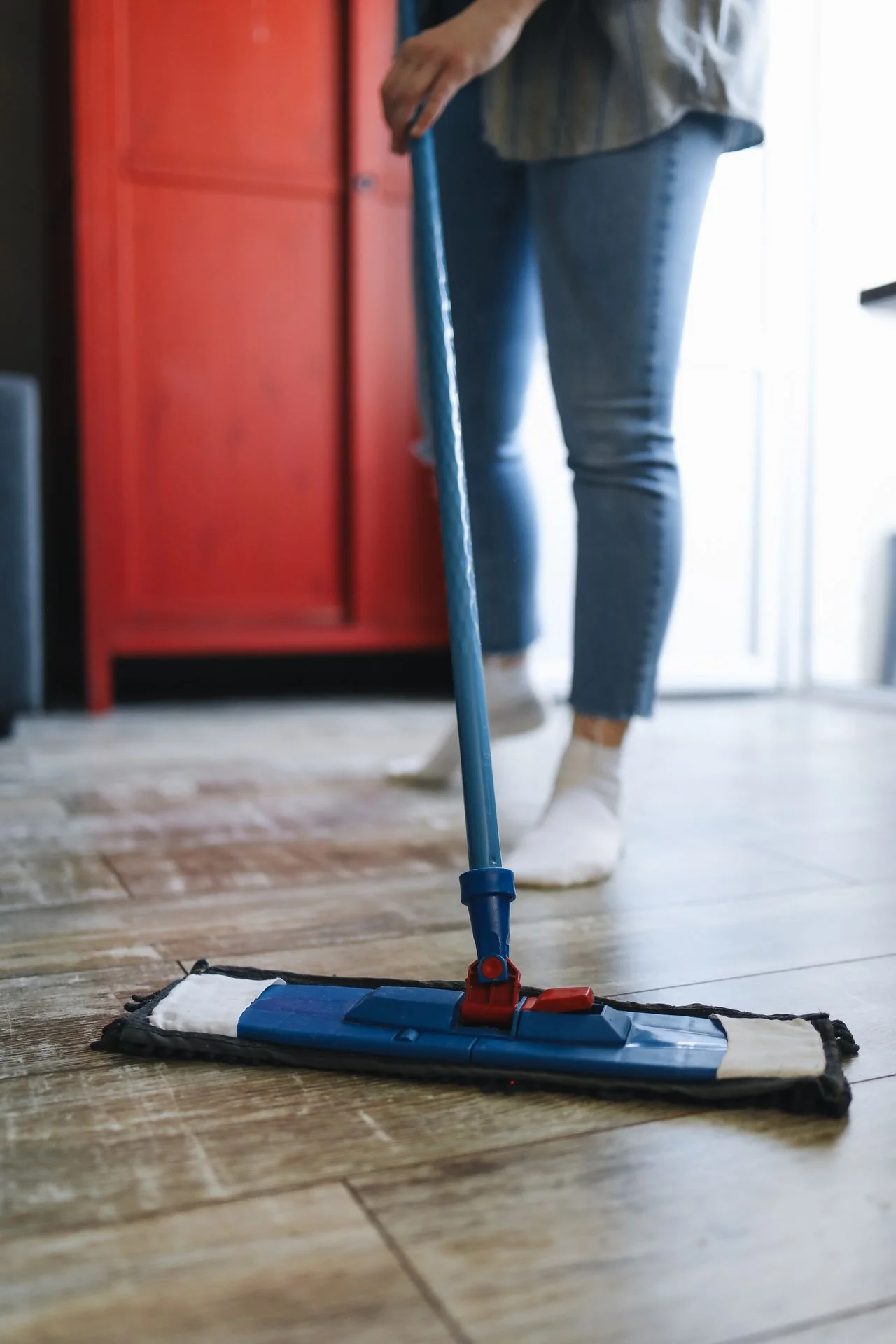
A wood-looking floor can have different materials and coatings. Locate the product or finish instructions before copying the cleaning action shown; a photograph cannot grant permission to wet-mop or steam-clean it.
Photo & usage
Polina Tankilevitch · Pexels License · Source. Display copies resized and encoded as WebP; no instructional details were fabricated or removed.
Keep material and finish in separate lines. For example, “engineered oak” identifies the construction but leaves the cleaning question open. The care instructions might instead identify a lacquer, penetrating oil or hardwax oil system. Likewise, a stone name does not identify a later topical coating.
Inspect without disturbing the floor. Look at existing visible edges and compare a sheltered area with the walking route in daylight. Note patchy shine, peeling, open joints and raised edges; these are observations to report, not a way to certify the finish. Do not lift boards, scratch the coating or apply solvents to identify it.
Bona's waxed-floor guidance acknowledges that oil and wax finishes can be difficult to distinguish by appearance and feel. A water-beading experiment would not give you the missing product specification either. Until identification is reliable, remove loose grit gently with a clean, soft dry tool and postpone liquid cleaning.
Give each surface its own cleaning boundary
Walk the route you normally mop and mark the changes on a quick sketch. Include narrow stone borders, timber thresholds and any repair patches. Decide where each wet-cleaning pass will end before starting. A compatible cleaner for the main floor may still be unsuitable for its border.
| Confirmed surface | Permission to look for | Assumption to avoid |
|---|---|---|
| Coated wood | Cleaner approved for the named finish | Every hardwood cleaner suits every coating |
| Oiled, waxed or hardwax-oiled wood | Instructions for that particular finish system | Similar appearance means interchangeable care |
| Laminate or vinyl | Exact range's cleaner and equipment instructions | Water resistance authorizes any wet machine |
| Natural stone | Stone identity and coating or sealer compatibility | Sealed stone tolerates acidic cleaner |
| Ceramic or porcelain tile | Tile, grout and any sealer's care instructions | The tile's tolerance applies to every joint |
Prepare separate clean pads for different methods. Put only the product needed for the current zone beside your tools. This makes the decision easier to follow when crossing a doorway, particularly if another person shares the cleaning.
For wood, match the coating and control the liquid
The National Wood Flooring Association's maintenance guidance recommends dry debris removal, prompt attention to spills and a cleaner intended for the floor's finish. It advises against wet mops and steam mops. That is a useful boundary for both solid and engineered wood.
For an identified, intact coating, get its approved cleaner and read whether it is ready to use or requires dilution. Follow the specified application method with a clean pad. Do not substitute an oil treatment because the timber looks pale, or a shine product because a traffic lane looks dull. Cleaning and renewing a finish are separate decisions.
For an oil, wax or hardwax-oil finish, obtain instructions for that named system before buying liquid cleaner. If the finish is unknown, send photographs and any receipts to a flooring professional and ask specifically what routine cleaner is suitable. An answer about the wood species does not resolve the coating question.
Where the coating is visibly broken, keep routine liquid cleaning away from that patch and request an assessment. Photograph the area first so that changes are easier to explain.
For laminate and vinyl, read equipment permissions literally
The Pergo Original Laminate maintenance leaflet distinguishes between product groups. It specifies slightly damp microfiber cleaning and restricts its steam-cleaning permission to a particular AquaSafe group, with operating conditions. It also rejects waxing and polishing. Permission for that group cannot establish permission for unidentified laminate elsewhere.
Before using a robot mop or powered washer, check that the floor instructions authorize the equipment type and that the machine can meet the stated conditions. A machine's hard-floor setting does not identify your floor. If the instructions leave this unresolved, use the approved manual method while asking the flooring manufacturer.
Armstrong Flooring's residential FAQs explain that its no-wax floors have a factory coating that needs no waxing. They reject abrasive cleaners, paste wax and certain shine products for vinyl, while allowing specific polishes in some circumstances. The lesson is to check the particular product, rather than turning either “always polish” or “never polish” into a rule for all vinyl.
Keep a note of the floor's product code with the machine instructions. If permission depends on a feature you cannot confirm, leave the equipment unused.
For stone and tile, include the joints in the decision
The Natural Stone Institute's care guidance recommends neutral stone cleaning, warns against acidic products and explains that an impregnating sealer improves stain resistance without making stone stain-proof. Vinegar is therefore a poor default for a stone floor, including one described as sealed.
Choose a stone cleaner compatible with any known coating. Follow its directions for application and rinsing, then dry as directed. Keep the treatment within the stone zone. The Institute also distinguishes acid etching from staining: a dull mark may need restoration rather than more washing.
For ceramic or porcelain, collect the grout and sealer instructions alongside the tile instructions. If their requirements conflict, ask the installer for a compatible method. Do not import a descaling technique from a shower fitting onto an unidentified floor.
In a hypothetical entrance with porcelain tiles and a marble border, authorize each area separately. Keep the first tile-cleaning pass short of the border and clean the border with its own approved method. If that separation is impractical, ask the suppliers for one method compatible with the entire assembly.
Use a small area to check the chosen method
Once you have compatible instructions, gather the approved cleaner, its measuring device if needed, clean pads and a dry cloth. Clear a manageable area and leave a route out. Use one cleaning product; do not add a second product to alter its performance.
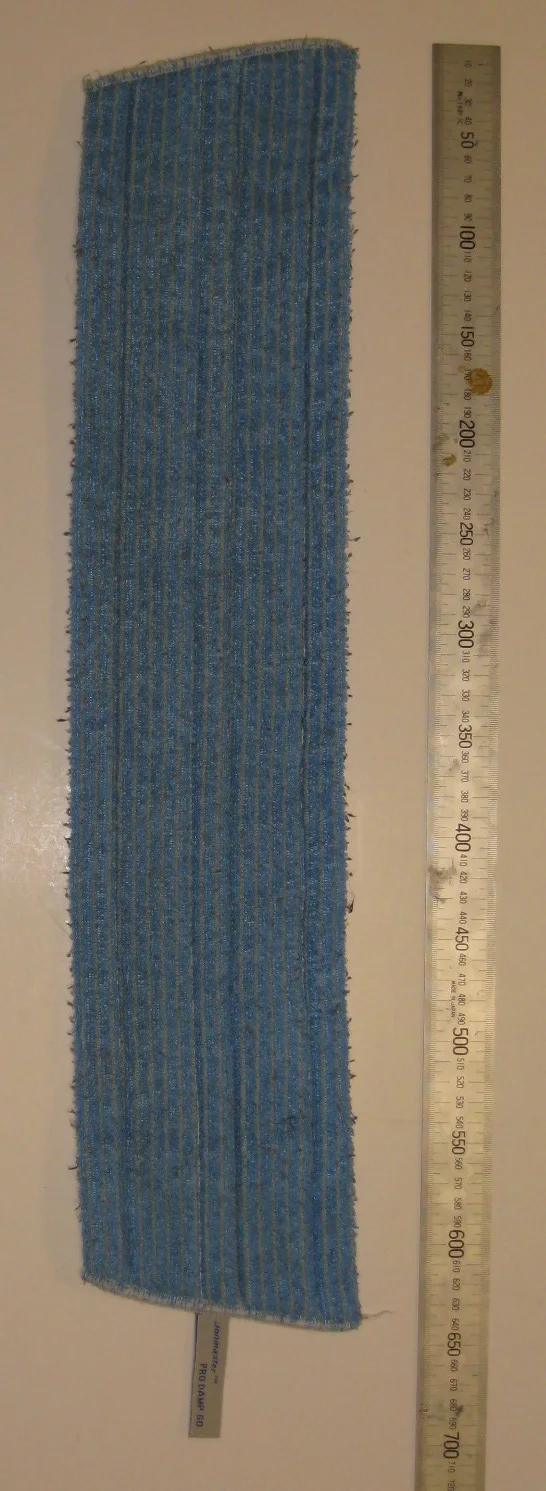
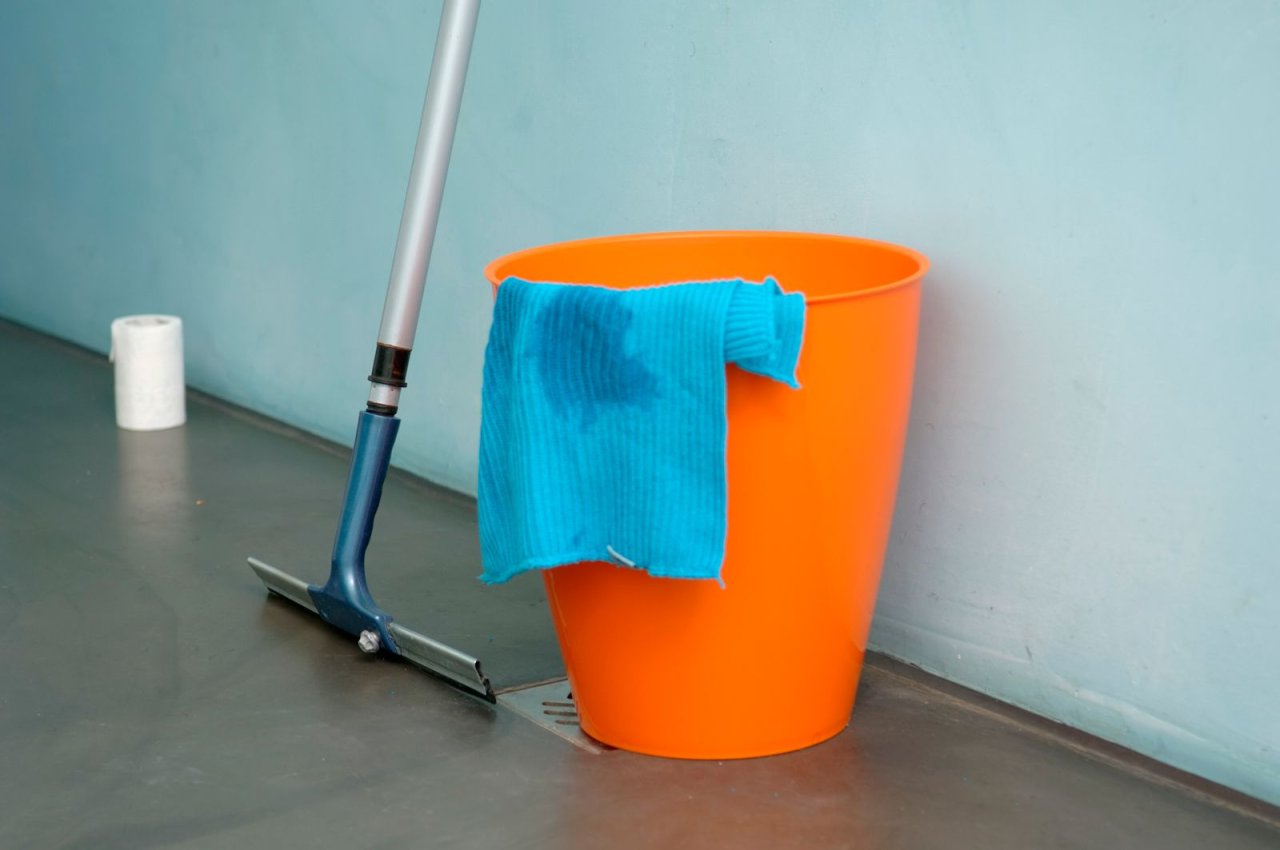
The exposed pad face and perimeter show where to check for grit, damaged loops and embedded debris before floor contact. Select the pad and cleaning method permitted for your identified finish. The ruler provides object context; neither the pictured size nor the product label establishes suitability for another mop or floor.
Photo & usage
Bjornwireen · Public domain · Source. Display copies resized and encoded as WebP; no instructional details were fabricated or removed.
- Remove loose debris with the floor-approved dry tool. Check the pad or brush for trapped grit before proceeding.
- Choose an inconspicuous area with representative, intact finish. Record its appearance before cleaning. This checks the proposed method; it does not identify an unknown finish.
- Prepare and apply the cleaner exactly as directed. Keep any required dilution measurement separate from guesswork about bucket size.
- Complete the prescribed wiping, rinsing or drying. Do not introduce an extra rinse where the instructions specify a different method.
- Wait until fully dry, then inspect from the same position and lighting. Look for new haze, changed sheen, tackiness or edge changes before extending the method.
For a hypothetical trial area of 2 square feet, approximately 0.19 square metres, the dimension merely limits how much floor receives the first pass. It is not a cleaning-product dose or a recommended coverage rate.
If the result is satisfactory, continue in areas you can finish without leaving liquid unattended. Change dirty pads rather than extending their use across another room. Record the successful method in ordinary language that someone else can repeat.
THE WORKING FILE / DECISION
A doorway is also a cleaning boundary
Suppose a room contains sealed wood, a stone threshold and a fitted resilient-floor area. All three may appear smooth and water-resistant, yet that appearance does not identify the coating or approve a cleaning product. Give each zone a record before treating a stain that crosses the doorway.
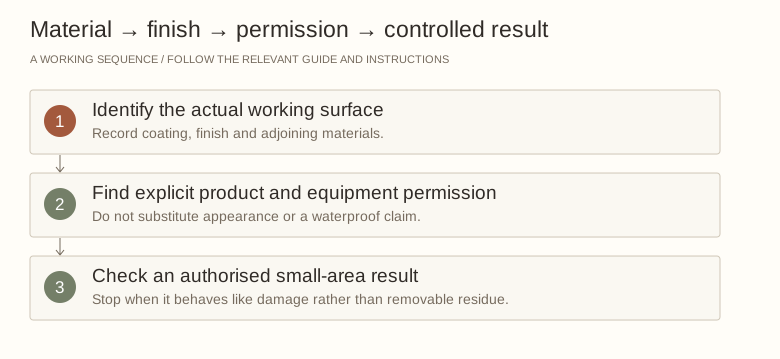
Wood
- Information still required
- Coating / wax status and approved method
- Action while unresolved
- Remove loose dry dirt by an appropriate non-damaging method
Stone threshold
- Information still required
- Stone identity, finish and acid restrictions
- Action while unresolved
- Keep adjacent treatment runoff off the threshold
Resilient flooring
- Information still required
- Exact product and equipment permissions
- Action while unresolved
- Do not infer steam permission from “waterproof” wording
Read the result
This boundary record prevents a safe instruction for one surface from becoming an unsafe shortcut on its neighbour. NWFA guidance rejects wet and steam mopping for wood and directs owners to finish-appropriate products. A clean small trial establishes only the result at that location under those conditions; it cannot grant permission that the manufacturer withholds.
Your decision record Blank worksheet
Build a permission record for each finish instead of applying one cleaner to the whole floor.
- Room / zone
- ________________________________
- Material
- ________________________________
- Finish / coating
- ________________________________
- Manufacturer document
- ________________________________
- Permitted cleaner
- ________________________________
- Prohibited equipment
- ________________________________
- Small-area result
- ________________________________
- Runoff boundary
- ________________________________
- Refer if
- ________________________________
Before closing the file
- The finish, not only the material, is identified.
- Equipment permission is explicit.
- Neighbouring finishes are protected.
Stop when the problem stops behaving like dirt
If the trial leaves haze or tackiness, pause instead of increasing concentration. Recheck the product, dilution and pad. Ask the manufacturer how to correct a possible residue; avoid experimenting with a second cleaner. Persistent dullness alone does not establish that the floor is still dirty.
New whitening, peeling, raised seams or swelling ends the trial. Blot remaining liquid without scrubbing and contact the installer or a qualified flooring specialist. Photograph the change and supply the product name, application method and any known earlier treatments. Do not repeat a failed pass to see whether the problem disappears.
Finish the care record with the exact product, dilution or ready-to-use status, tool, rinsing requirement and stop conditions. Leave unresolved surfaces marked “dry care pending identification.” That gives the next cleaning session a dependable starting point without turning uncertainty into a whole-room experiment.
THE REFERENCE FILE
Sources & scope
Documentation reviewed 1 Nov 2026. Examples are illustrative; this article does not claim hands-on product testing. Follow the instructions for your actual material, model and location.