A muddy trouser hem contains more than a brown stain. Grit can sit inside the turned edge, under stitching and against the opposite leg. Rubbing the wet hem vigorously may move that grit across the fabric rather than remove it. Treat the job as two stages: remove loose material without abrasion, then wash the compatible garment and inspect what remains.
Decide whether this is ordinary mud
Establish where the trousers were worn. Ordinary garden or path mud fits this household workflow; sewage, floodwater, unknown chemicals and oily industrial deposits do not. Keep unusual contamination separate and seek guidance appropriate to the substance. Do not bring a contaminated work garment into the family wash merely because the deposit looks like soil.
Read the care label and inspect the material. A coated rain trouser, wool suit and ordinary washable work trouser may require different treatment. GINETEX explains care symbols, including prohibited washing, but a symbol guide does not identify a missing label. Ask the manufacturer when the actual instructions are unclear.
Empty pockets and check for sharp objects before handling the hem. Photograph any existing tear, frayed edge or worn crease. These details matter later because cleaning can reveal damage previously hidden beneath mud, and another wash cannot reconstruct fibres already worn away.
Set up a contained dry-soil stage
Place the trousers over a washable tray or another suitable surface away from clean laundry. For an ordinary washable fabric, allow surface mud to dry enough to loosen, unless the garment's instructions require a different response. Avoid using a heater to accelerate this stage. Keep the hem supported rather than hanging grit over a carpet.
Gently flex the fabric and lift loose material with a soft, appropriate brush if the textile tolerates it. Do not attack a delicate weave with a stiff nail brush. Work along the turned hem and inspect the inner fold. Stop if brushing raises fibres, changes sheen or catches loose stitching.
Collect the dislodged soil and dispose of it without shaking the trousers around the room. This step should reduce the bulk of the deposit; it need not remove every coloured shadow. Trying to make the dry fabric spotless can create abrasion before the washing stage has even begun.
Open the folds without dismantling the garment
Turn the lower leg inside out and look along the seam allowance and cuff. Use good light rather than probing blindly. Remove accessible loose grit gently, but do not unpick a sewn hem to chase a few particles. Construction changes belong to repair work, not an improvised cleaning session.
Check the opposite leg, socks and pockets for transferred soil so the same material does not return during loading. Keep shoes and muddy accessories out of this wash. Their different construction and contamination can complicate a straightforward trouser job.
If material remains packed into an inaccessible fold, consider a label-permitted rinse or soak according to the relevant laundry product. ACI's mystery-stain article identifies hems as a useful soil-location clue, while its general laundry advice separates heavy soil. Neither means that every muddy item needs prolonged soaking. The fabric and product limits decide whether that step is appropriate.
Treat the residual mark within a single plan
Once loose soil is removed, examine what remains. A broad brown area without surface grit may be ready for a compatible laundry pretreatment. A shiny scrape, pale crease or hole is a different problem. Mark those observations in your note without putting ink on the garment itself.
Select a permitted stain product or detergent and test an inconspicuous area. Follow its timing and rinse requirements. Do not spread undiluted product across the whole lower leg simply because several small patches are present. Application should match the instructions and the remaining soil.
Avoid combining products to compensate for an uncertain stain. If ordinary mud has an unexpectedly greasy component, record that discovery and reconsider the source. Keep a clear boundary between one supported treatment and an escalating series of unrelated stain remedies. That makes a professional handover easier if the mark persists.
Wash for the soil without sacrificing the fabric
Group the trousers with items compatible in care, colour and soil level. ACI advises separating heavily soiled laundry from lightly soiled pieces. Clean away the bulk mud first rather than relying on a large mixed load to distribute it harmlessly. Respect your washer's programme-specific load instructions.
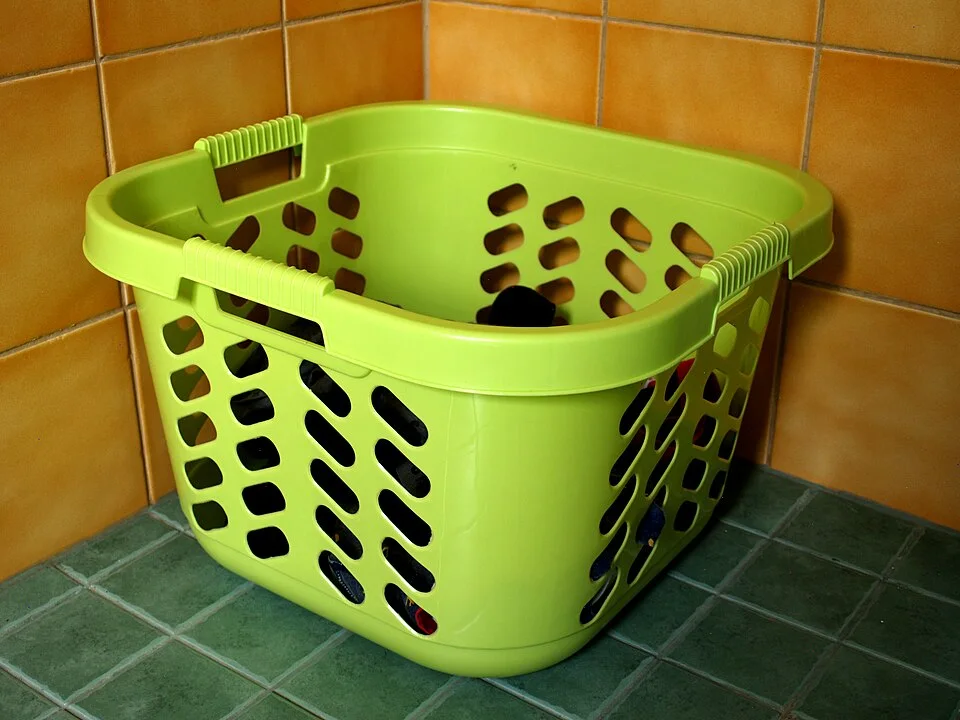
The basket provides a distinct holding place for a selected group of clothes. Keep heavily soiled trousers apart from lightly soiled items after removing loose mud, then compare garment care, colour and soil level before loading. The photograph does not show mud removal or establish that these garments share a wash setting; use your labels and the washer’s programme-specific limits.
Photo & usage
Santeri Viinamäki · CC BY-SA 4.0 · Source. Display copies resized and encoded as WebP; no instructional details were fabricated or removed.
Measure the appropriate detergent and select the garment-permitted settings. A temperature ceiling is a limit, not proof that the hottest permitted wash is always necessary. Conversely, a very mild process may be insufficient for the soil if the fabric requires professional care. Resolve that mismatch instead of overriding the label.
At unloading, inspect the drum opening and any other garments for transferred soil. Hold the trousers for inspection before heat drying. Turn each cuff again: the outside face can look clean while the inner fold still contains a gritty line. If the washer shows a persistent drainage or cleaning problem, follow its manual rather than repeatedly running muddy loads.
Compare the two hems after drying
This comparison is illustrative and invented. It describes observations after a care-compatible wash and permitted air drying, not results from testing a product. The right and left hems began with similar visible mud, but only one had a worn fold.
| Area | Dry observation | Meaning for the next step |
|---|---|---|
| Right outer hem | Brown shadow; surface feels unchanged | Review residual soil treatment |
| Left outer hem | Pale shiny ridge at fold | Consider abrasion; do not scrub harder |
| Inner cuff | Loose grit still present | Remove accessible grit before another wash |
The observations do not identify every brown mark chemically. They separate a treatment question from a material-condition question. Look across the same crease under angled light and compare it with an unworn section. If a rough area catches the cloth, stop rubbing. A tailor or cleaner may help decide whether repair or acceptance is more sensible than further washing.
Inspect the brush before its next garment
A brush used on muddy work trousers should not move directly to a fine dark hem. Check the bristles and their base for hard particles, broken tips and compacted soil. Clean it by the tool maker’s permitted method and let it dry before storage. Label its purpose if several similar brushes live together.
When the same trousers return from another muddy trip, compare the deposit before repeating the previous plan. Sandy grit, clay-like mud and a greasy roadside splash may look similarly brown but require different questions. Keep the earlier successful route as a reference rather than a universal recipe. If the new deposit feels oily or has an unknown source, stop at containment and identification. The previous record establishes what you did last time, not what this new material contains.
Restore the trousers and the landing area
Check the dry cuffs, pocket corners and waistband before storage. Confirm that no gritty deposit transfers to a clean hand or suitable cloth. If a residual stain remains, write down the product and settings used and keep the garment outside the routine ironing pile until its next step is chosen.
Clean the tray, brush and nearby floor so loose mud does not migrate back to fresh laundry. Wash the cleaning tools according to their own instructions and let them dry before storage. The landing surface should be ready for another ordinary muddy item without retaining the previous deposit.
Consider whether the trouser length repeatedly drags through soil. A suitable alteration or different outdoor garment may reduce the recurring hem problem, but make that choice after the fabric's condition is clear. The cleaning task is complete when soil removal, remaining damage and any repair decision have each been checked explicitly.
THE REFERENCE FILE
Sources & scope
Documentation reviewed 1 Nov 2026. Examples are illustrative; this article does not claim hands-on product testing. Follow the instructions for your actual material, model and location.