Find the dates that bound consumption
A higher water bill may cover more days than the previous one. Before looking for a changed household habit, identify the start and end meter dates and the number of service days. The issue date, payment deadline and date the bill reached your inbox do not necessarily describe that consumption interval.
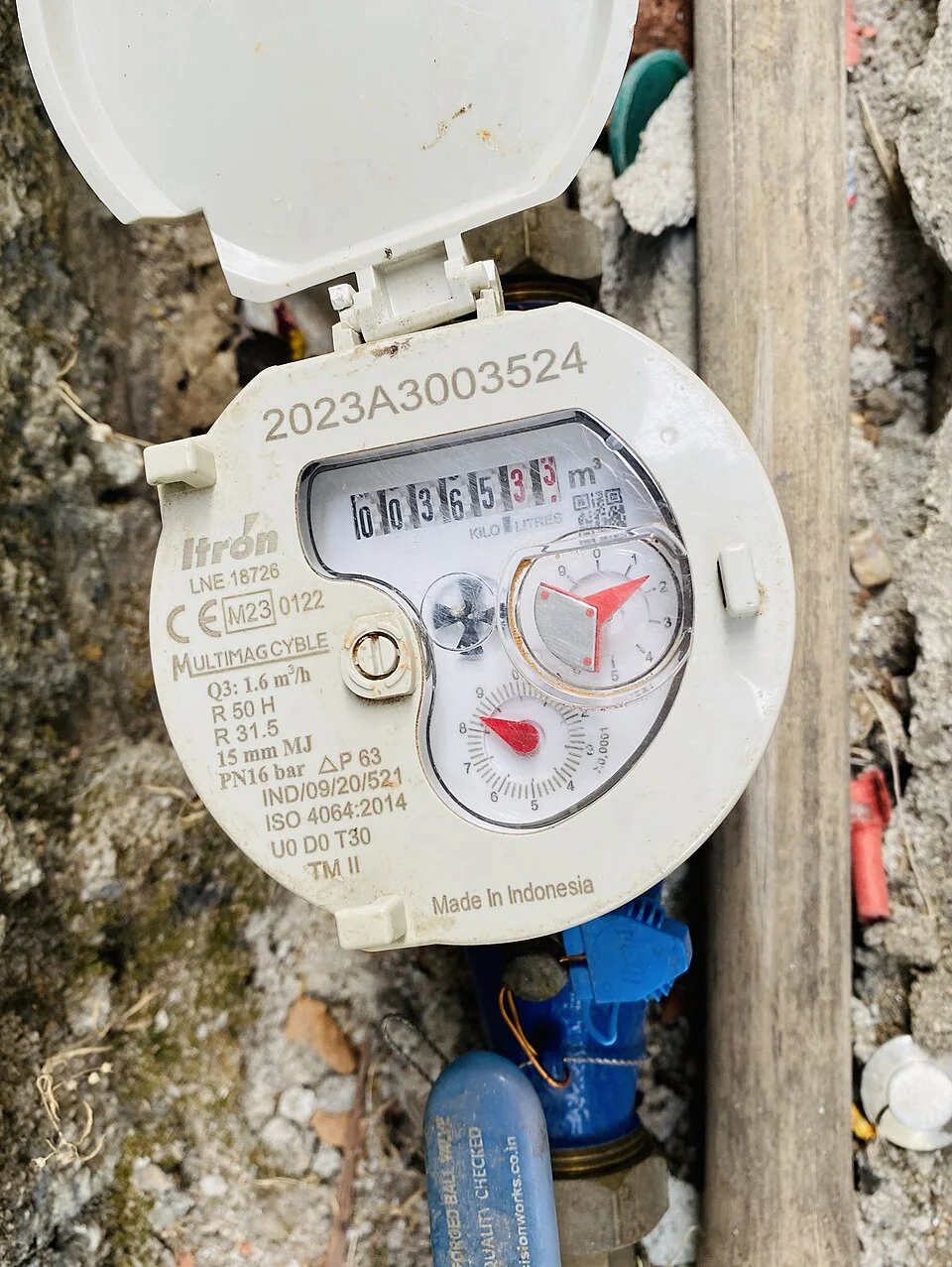
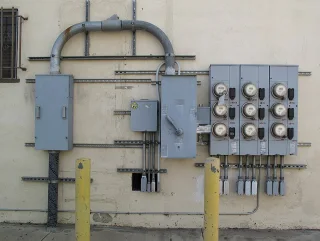
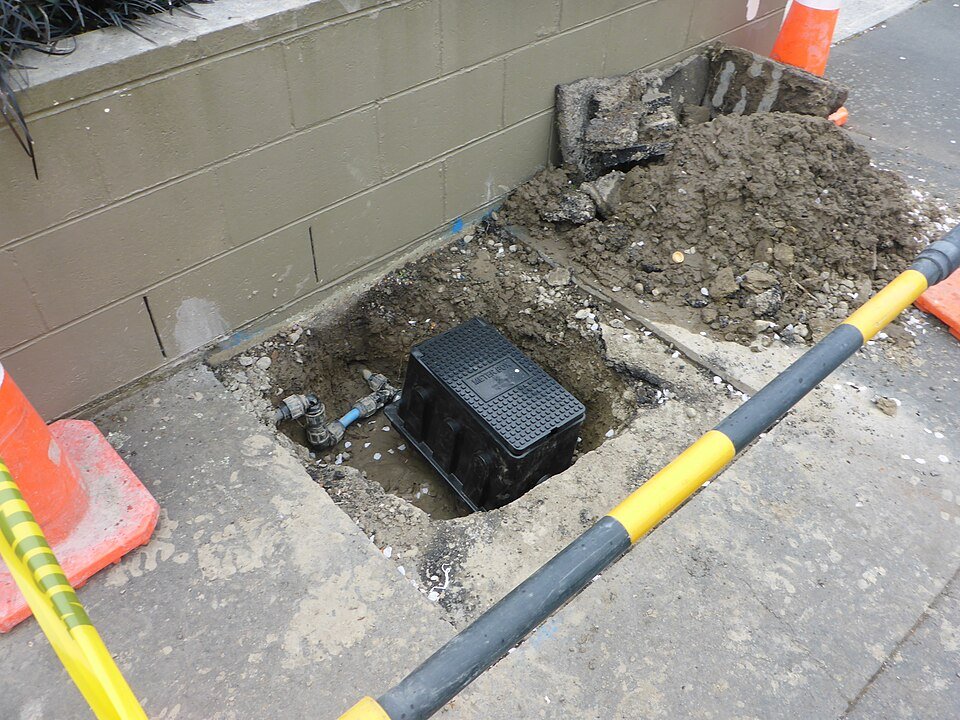
The visible mechanical register and identifier provide a reference for an actual water observation. Record when the reading was taken and compare it with the statement’s opening and closing meter dates. The meter face itself cannot supply the service-day count, issue date or payment deadline used by the utility.
Photo & usage
Ganesh Dhamodkar · CC BY 4.0 · Source. Display copies resized and encoded as WebP; no instructional details were fabricated or removed.
Copy the utility's stated service-day count where supplied and note its convention. If you calculate days yourself, use one consistent elapsed-day method and resolve any difference with the bill. Do not mix inclusive calendar counting in one period with elapsed days in another.
Miami-Dade's bill guide identifies service dates, readings and days of service as separate fields. EPA's bill guide provides wider context for consumption and charges. Use those examples to locate information, then follow your own supplying utility's definitions.
Compare volume before money
Extract consumption in a single verified unit for each period. Keep fixed charges, rates and account adjustments outside this first comparison. A price change can raise the bill without any increase in water use, while a longer service period can raise both volume and recurring charges.
Record whether the readings are actual or estimated. DC Water explains that estimates may be based on previous consumption when an actual read is unavailable. A period based on estimates should not be treated as a direct measurement of a newly changed routine.
Keep the original bill values and add derived columns alongside them. Do not overwrite a quarterly total with a daily average, because the original figure is needed to reconcile the statement and identify later corrections.
Calculate an equal daily rate from unequal totals
This illustrative comparison uses 12 cubic metres over 30 days in one period and 14 cubic metres over 35 days in the next. The first average is 12 ÷ 30 = 0.4 cubic metre per day. The second is 14 ÷ 35 = 0.4 cubic metre per day.
Both equal 400 litres per day. Total volume rose by 2 cubic metres, or about 16.7 percent, while average daily volume remained unchanged. The longer interval fully explains the volume difference under these invented inputs.
This does not prove identical daily behaviour. A high-use weekend and a low-use absence could produce the same average. It also does not explain a charge difference until rates and billing rules are checked. The calculation is a first filter that prevents an unequal period from being mistaken for a change in daily demand.
Add occupancy without making it the only explanation
Note guests, absences and changes in the number of residents during each interval. If person-days are useful, calculate them from actual occupancy and state what that measure includes. A visitor staying overnight may still use water outside the home, so person-days are a normalising aid rather than a complete model.
Keep outdoor watering, pool filling and other property uses visible. Those uses do not necessarily scale with the number of residents. A lower per-person figure can coexist with increased total property consumption when occupancy rises.
Avoid comparing the household to a national average as a diagnostic verdict. Different climates, property types and shared services affect demand. Use the household's own comparable history first, and investigate a material unexplained change with the utility or relevant professional.
Mark events near the reading boundary
A large laundry day, tank fill or visitor departure close to the meter date can fall into different periods from year to year. Record the event and date if known. Do not move the consumption between bills manually unless the utility provides an approved correction.
If a period spans a move or meter replacement, obtain the relevant closing and opening information. A simple difference between two displayed numbers may no longer represent one continuous register. Keep the discontinuity explicit.
For portal data, check whether daily values refer to calendar days, a utility read window or another interval. Align the comparison with that definition. A midnight household note cannot be assumed to match a chart labelled only with a date.
Use annualised figures only as scenarios
Multiplying a daily average by 365 gives a scenario based on that interval, not a forecast that every season will behave the same way. Mark it as illustrative or conditional and include the source period.
For example, the invented 400-litre daily average would produce 146,000 litres over 365 days. If the observed period included unusual outdoor watering, that projection may be unrepresentative. Prefer a full year of comparable actual records where available.
Do not turn a short period into a guaranteed saving or a reason to replace an appliance. First ask whether the difference persists across comparable intervals and whether the suspected activity is actually measured. Daily normalisation narrows the question; it does not identify a cause by itself.
Prepare a focused billing question
If the utility's service-day count or read interval seems inconsistent, collect the bill references, dates, read types and verified units. Provide a clear calculation and ask which convention or adjustment explains the difference.
Keep account balances and payments separate from consumption queries. An amount due may include arrears or credits from another period. A complete household record should retain those lines without letting them distort the water-use trend.
Follow the utility's stated query and payment arrangements rather than assuming a disputed figure can simply be ignored. This article does not determine local rights or deadlines. Its practical contribution is a concise evidence file that lets the utility address the exact date or unit question.
Check the comparison in both directions
Multiply each daily average by its service days to recover the original consumption, allowing for stated rounding. If it does not reconcile, recheck units, dates and transcription before interpreting the trend.
Save the final comparison with a short conclusion: longer period explains the total, daily use changed, or estimates prevent a reliable judgement. List any separate rate question for later analysis.
The comparison is complete when totals, service days and read types are visible together. A higher bill can then be discussed as a set of specific changes rather than one alarming number.
Keep partial occupancy inside the service interval
A first bill after a move may include only part of a normal period. Record the service start date and the actual opening read supplied for the account. Do not divide its consumption by a full calendar month merely because the invoice was issued at month end.
In an illustrative comparison, 4 cubic metres over ten service days equals 0.4 cubic metre per day. Comparing that total directly with 12 cubic metres over thirty days would suggest a two-thirds reduction, although the daily averages are identical. The smaller total simply covers one-third as many days.
Check whether any account-opening fee, deposit or carried balance appears on the first statement. Those lines can make the amount due unusually large despite a short consumption interval. Keep them outside both the daily-volume calculation and a comparison of recurring service charges.
At departure, use the same discipline for the final bill. A later-issued statement may describe use before the household left, while a refund or adjustment may arrive after the account closes. Preserve the meter dates and transaction dates separately. This makes a moving-period comparison understandable without treating every amount received in one month as that month's water use.
THE REFERENCE FILE
Sources & scope
Documentation reviewed 1 Nov 2026. Examples are illustrative; this article does not claim hands-on product testing. Follow the instructions for your actual material, model and location.