Give the label three distinct jobs
A moving label needs to answer where a carton goes, which carton it is and when it should be opened. Writing a long contents list on the top rarely answers those questions well. Tops disappear beneath other boxes, rooms acquire different names and detailed descriptions may expose private belongings in shared corridors.
Use a destination name, a unique carton number and a simple opening priority. Keep the detailed contents in a separate register. Choose plain words that the unloading team can read without decoding a colour system. Colour may support the text, but should never carry the entire meaning.
Agree room names with the people receiving the delivery. A plan using “study” will fail if someone directs the same boxes to “bedroom two.” Put the final room names on a sketch of the destination, and use those exact words on cartons, instructions and door signs.
Number cartons without creating duplicate identities
Choose one numbering sequence for the entire household, or assign clearly different prefixes to separate packers. A central sequence is easiest when one person records the boxes. Prefixes help when rooms are being packed independently, but each prefix must have an owner who avoids reusing numbers.
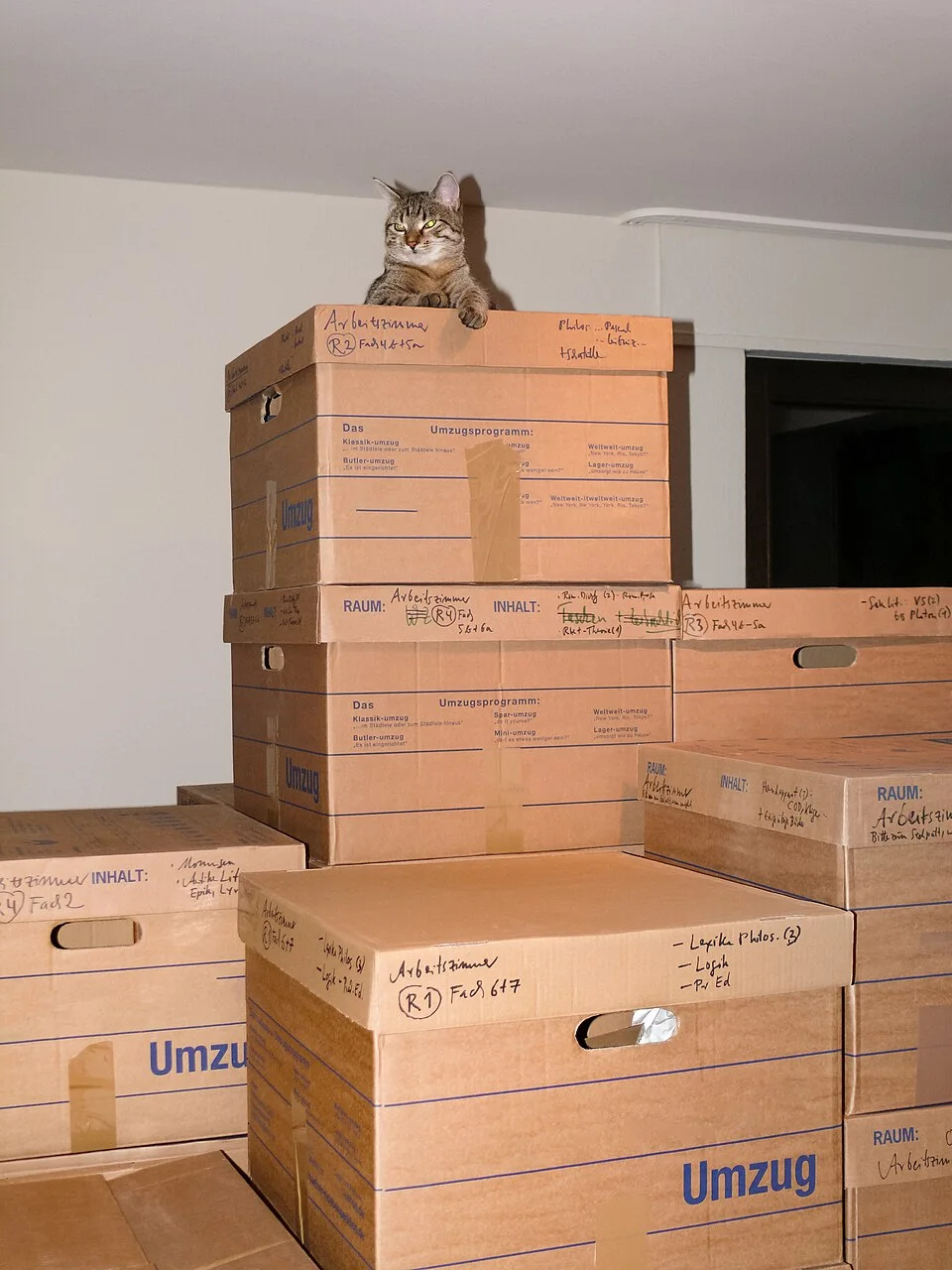
The stacked cartons show writing near top edges and on side faces, so some identifying areas remain visible while others are concealed. Give each carton one unique identity and keep it consistent with the inventory and destination. The scene illustrates label visibility only; it does not establish safe stacking or a suitable place for pets during a move.
Photo & usage
Roman Eisele · CC BY-SA 4.0 · Source. Display copies resized and encoded as WebP; no instructional details were fabricated or removed.
Record a box when it is packed, rather than reserving dozens of numbers and later trying to remember which were used. If a box is emptied and repurposed, update its register entry and remove the old destination labels. Crossing out only one side can leave a convincing but incorrect instruction visible.
Place the identity on more than one visible face, subject to the carton supplier's instructions and without obscuring handling information. Write large enough to read from the normal unloading position. Check labels under the lighting in the hallway, where pale marker ink or elaborate handwriting may be difficult to distinguish.
Make opening priority describe a real deadline
Replace vague labels such as “important” with a small agreed vocabulary: arrival, next day and later. Arrival cartons should support specific immediate tasks, such as making an adult bed or setting out basic bathroom supplies. Documents and items needed during the journey still belong in the personal load.
Limit arrival status by function. If every carton is urgent, the unloading team cannot identify a useful first group. Ask what would actually fail if a particular box stayed closed until tomorrow. A decorative bowl may be precious without being operationally urgent, so record careful handling separately from opening priority.
Do not treat a fragile label as packaging. Ask the mover or packing supplier how the contents need to be protected and which handling marks they use. The label communicates a concern; it does not make a weak carton suitable for glassware or establish the carrier's acceptance of a special item.
Use counts to expose a missing carton
The following illustrative delivery register has four destination groups. Each carton also has an individual identifier, which allows a missing number to be traced without relying on totals alone.
| Destination | Packed | Received | Difference |
|---|---|---|---|
| Kitchen | 12 | 12 | 0 |
| Main bedroom | 8 | 7 | 1 |
| Study | 9 | 9 | 0 |
| Bathroom | 3 | 3 | 0 |
The household packed 32 cartons and received 31. The difference is one main-bedroom carton, but the total does not identify which one. Comparing its eight recorded identifiers with the seven received identifiers reveals the missing number. Search other rooms and check the carrier's record before assuming loss.
If one study box arrived in the bedroom, the room counts could appear correct while destinations were wrong. Mark receipt against the unique identity and destination together. This is an operational register, not a substitute for recording exceptions on the mover's documents.
Keep contents useful and private
In the private register, record recognisable groups such as “desk cables and keyboard” rather than “miscellaneous.” The useful level of detail is whatever allows someone to find the next needed object without opening several cartons. Photograph a packed carton before closing if that helps, ensuring the photograph is linked to its identifier.
Avoid exterior descriptions of valuables, identity documents or medical supplies. Keep the register in a place accessible to the household during the move, with an offline copy if necessary. Give movers the destination information they need without distributing a detailed list of sensitive contents to everyone handling a box.
If several people update a digital register, establish who confirms receipt and who edits destinations. Accidental edits can make a box look missing after it has merely been reassigned. Keep the original packed list and record changes beside it rather than overwriting the only record of what left.
Translate the labels at the new address
Before unloading starts, attach room signs in positions the crew can see from the approach. Obtain permission for adhesive use where relevant and choose a method suitable for the surface. Include a simple floor plan for rooms that cannot be identified from the entrance.
Show the crew leader where each destination is and which areas must remain clear. If room use has changed since packing, make a single translation list. For example, “study cartons to front bedroom” is easier to apply consistently than correcting individual workers at different times.
FMCSA's checklist recommends supervising unloading and recording missing or damaged goods before signing delivery documents. Its toolkit and rights booklet give further context for US interstate moves. Use the carrier's required reporting process as well as the household register, and check the applicable arrangements for other jurisdictions.
Retire a carton only after checking its contents
Open priority cartons first, and confirm their contents against the register. If a label was wrong, correct the record before moving the carton elsewhere. Record visible damage and missing contents through the carrier's process; keeping a carton marked “received” should not imply that everything inside has been checked.
When a box is empty, inspect folded paper and dividers before recycling them. Small fittings can disappear inside packaging. Remove or obscure personal details from discarded labels, and follow local recycling rules for tape and mixed packing materials.
Close the register when the packed identifiers have been accounted for, destination errors corrected, immediate items found and any exceptions documented. Keep the relevant records with the move file. A successful label system leaves a short, explainable list of unresolved issues instead of a pile of boxes that simply looks smaller.
Try the code on three cartons first
Before labelling the entire load, make three trial labels with different destinations and priorities. Ask another household member to read them from a few steps away and explain where each carton should go. If they confuse a bedroom number with a carton number, change the format now. A printed legend cannot rescue a label whose largest elements are ambiguous.
Stand one carton upright and place another in front of it without lifting anything heavy. Check whether the destination and identity remain visible from the likely approach. Repeat with a carton facing the opposite direction. This simple visibility rehearsal can show that labels need to be placed on adjacent sides rather than concentrated on the lid.
For rooms with similar names, use descriptive words such as “front bedroom” and “rear bedroom,” matched to the destination sketch. Avoid relying on who currently sleeps there when the room allocation will change after moving. Record any agreed abbreviation in the register, and keep ordinary handwriting consistent enough that the crew can distinguish a handwritten 1 from a 7.
THE REFERENCE FILE
Sources & scope
Documentation reviewed 1 Nov 2026. Examples are illustrative; this article does not claim hands-on product testing. Follow the instructions for your actual material, model and location.