Bedroom dusting often stalls because each surface requires moving the same objects twice. Start with a simple route that gives loose items a temporary home and ends at the floor. The purpose is visible dust control on accessible surfaces, not a claim to remove every particle or improve a medical condition. Match each cloth or tool to the material before beginning.
Define the accessible room rather than an ideal room
List the surfaces you can safely reach: bedside tables, open shelves, headboard ledges, dresser and accessible skirting. Note heavy furniture, high fittings and delicate collections that need another method or help. An honest scope makes completion possible without treating a dangerous reach as an unfinished obligation.
Inspect for moisture, mould or unusual contamination before disturbing anything. EPA's biological-contaminant guidance discusses regular cleaning and moisture control as separate concerns. A damp patch behind furniture needs its own investigation; dusting over it does not resolve the cause.
Read care instructions for polished wood, painted furniture, upholstery and electronic items. A damp cloth that suits one surface can damage another. Keep sprays and moisture away from electrical openings. Do not use the bedroom route to improvise cleaning inside equipment or inaccessible ventilation components.
Prepare one landing zone and enough cloth faces
Choose a clean, dry tray or clear surface for temporarily holding bedside objects. Keep clean bedding outside the dirty-tool route. Gather appropriate cloths, a suitable vacuum attachment where permitted and any finish-specific product. Read product labels before bringing several bottles into the room.
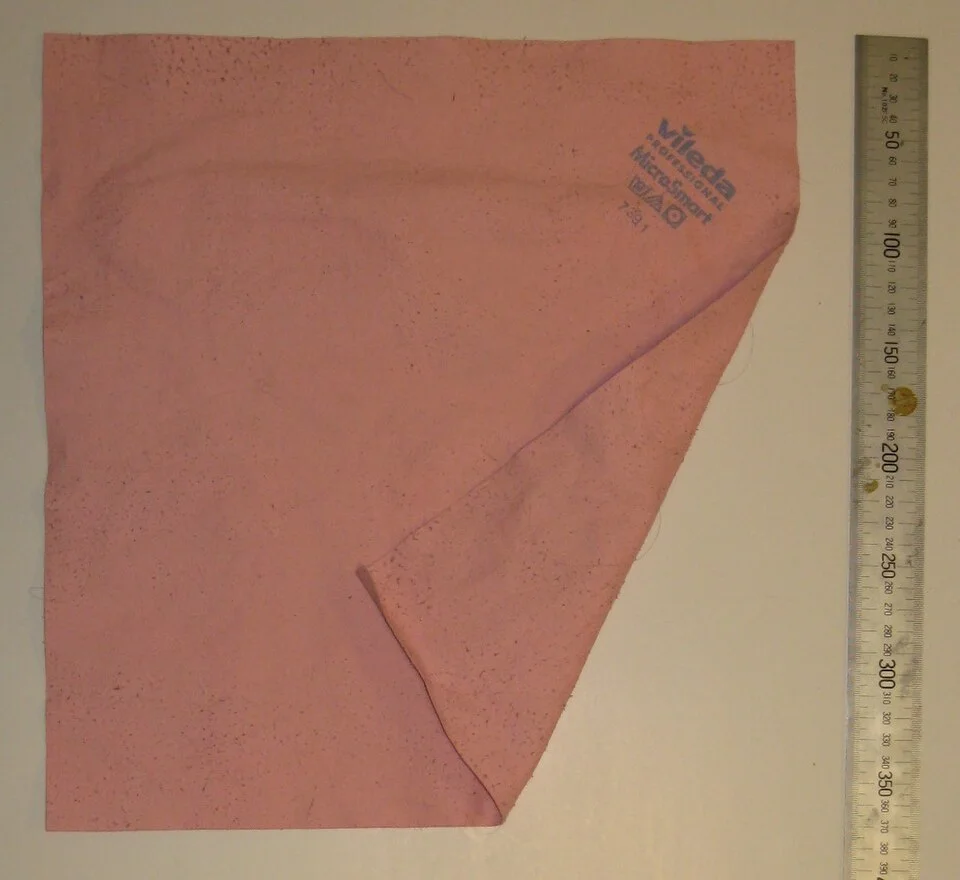
The turned corner makes the cloth’s separate faces and free edges visible. Open your own cloth before starting the bedroom route and check both sides for grit, lint or previous-task residue. Reserve a clean landing area and keep used cloths outside the ready group. The ruler is part of this reference photograph, not a required cloth size or a cleaning measurement.
Photo & usage
Bjornwireen · Public domain · Source. Display copies resized and encoded as WebP; no instructional details were fabricated or removed.
Inspect cloths for grit, lint and damp residue from previous tasks. A visibly clean folded cloth can still have a hard particle in its binding. Keep used cloths separate from ready ones, and plan where each will go after the session. Do not place a dusty cloth on the freshly cleared shelf.
EPA recommends damp dusting where suitable to help avoid returning settled dust to the air. Apply that principle only where the surface permits it. Use a dry or specialist route for materials that require one. A controlled amount of moisture belongs on a compatible cloth, not a spray cloud over books and electrics.
Move through the high surfaces without backtracking
Start at the highest safely accessible surface in the planned scope. Move objects to the landing zone, clean the exposed surface by its permitted method and inspect it before replacing items. Clean the objects separately where appropriate rather than transferring a dusty base back onto a clean shelf.
- Clear one surface into the temporary landing zone.
- Check the surface for damage or moisture.
- Remove dust with a compatible clean tool face.
- Care for object bases as their materials permit.
- Return dry items and move to the next surface.
Avoid stacking fragile objects precariously to clear a large area at once. A small complete surface is easier to manage than a room full of displaced belongings. If you encounter an item requiring specialist care, set it in a stable separate position with a note and continue independent ordinary surfaces.
Keep cloth loading visible
Fold a suitable cloth so you can expose clean faces as it becomes loaded. Do not rely on a fixed number of shelves per cloth; soil and surface size vary. When a face leaves a visible trail or carries grit, change it or use another ready cloth.
Inspect the edge of a polished surface under angled light. A dusty streak may mean the cloth is overloaded; a changed sheen can indicate an incompatible method or existing wear. Stop and compare before making repeated passes. More pressure can turn a manageable deposit into surface damage.
For small crevices, use only tools compatible with the material. Do not force a vacuum nozzle against fragile trim or drag a hard attachment along a painted edge. Dust removal should leave the surface condition unchanged. Where access is poor, record the limitation rather than digging blindly behind a fixed object.
Read an illustrative route comparison
The following observations are invented and illustrative. They compare two ways of handling the same ordinary bedroom surfaces, not measured cleaning performance. The point is to see where dust or object handling returns work to an earlier stage.
| Sequence | Observation | Practical change |
|---|---|---|
| Floor first, then high shelf | Loose debris lands on finished floor | Finish floor after high work |
| Objects placed on uncleaned bed | Clean bases contact dusty fabric | Use a clean landing tray |
| One cloth used after visible loading | Dust trail remains | Change to a clean face or cloth |
The comparison does not establish a universal schedule or quantify airborne particles. It shows observable avoidable repetition. Keep the route flexible for the room's materials and access. A bookcase that cannot tolerate damp wiping needs a different method even if the rest of the furniture permits a lightly damp cloth.
Finish the bed frame and low edges
Move down to the accessible bed-frame surfaces and skirting after higher furniture. Keep the mattress within its own care restrictions; do not extend a furniture wipe or vacuum method onto it automatically. Remove bedding only if the planned work requires it and a clean replacement route is ready.
Inspect low corners with light before reaching. Identify cables, loose fasteners or objects that could obstruct a tool. Do not pull furniture by an electrical cord or reach under moving bed mechanisms. If safe access requires help, leave a specific follow-up rather than attempting an unstable manoeuvre.
Collect displaced debris from the landing zone and clean that zone last among the furniture surfaces. Confirm that fragile items are stable and drawers or doors close normally. The room should not retain a temporary pile whose dusty underside will undo the finished work after you leave.
Give the floor its own permitted finish
Vacuum or sweep accessible debris using a floor-compatible method. Check head condition and settings, especially when moving between rugs and hard flooring. NWFA recommends a bare-floor setting for wood-floor debris removal and warns against wet and steam mops; do not default to a wet final pass on every bedroom floor.
Work around stored objects deliberately. Remove only what can be handled safely and keep storage containers off clean bedding. If under-bed storage prevents useful access, note a separate rearrangement task. Do not claim the entire floor is completed when a large inaccessible area remains.
Finish near the exit without trapping yourself on a treated surface. Follow any product's drying or return-to-use instructions. Inspect for loose grit and visible dust lines along the accessible perimeter. The finish check should reflect the floor material, not a generic expectation that every surface should look glossy.
Leave a short route for next time
Return tools to their own care routes and wash hands before handling clean textiles. Store only fully dry cloths and keep the temporary landing tray clear. Replace displaced objects intentionally, leaving access to frequently dusted ledges where practical.
Record only the issue that changes the next session: help needed to move a dresser, an incompatible cloth method or a damp area awaiting investigation. Avoid turning a visible housekeeping route into a promise about allergy symptoms or complete particle removal. The observations do not support those conclusions.
The bedroom reset is finished when accessible surfaces are checked, object bases are not reintroducing dust, the floor has its correct finish and limitations are explicit. A repeatable sequence reduces backtracking because each surface receives one clear turn in the route.
Before leaving, check the tray that held small objects. A watch strap, lamp base or bottle bottom may have left dust behind even when the furniture is complete. Clean the tray by its own material instructions and let it dry before storage. Do not keep it as a permanent catch-all that will need another sorting session before the next dust route can begin.
THE REFERENCE FILE
Sources & scope
Documentation reviewed 1 Nov 2026. Examples are illustrative; this article does not claim hands-on product testing. Follow the instructions for your actual material, model and location.