A mattress protector can look finished when its broad top panel is dry, yet retain moisture inside a bound corner or show damage on the underside. The inspection after washing is therefore a separate task. Give the protector a supported, well-lit examination before putting it back on the bed, especially when a spill or an unfamiliar drying cycle prompted the wash.
Identify the protector rather than the bed size
Find the protector's own label and product information. A fitted protector, quilted pad and encasement can have different construction and care routes even when all fit a queen mattress. Record whether the item has a membrane, zipper, elastic skirt or separate top panel. Do not remove layers bonded together by the manufacturer.
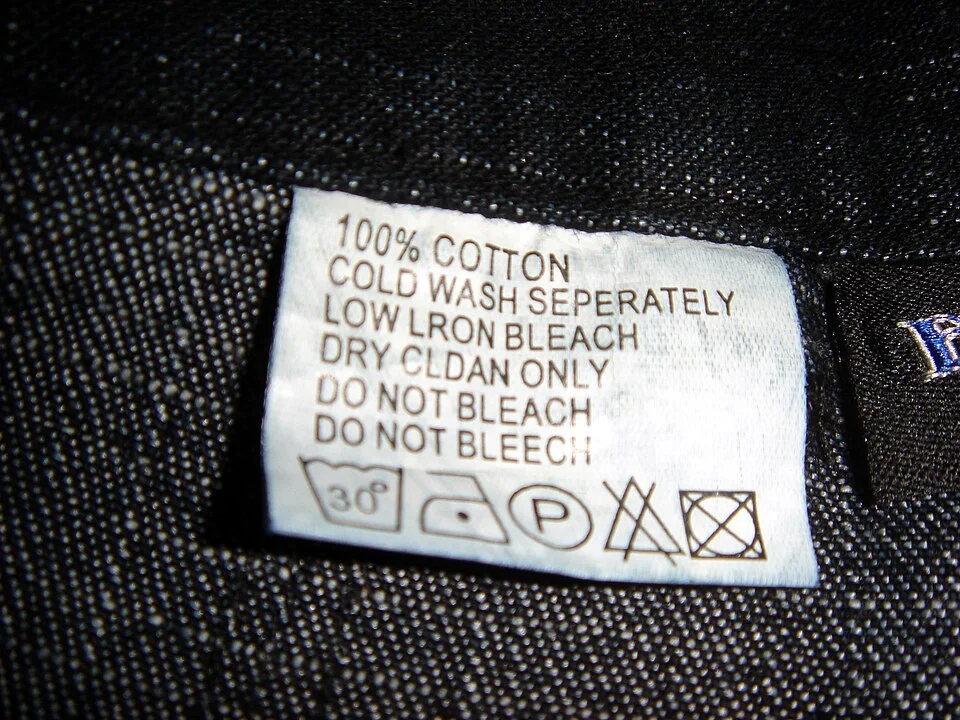
The crowded wording and symbols make an unresolved care label visible rather than something to reconstruct from fabric appearance. Find your protector’s own identity and complete washing, bleach and drying directions, then ask its maker about missing or conflicting information. This garment label is a reading reference; it supplies no permission for a protector membrane, zipper or elastic skirt.
Photo & usage
邰秉宥 from Changhua, Taiwan · CC BY-SA 2.0 · Source. Display copies resized and encoded as WebP; no instructional details were fabricated or removed.
Read permitted washing, bleach and drying instructions in full. GINETEX explains the symbol system, including natural and tumble-drying restrictions, but the label supplies your item's permission. The mattress maker's general bedding advice cannot replace a protector's more restrictive directions.
If the label has faded, use the product identifier, order history or photographs to seek confirmation. Keep the dry protector aside while researching. A cautious delay is easier to manage than a damaged membrane discovered only after the next spill. Do not infer washability from a fabric content label that describes only the top surface.
Record what happened in the wash
Note the programme, temperature selection, detergent and drying method actually used. Include any accidental bleach, fabric softener or excessive heat exposure rather than omitting an inconvenient detail. These facts help explain a changed backing and give manufacturer support something specific to assess.
Check whether the protector was washed alone or with other suitable items and whether it tangled into a tight bundle. A twisted skirt can hide a damp zone; it does not automatically mean the material is damaged. Lay the piece out as directed before judging shape or dryness.
TEMPUR's care materials and Tempur-Pedic's spill guidance distinguish washable covers from protected inner materials. That distinction matters here: cleaning the protector should not expose the mattress to the inspection's moisture. Use a separate clean surface or drying support. Do not place a partly dry protector on the mattress as a convenient inspection table.
Follow the binding before checking the centre
Start at one corner and work around the perimeter. Pinch the accessible binding lightly between clean fingers and compare it with a known dry area. Open folded elastic skirts gently so air can reach trapped sections. Avoid stretching the elastic to create a misleading impression that it has lost its shape.
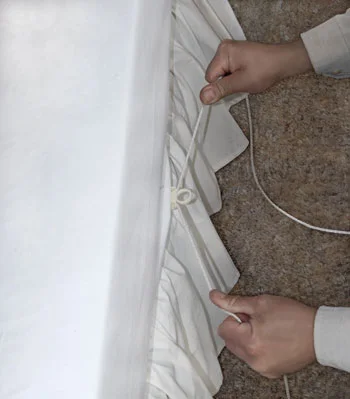
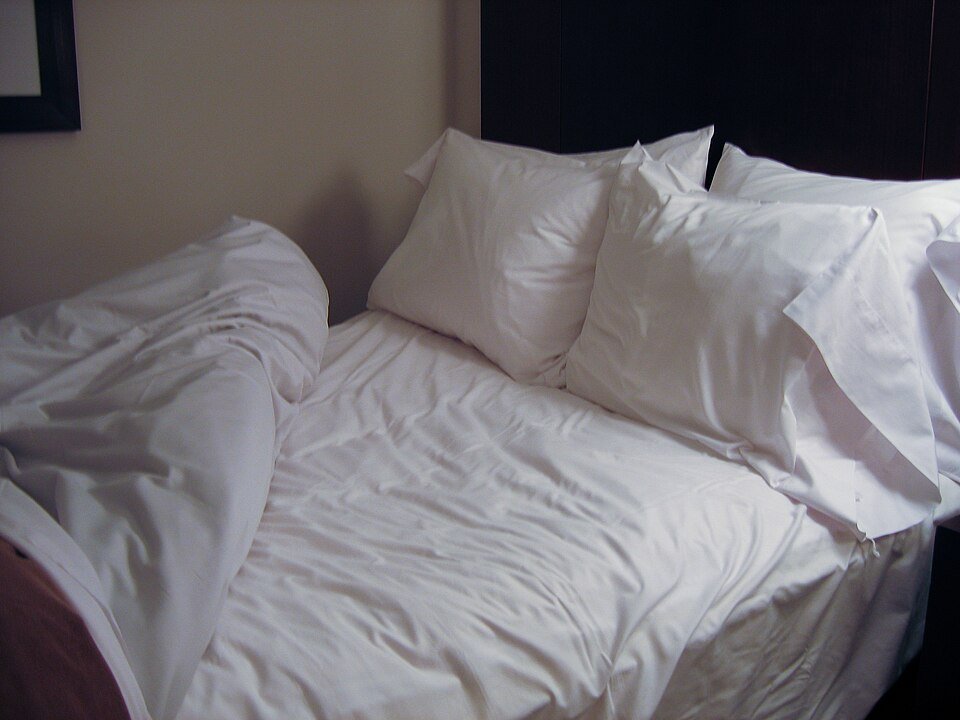
The gathered sheet hem and cord channel illustrate how an edge can hide folds and sheltered fabric. On your own mattress protector, follow the binding, skirt and corners on a supported surface before checking the centre. This is a sheet construction reference; it does not identify a protector membrane or instruct you to pull its binding or adjust a cord.
Photo & usage
RobWikiworld · CC BY-SA 3.0 · Source. Display copies resized and encoded as WebP; no instructional details were fabricated or removed.
Inspect zipper tape and its end stops on an encasement. If the care instructions require a particular zipper position for washing or drying, check that the process followed it. Do not force a stiff zipper while fabric is twisted. Reorient the cover on a supported surface before trying again.
A cooler feel is not proof of moisture because fabrics and room conditions vary. Use multiple observations: feel, visible darkening, compression of a folded seam and the drying history. If any accessible zone remains uncertain, continue the permitted drying route and inspect again. Do not cover an unresolved binding with a fitted sheet.
Examine the backing without stress testing it
Turn the protector as its construction allows and look for peeling, cracks, bubbles, tackiness or exposed fabric where a coating appears absent. Compare suspected changes with undamaged areas and any photographs from before washing. A textured membrane may be normal; a new detached flap is a more concrete concern.
Do not pull at a small blister to see how far it will peel. That changes an observation into additional damage. Similarly, avoid folding a questionable backing sharply or rubbing it with solvent to remove stickiness. Photograph the feature with enough surrounding material to show its location.
If the protector is sold as waterproof, follow the maker's inspection or testing guidance. Do not invent a large water test on the bed. Such a test can wet the mattress if the protector fails, and a small successful patch would not establish performance at every seam. Uncertain protective function belongs in a manufacturer enquiry.
Check fit without forcing the corners
Once the item is fully dry, compare its relaxed shape with the mattress dimensions and its previous fit. Work with the manufacturer's fitting order. A tightly rolled skirt or inside-out corner can mimic shrinkage. Correct orientation before concluding that washing changed the size.
Measure only where the product offers meaningful reference points. Stretchy skirts are not usefully judged by pulling them to a maximum. If you have a previous relaxed measurement, compare under similar conditions. If you do not, describe the current fit problem rather than inventing a shrinkage percentage.
Stop if fitting requires exceptional force or causes seams to strain. A protector that pulls the mattress corners sharply or cannot close its zipper has not passed a practical fit check. Do not cut elastic, enlarge a zipper opening or alter the item to make it function. Ask the maker whether the observed change is expected or warrants replacement.
Compare a clear panel with an unresolved edge
The following record is illustrative and invented. It compares locations on one hypothetical protector after an approved wash. No drying duration is given because the observations, rather than a universal time, determine the next decision.
| Location | Observation | Action |
|---|---|---|
| Top panel | Dry; texture unchanged | No further action there |
| Lower binding | Folded section still damp | Expose and continue permitted drying |
| Underside corner | New peeling area | Photograph; ask maker about function |
The dry panel does not cancel the damp edge, and drying the edge will not repair the peeling corner. These are separate decisions. Keep the damaged item out of service until its status is resolved, particularly when you rely on it to protect a mattress that cannot be washed. Use an approved spare if available rather than rushing the uncertain protector back onto the bed.
Make a replacement enquiry specific
If the backing is peeling, photograph the affected area flat and relaxed, including a wider view showing its position. Send the product identifier, label photograph and actual care history to the maker. Ask whether the observed feature affects the advertised protective function and what inspection or replacement route they recommend.
Keep the item separate while awaiting that answer. Do not glue a membrane, tape over a crack or stitch through a waterproof panel unless the manufacturer supplies an appropriate authorised repair. Such changes can create new openings or interfere with fit. If an approved spare is used, label the held protector clearly so it does not return to the bed at the next linen change. Retain the response with that specific item’s record rather than generalising it to every protector the household owns.
Put the protector back into a reliable rotation
Refit only after dryness, construction and fit checks are complete. Smooth the top without trapping folds and verify that any zipper closes as intended. Remake the bed with dry linens and keep the protector's instructions accessible for the next wash.
Record exceptions rather than writing a long inventory of every routine cycle. Useful notes include a drying route that leaves binding damp, a manufacturer instruction about the backing, or a replacement decision after peeling. Remove obsolete notes when the item leaves the household so someone does not apply them to a different protector.
Clean and dry the support surface and put the spare in a dry storage location. The inspection is complete when the protector has a clear ready, drying or held status. That small distinction prevents a broad dry panel from concealing an unfinished edge or an unresolved protective layer.
THE REFERENCE FILE
Sources & scope
Documentation reviewed 1 Nov 2026. Examples are illustrative; this article does not claim hands-on product testing. Follow the instructions for your actual material, model and location.