Pale lint on dark laundry can make a clean shirt look unfinished. The source may be a new towel, a fuzzy garment or a tissue hidden in a pocket. Before changing detergent or running another long wash, examine the load history. A focused sorting change and a careful dry inspection often provide a clearer next step than treating all visible white material as the same problem.
Describe the deposit before naming it
Look at the affected garment in good light. Loose fibres, flat tissue fragments and chalky clumps are different observations. Check whether the deposit sits on the surface, catches along seams or forms a broad pale patch. Do not rub vigorously to identify it; delicate fabric can develop new fuzz from the inspection itself.
Compare several items from the same load. A dark synthetic top may show lint more clearly than a pale cotton piece, so visibility alone does not identify the source. Photograph a representative patch and note which garments are affected. Keep the original load group together mentally even if you separate it for inspection.
White detergent residue is a separate possibility. Whirlpool's detergent comparison notes that incompletely dissolved powder can leave residue. That does not establish that every pale fleck is detergent. Use the physical appearance and load history to decide which question to investigate first.
Reconstruct the donor list
List the textiles that shared the wash. New towels, fluffy sweatshirts, chenille and similar items can shed fibres. ACI's laundry guidance distinguishes lint-shedding items from lint attractors. Check whether a pale donor matches the colour and appearance of the material on the dark garment.
Inspect pockets, turned cuffs and garment bags for tissue or paper remains. A missing tissue can explain a sudden whole-load problem that did not occur in previous similar washes. Remove accessible fragments carefully and keep them out of the next load. Do not blame the washing machine before checking this simpler history.
Note whether the load included damaged fabric with fraying seams or loose filling. That item may need repair or retirement before laundering again. If no likely donor appears, keep the conclusion open and inspect the washer only as its manual permits. Do not dismantle components to investigate ordinary lint.
Build compatible groups without copying a colour rule
Separate likely lint donors from dark lint-attracting garments where practical, while still comparing care instructions and soil levels. Colour alone does not settle compatibility. A fuzzy dark sweatshirt can be a donor, and a pale smooth blouse may have a delicate process requirement.
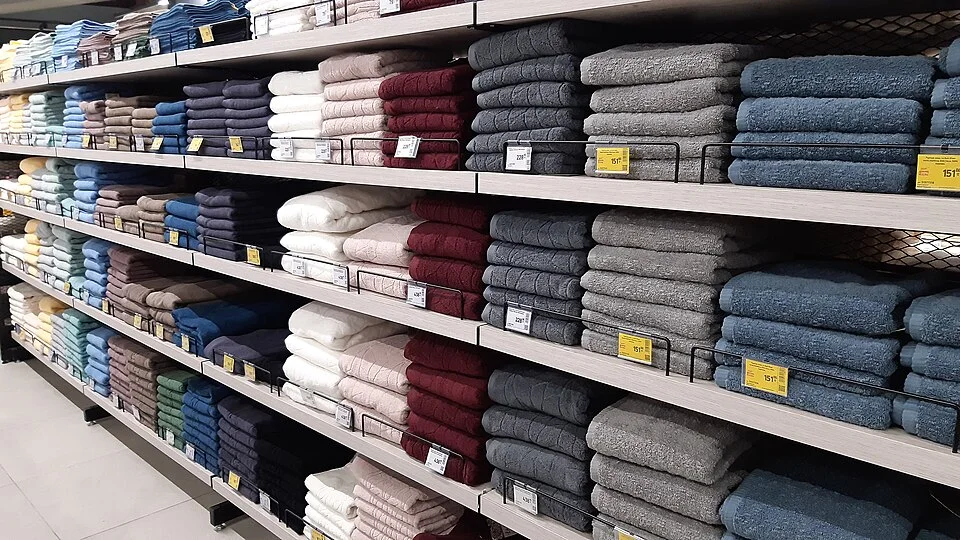
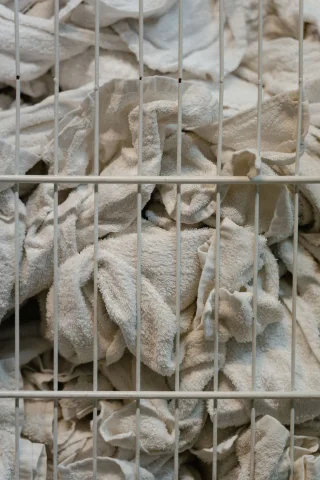
The textured towel piles illustrate one group to consider separately from lint-attracting dark garments. Compare each item’s actual label and soil level before choosing compatible routes; pale or dark colour alone does not decide the group. This display shows towel texture and variety, not proven shedding behaviour or a ready-sorted household wash.
Check the full labels using GINETEX's symbol explanations where needed. Do not choose a harsher cycle merely to dislodge visible fibres if that exceeds the garment's process limit. Keep hand-wash and professional-care items in their required routes rather than combining them with a convenient machine load.
Prepare a small pocket-check habit before loading. Turn out accessible pockets, inspect tissues and remove loose paper. Follow garment directions for zippers, hook-and-loop closures and inside-out washing. These steps should fit the actual items, not become a universal instruction to reverse every textile regardless of construction.
Compare three illustrative lint histories
These observations are invented and illustrative, not results from laundry trials. They show why the first question should follow the load history. The table does not promise that a specific sorting change will eliminate every fibre.
| Load history | Deposit | First question |
|---|---|---|
| New pale towel with dark tops | Fine loose pale fibres | Likely donor compatibility |
| Tissue found in trouser pocket | Flat paper-like fragments | Accessible debris removal |
| No fuzzy items; powdered detergent | Chalky clumps | Dissolution and dosing |
One garment can carry more than one deposit. A tissue can coexist with detergent residue, and a donor can shed unevenly. Keep the observation specific rather than declaring a single cause from one photograph. Change one relevant part of the next compatible load so the result remains interpretable.
Remove visible lint within the fabric limits
Check the garment's and tool's instructions before using a roller, brush or shaver. A gentle lint roller may suit one textile but pull fibres from another. Test an inconspicuous area and stop if the surface changes. Do not shave a loosely knitted garment merely because a lint-removal device is nearby.
Where the label permits tumble drying, follow the approved route and the dryer manual. Do not send an unresolved stain or incompatible garment through heat just to remove lint. A no-tumble item needs another permitted method. Inspect the lint screen and care for it as the appliance directs.
If accessible tissue fragments remain, remove them carefully before considering a compatible rinse or rewash. Another full detergent dose is not automatically needed. Follow the washer and detergent guidance rather than adding more product to a problem that may consist mainly of loose material.
Check the next load as a comparison
For the next ordinary compatible wash, keep likely donors separate and record the relevant change. Use the correct detergent dose and avoid changing several unrelated settings at once. Inspect dark garments after their permitted drying route under similar light to the previous load.
Look at seams, cuffs and broad flat panels. If loose fibres are substantially reduced, that supports the sorting decision for this household's items. It does not prove every future towel or sweatshirt will behave the same way. If deposits persist, revisit the donor list, pocket checks and residue question.
If the washer leaves unusual material repeatedly across different correctly prepared loads, follow its cleaning and troubleshooting instructions. Note the material, programme and affected items for support. Keep the boundary between household observation and appliance diagnosis clear; a recurring lint complaint alone does not establish a defective part.
Check whether the apparent lint is pilling
Pilling remains attached to the garment rather than arriving solely as loose material from another textile. Examine an affected patch gently without pulling at it. If small balls are anchored to the surface, compare areas exposed to friction, such as underarms and the side contacted by a bag. A lint roller may remove loose fibres around them without addressing the attached pills.
Record this as a different finishing question before changing the laundry sort again. Check the garment maker’s guidance for an appropriate removal tool, especially for fine knitwear or fabric with a raised surface. Do not use scissors close to the weave or repeatedly drag an aggressive brush across it.
A garment can show both attached pills and loose towel lint. Treating those observations separately prevents an unsuccessful roller pass from being interpreted as evidence that the washer needs a stronger programme. Keep any surface-care decision within the textile’s instructions and stop if fibres begin lifting.
Check any reusable laundry bag as well. Lint retained along its seams can enter a later load after the original donor has been removed. Care for the bag according to its own instructions and inspect it dry before reuse. Keep a damaged mesh or exposed fastening out of a delicate load rather than assuming the bag remains protective because it closes.
Finish with a small sorting exception
Return garments to storage only when fully dry and acceptably finished. Put unresolved delicate items aside rather than rubbing them repeatedly while folding. Check for a remaining stain that was hidden by lint before returning a garment to routine ironing or heat drying.
Save a short exception such as “new cream towel: separate from dark smooth tops” while it remains useful. Remove the note when the item's behaviour changes or it leaves the household. Keep pocket checks part of the loading action so a tissue does not recreate the problem.
The task is complete when the visible deposit has been assessed, the garment has a permitted finishing route and the next load has a concrete sorting decision. That is stronger evidence than repeatedly adding detergent while the likely donor continues entering the same basket.
THE REFERENCE FILE
Sources & scope
Documentation reviewed 1 Nov 2026. Examples are illustrative; this article does not claim hands-on product testing. Follow the instructions for your actual material, model and location.