Observe the bedroom as it is normally used
A bedroom can feel different by morning even when the rest of the home seems unchanged. The useful starting point is the occupied room: who slept there, when the heating or cooling ran, and which intended ventilation openings were available. Begin with the normal routine. Do not make sleeping with the door open an experiment or alter a fire-safety arrangement to improve a humidity graph.
Write a narrowly defined concern, such as recurring morning droplets on the room-facing window or a damp smell beside a wardrobe. A stuffy impression alone does not identify a pollutant or establish the ventilation rate. Humidity is only one part of the record, and a reassuring RH figure cannot establish that the bedroom air is safe.
EPA: Low-Cost Air Pollution Monitors and Indoor Air Quality explains the limited scope of consumer monitors. Keep that boundary visible: your room meter describes temperature and RH at its position. It does not measure every indoor contaminant or the water content of bedding and walls.
Make bedtime and waking observations comparable
Place the meter in an open, repeatable position away from the bed occupant's breath, direct supply air, a radiator and the window surface. Follow its settling instructions and leave it there overnight. Record bedtime temperature and RH, then take the waking reading before opening curtains or changing the room's ventilation if practical.
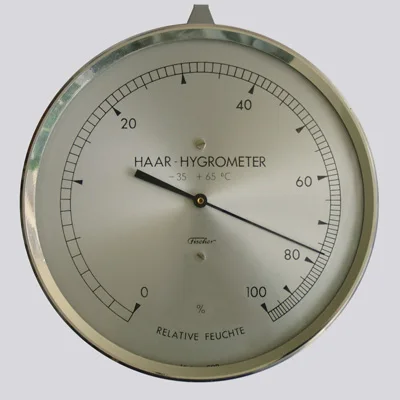
The percentage dial illustrates one part of the bedtime baseline. Record temperature separately with time, ordinary occupancy and existing heating or cooling conditions, keeping the meter at its defined position. Follow the actual meter’s settling guidance. This instrument photograph supplies no nighttime moisture pattern and no assessment of whether a bedroom door may be left open or closed.
Photo & usage
Daniel FR at de.wikipedia.org · Public domain · Source. Display copies resized and encoded as WebP; no instructional details were fabricated or removed.
Keep the observation brief so it does not delay drying visible water. Note whether the window is clear, lightly misted, dotted with droplets or wet enough to run. Wipe accessible condensation with a suitable cloth and record that intervention. Inspect the sill and adjacent finish without lifting flooring or disturbing wallpaper.
Add occupancy and unusual moisture sources. Wet towels, an indoor drying rack, a humidifier or recently watered plants can change the story. Do not attribute all overnight moisture to the sleepers merely because the room was occupied. A concealed leak and a cold surface can coexist with an ordinary bedtime routine.
Identify the ventilation provided for the room
Look for intended background vents, supply grilles and relevant controls using the home's documents or advice from its manager. Keep them unobstructed and use them as designed. A grille's appearance alone does not tell you whether it supplies outdoor air, recirculates room air or connects to an exhaust system.
PNNL Building America: Whole House Ventilation Strategies for Existing Homes describes the need to assess existing systems and their intended ventilation rates. For a household, the next step is often to identify the system correctly before changing its settings. Ask which controls residents should use overnight and which should remain continuously active. Do not rewire a control or tape over an opening to create an isolated comparison.
Record whether furniture or heavy curtains block the relevant opening. Move only lightweight items you can handle safely, and preserve heater and appliance clearances. If a vent is damaged or its operation is unclear, include a photograph in a maintenance request. The request should ask for identification and performance assessment rather than demand a guessed replacement.
Compare mornings without overstating the numbers
The following observations are illustrative and invented. They describe three mornings in the same bedroom with the nighttime door routine unchanged. Readings come from the same position, but outdoor conditions still vary.
| Morning | Room conditions | Relevant note | Window |
|---|---|---|---|
| Monday | 19°C, 62% RH | Wet laundry present | Droplets |
| Tuesday | 19°C, 55% RH | Laundry removed; similar cool night | Light mist |
| Wednesday | 21°C, 51% RH | Warmer night; laundry absent | Clear |
Monday to Tuesday is a 7-percentage-point fall at the same indicated temperature. Tuesday to Wednesday is a further 4-point fall alongside a 2°C rise. The first comparison supports investigating the laundry contribution; the second is confounded by warmth. None measures an overnight ventilation rate, and neither supports a claim about sleep quality or health.
Use practical changes outside the sleeping period
Choose a change that addresses a plausible source without changing nighttime safety. Remove wet laundry from the bedroom to an appropriate drying arrangement, stop unnecessary humidification, or clear a blocked intended vent. Make one documented change at a time where practical. Do not disable extraction elsewhere to make the bedroom result easier to interpret.
During the day, opening coverings can allow room air to reach a cold window where appropriate. If using window ventilation, consider weather, outdoor pollution, security and the risk from the opening. A cooler room is not automatically a drier room. Continue pairing every humidity reading with temperature.
Health Canada: Guide to addressing moisture and mould indoors includes everyday moisture sources, condensation and ventilation in its prevention guidance. Use those categories to decide where to look next. A persistent damp smell with no visible source is a reason for qualified investigation, especially when there is a history of water damage; it is not a reason to remove wall finishes yourself.
Do not make room RH stand in for material condition
Check bedding and nearby storage by ordinary care methods, keeping fabric instructions in mind. A damp-feeling textile may need drying or a different storage routine even when the central meter seems unremarkable. Avoid placing bedding directly against an external wall or blocking an intended air opening. Do not lift heavy beds alone to inspect an inaccessible area.
If moisture appears only on one cold junction, write down that location and the weather association. If several surfaces become wet, record the wider pattern. If a stain grows after rain, treat water entry as a separate question. These distinctions make a service visit more useful than the general description damp bedroom.
Do not spray fragrance to conceal the symptom while logging it. That adds a new source and makes odour comparisons harder. Equally, do not repeatedly smell bedding or place your face into a suspect cavity. Ordinary observations from normal room use are enough to document the concern for an appropriate professional.
Finish when the routine works through the original trigger
A useful result is a bedroom that no longer develops the recorded wetness under comparable use and weather, with intended ventilation identified and available. Recheck after the next similar cool night and after a normal change in occupancy. One warmer morning does not demonstrate that a winter pattern has been solved.
Keep the final record concise: original concern, normal nighttime arrangement, meter position, deliberate daytime change, comparable observations and any unresolved damage. If the problem persists, share this record with the property manager or ventilation professional. Ask them to investigate source and airflow conditions rather than asking a household hygrometer to certify the room.
The log can close even when it leads to a service request. Completion means the next action is clear and the evidence is understandable. It does not require proving that a particular person produced the moisture, establishing a medical explanation, or changing a nighttime door arrangement that serves a different and important purpose.
THE REFERENCE FILE
Sources & scope
Documentation reviewed 1 Nov 2026. Examples are illustrative; this article does not claim hands-on product testing. Follow the instructions for your actual material, model and location.