Dust around a bed often accumulates on the frame, under the headboard and beside stored objects before anyone notices the mattress surface. A useful reset addresses those accessible places in a planned order. It does not begin by applying a universal mattress-cleaning recipe. Identify what each component permits, prepare the room, and finish with a clean route for replacing the bedding.
Establish a dry-cleaning boundary
Check the bed frame, mattress and any topper for their separate instructions. Write down surfaces that permit a soft attachment, a cloth or no direct cleaning. A memory-foam product can have different restrictions from a sprung mattress. TEMPUR's mattress-cleaning article explicitly distinguishes its products from non-TEMPUR mattresses when discussing vacuuming.
Do not remove a mattress cover, inner sleeve or barrier merely because it has a zipper. Confirm whether routine removal is authorised. Keep powders, sprays and steam outside this dry-dust workflow. If you discover staining or moisture, stop and create a separate product-specific care decision.
Inspect for unusual contamination before disturbing dust. Suspected pests, rodent droppings, extensive mould or unknown residues do not belong in an ordinary vacuuming routine. Seek appropriate guidance rather than spreading the material through the room. The scope here is ordinary settled household dust on accessible, intact surfaces.
Clear a landing place for clean bedding
Prepare a clean, dry surface or container for replacement linens. Remove bedding carefully without shaking it in the room and send it to its own label-compatible laundry route. Keep the clean set away from the floor and from the tools you will use under the bed.
Move small bedside objects into a tray so they do not become a new scattering of obstacles. Photograph cable routes if disconnecting a permitted accessory will make cleaning easier. Keep powered items safely isolated according to their instructions; do not pull on cords to shift furniture.
Check whether the bed can be moved safely and whether storage drawers detach as intended. Work around heavy furniture that cannot be moved safely rather than attempting a risky solo lift. Note inaccessible areas honestly. A practical cleaning record can distinguish completed accessible surfaces from a task requiring help on another day.
Follow the frame from high to low
Start with accessible headboard ledges and frame surfaces above the floor. Use the frame maker's permitted cloth or soft tool, keeping moisture away from upholstery or timber that does not tolerate it. Remove loose objects first so dust is not merely pushed around their outlines.
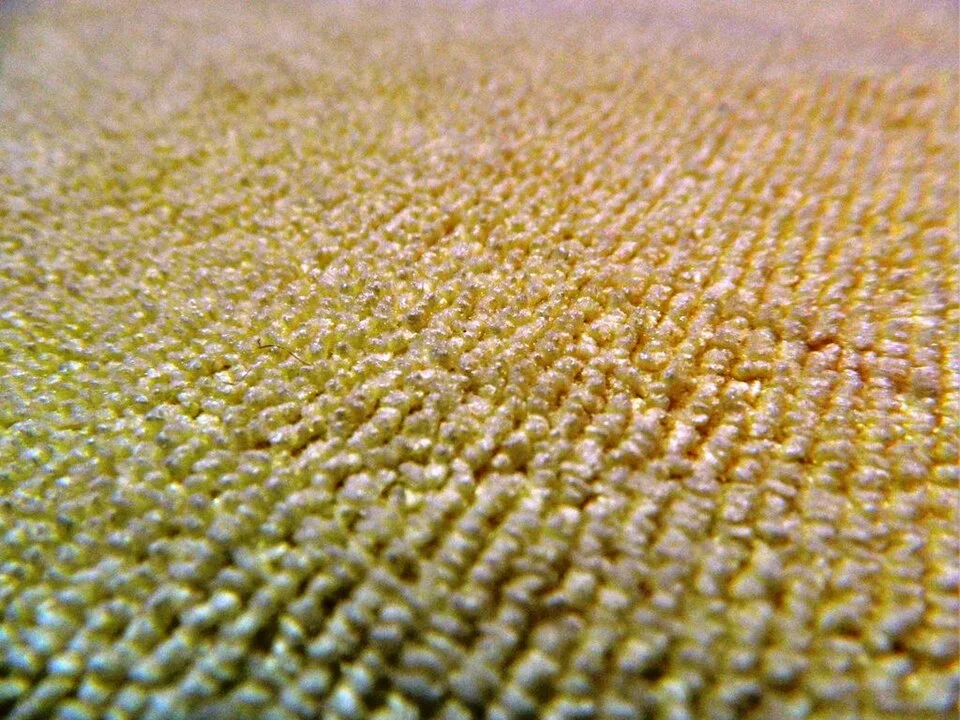
The close view shows the cloth’s raised loops, where hair or grit can lodge before the next pass. Inspect your cloth under good light and change faces as dust accumulates along the headboard and rails. Use only the frame maker’s permitted cloth and moisture method; this fabric photograph establishes neither cleanliness nor permission to dampen a mattress or electrical base.
Photo & usage
Anand2202 · CC BY-SA 4.0 · Source. Display copies resized and encoded as WebP; no instructional details were fabricated or removed.
Work along joints, rails and the outer edge in a consistent direction. Change to a clean cloth face when the first becomes visibly loaded. Do not use a gritty cloth on a polished frame. Inspect decorative corners with light rather than forcing a hard tool into them.
EPA's indoor-particle guidance includes damp dusting where appropriate to limit redistributing settled dust. That does not authorise dampening the mattress or an electrical bed base. Apply the general dust-control principle only to surfaces whose own instructions permit the method. A dry-only component keeps its dry-only route even when a neighbouring frame can be wiped.
Finish the floor and storage route
Clean the accessible floor last, using the method permitted for its finish. Reach under the bed with a suitable tool while maintaining a stable position. Avoid hooking cables, fabric skirts or stored bags. If a hard object obstructs the tool, stop and identify it rather than pushing harder.
Remove storage containers one at a time to a protected area. Clean their exteriors by the appropriate method, inspect the floor beneath, and return only dry containers. Do not empty dusty boxes onto the freshly cleaned bed. If stored objects prevent useful access, decide which can move elsewhere before the next reset.
Inspect the vacuum path and attachment for entangled fibres or debris after use, following the appliance instructions before touching moving parts. Keep floor tools separate from clean linen handling. Wash hands before bringing the replacement bedding into the room. The route should move from cleaning work to clean setup with a deliberate handover.
Compare zones rather than counting dust as proof
This table is illustrative and invented. It records visible conditions in three bed-area zones after a planned reset. It is not a measurement of allergens, indoor air quality or health outcomes. The purpose is to identify what remains actionable.
| Zone | Observation | Decision |
|---|---|---|
| Headboard ledge | No visible loose dust after permitted wipe | Completed |
| Floor behind heavy bed | Unreachable without moving furniture | Schedule help; record limitation |
| Mattress edge | New damp patch | Hold bedding; open separate care task |
A clean ledge cannot compensate for the damp patch. Equally, the inaccessible floor area should not erase the useful work completed elsewhere. Record the limitation precisely so the next session has a concrete purpose. Avoid claiming that one reset improved breathing or removed every particle; this inspection supports a visible housekeeping decision, not a health conclusion.
Keep clean attachments separate from floor tools
If an approved mattress or upholstery attachment is part of the plan, inspect and care for it separately from the floor head. A tool just used under the bed can carry grit on its rim or wheels even when its inlet is clear. Follow the appliance instructions for cleaning permitted components and any required drying before reuse.
Do not wash an electrical or motorised attachment unless its manual explicitly permits that process. A clean surface can be achieved only through the tool’s supported care route, not by assuming all detachable parts are washable. Store the appropriate attachment where it will not rub against a dirty floor brush. This practical separation makes the next bed-area session easier to start and reduces the chance that a floor-cleaning accessory becomes an unexamined contact surface on a delicate cover.
Rebuild the bed and keep the route usable
Return bedding only when every relevant component is dry and any separate concern is resolved. Check that the mattress and frame sit in their intended positions. Keep ventilation openings and moving mechanisms clear according to the bed's instructions. Reconnect accessories safely and verify that no cable is trapped beneath a leg or drawer.
Leave a short note about the next meaningful task: moving help, a manufacturer question or a recurring inaccessible corner. Do not create a long checklist of already routine surfaces. The note should reduce the effort needed to begin the next reset, not become another object collecting dust.
Put clean tools away only after their own care steps are complete. Keep the fresh linen landing area clear until all bedding is fitted. The room is finished when dust work, floor work and clean setup each have a definite endpoint, with mattress permissions respected throughout.
THE REFERENCE FILE
Sources & scope
Documentation reviewed 1 Nov 2026. Examples are illustrative; this article does not claim hands-on product testing. Follow the instructions for your actual material, model and location.