A coffee splash is rarely just a colour problem. A black coffee mark, a sweetened latte splash and a spill that has already been ironed have different histories. Start by protecting the garment from hurried rubbing and unnecessary heat. Then choose a permitted laundry treatment, keeping the care label and the drink ingredients in view throughout the job.
Recover the history before choosing a product
Ask what was in the cup and when the spill happened. Note milk, cream, syrup and whether the shirt has already been washed or dried. These details help you describe a persistent mark later. They do not justify applying several products at once. A cream-containing drink may leave a greasy-looking edge after the brown colour fades.
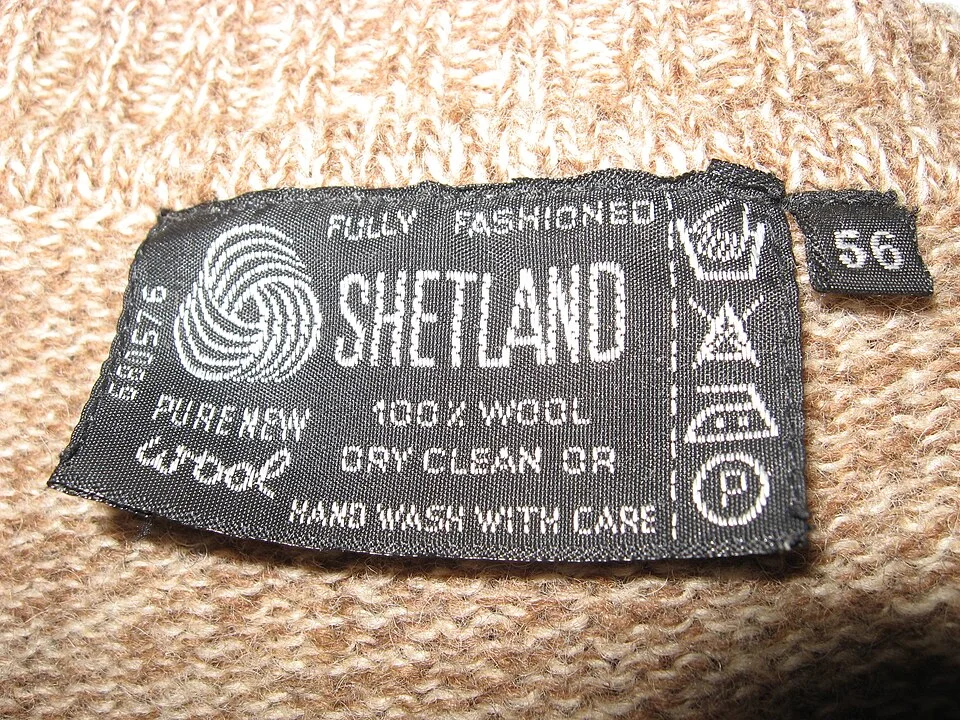
This knitwear label places fibre information beside several care symbols and written directions, showing why a fibre name alone is insufficient. Locate the equivalent complete label on your coffee-marked shirt and check its trim and layers before choosing treatment. These pictured wool-garment instructions belong only to that garment; they do not supply wash, bleach or drying permission for your shirt.
Photo & usage
Elkagye · Public domain · Source. Display copies resized and encoded as WebP; no instructional details were fabricated or removed.
Locate the care label and check the complete garment. A washable cotton shell may carry delicate trim or a lining with different requirements. FTC guidance treats care instructions as applying to the assembled garment, which is why the fibre name alone is insufficient. Keep dry-clean-only or unclear items out of this home washing workflow.
Check the stain's location too. A splash across a placket can extend through several layers; a cuff can trap liquid under a folded edge. Photograph the affected area so the final inspection covers the original footprint rather than only the most visible spot.
Absorb the fresh spill without spreading it
Remove the shirt if practical and place a clean absorbent cloth behind the affected layer. Blot with another plain cloth, lifting rather than dragging across the weave. Replace a wet portion so the absorbed coffee does not return to the shirt. Avoid rubbing the mark into a larger pale halo.
For a garment that permits water treatment, use cool water in a controlled way according to the fabric instructions. Keep unrelated layers clear of the runoff. The ACI toolkit includes a cool-water stage in its coffee and tea advice. This is a starting point for compatible washables, not permission to soak every decorated shirt.
Do not add salt, toothpaste or a collection of kitchen liquids. They complicate the treatment history and may leave residue. If you are away from home, a careful blot and a clear note about the spill can be more useful than an improvised treatment applied without the label available.
Make pretreatment a controlled step
Select a laundry stain product or liquid detergent whose instructions permit pretreatment of this fabric and colour. Check any exclusions and whether the product contains bleach. Test a hidden area using its directions, then inspect after the relevant drying interval. Dye transfer or a changed finish is a reason to stop.
Place the affected layer over a suitable clean support. Apply the product as directed and observe its timing limits. A product that may remain on fabric briefly should not be left overnight because the stain looks stubborn. Keep the treated shirt separate from untreated laundry until you are ready for the next required step.
Use gentle handling. Aggressive brushing can make a tidy stain-removal result impossible even if the colour lifts. If cream or syrup is involved, note any remaining slick or stiff area rather than automatically increasing the cleaner concentration. The next choice should respond to an observed residue and the product instructions.
Wash within the garment and washer limits
Choose a wash process permitted by the shirt's label and appropriate for its construction. Combine it only with genuinely compatible garments. ACI's laundry guidance groups loads by care instructions as well as colour and soil; a pale shirt with a fresh splash should not be used to fill a heavily soiled work-clothes load.
Measure detergent from its own label. Include any pretreatment contribution when the product directions tell you to. Avoid adding extra detergent simply because the brown mark is visually dramatic. More foam does not provide a useful measure of stain removal, and extra residue makes inspection harder.
Make the unloading plan explicit before starting. Put a note near the machine identifying the shirt as requiring inspection. If another person transfers the load, tell them the drying hold. The workflow depends on catching the garment before habitual tumble drying, rather than remembering the coffee once the dryer has finished.
Inspect the wet result and a permitted air-dry result
After washing, look at the original spill area under good light. Check cuffs, placket folds and the reverse of the fabric. Wet fabric can hide a faint brown shadow, so use a permitted air-drying route if the result remains uncertain. Do not iron the area to make the comparison easier.
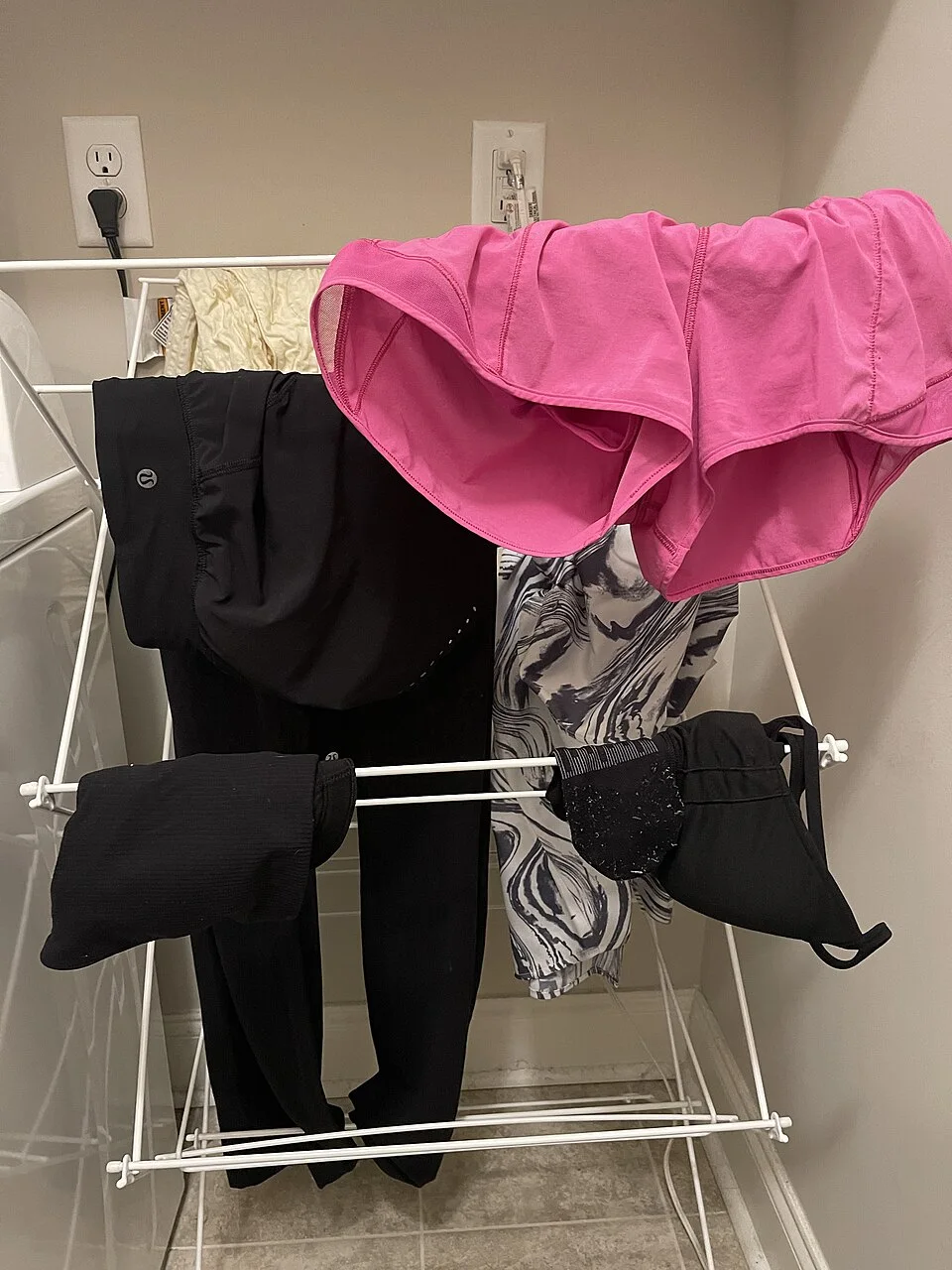
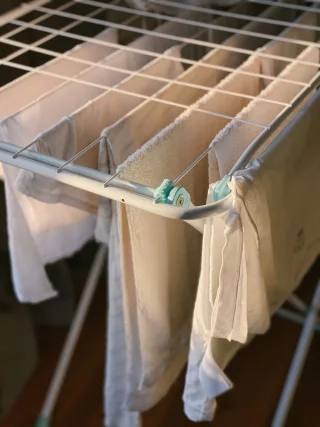
The rack shows garments supported with several seams and folded edges exposed. Reserve suitable space for the coffee-marked shirt if its care instructions permit air drying, then inspect the original spill area, placket, cuffs and reverse under good light. These pictured garments do not establish the shirt’s allowed drying method or prove stain removal; keep unresolved marks away from ironing and dryer heat.
Photo & usage
Gabbybratcher · CC BY-SA 4.0 · Source. Display copies resized and encoded as WebP; no instructional details were fabricated or removed.
The ACI stain toolkit warns that dryer heat can set remaining stains. Treat the drying hold as part of the job, not an optional precaution after a failed wash. If a mark remains, review what has changed: did the colour fade, did the edge persist, or did a broader ring appear?
A new pale patch or rough surface calls for stopping, rather than another stain attempt. A residual coffee shadow on otherwise unchanged fabric may justify a repeat only within the product and garment directions. If the shirt has substantial value or sentimental importance, a professional can assess it before repeated treatment changes the material.
Compare two illustrative shirt records
These are invented observations, not results from testing shirts or cleaners. Shirt A has a fresh black-coffee splash on a permitted washable fabric. Shirt B has a latte mark discovered after an earlier dryer cycle. The histories make the decisions different even if the initial brown areas look similar.
| Checkpoint | Shirt A | Shirt B |
|---|---|---|
| After permitted wash | No visible brown mark while wet | Faint brown centre and translucent edge |
| After permitted air drying | Matches nearby fabric | Edge remains visible |
| Next decision | Release for normal care | Hold; review previous heat and ingredients |
The comparison does not prove that black coffee always washes out or that a heat-exposed latte mark cannot be improved. It shows why the completion decision belongs after observation. A record reading “washed once, still marked” is less informative than one identifying the remaining edge, the drink additives and the earlier heat exposure.
Preserve the care route when away from home
If the spill happens during travel, keep the garment’s label photograph available before buying a treatment product. A small hotel sink does not change a professional-care instruction or provide space to dry every construction appropriately.
For a permitted washable shirt, separate it from clean packed clothes and keep any damp area exposed as the care route allows. Do not leave a wet treated garment compressed in luggage. Record the time and drink ingredients so a delayed home treatment begins with useful history. If appropriate drying or rinsing is unavailable, choose careful containment and professional advice rather than a concentrated product left on the fabric for an unknown interval.
Finish with a usable garment and a short note
Once dry, compare the spill location with clean adjacent fabric. Look from both sides and check for stiffness that could indicate residue. Confirm that the care label, seams and trim remain unchanged. If the shirt is clean and the surface matches, return it to its ordinary care route.
For an unresolved mark, record the products used and their sequence. Keep the shirt out of the general ironing pile and label the hold in plain language. A professional cleaner needs the history, including any homemade treatment, rather than an optimistic description that the shirt is “almost clean.”
Clean the support surface and put stain products away in their original containers. The job ends with either a verified clean garment or a clearly held item with an informed next step. It does not end merely because a washer cycle ran, or because the mark is less obvious under bathroom lighting.
THE REFERENCE FILE
Sources & scope
Documentation reviewed 1 Nov 2026. Examples are illustrative; this article does not claim hands-on product testing. Follow the instructions for your actual material, model and location.