Pet hair tends to form a map of how a sofa is used. It gathers at the edge of a favourite cushion, inside piping and where a throw stops covering an arm. Read that map before washing the whole sofa. A careful dry pickup route can remove loose material while keeping fragile seams, nap and cover permissions in view.
Read the sofa and the hair pattern
Identify the upholstery and locate its care instructions. Check fixed fabric, removable covers, decorative cushions and throws separately. A sofa with a washable seat cover can still have a fixed arm that must stay dry. IKEA directs owners to the specific product information for washability; the name of the sofa range alone is not enough.
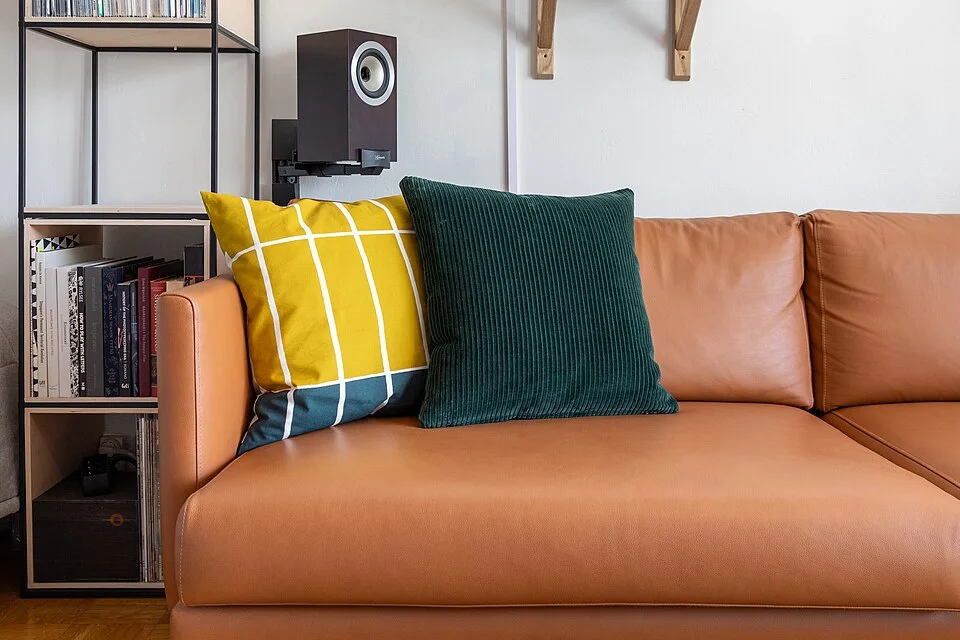
The photograph shows textile cushions on leather seating. It illustrates component identification, not pet-hair pickup performance or permission to use one tool on both materials.
Photo & usage
Aaaatu · CC BY-SA 4.0 · Source. Display copies resized and encoded as WebP; no instructional details were fabricated or removed.
Examine the sleeping area under good light. Distinguish loose strands lying on the surface from hairs embedded in the weave. Check whether the fabric already has pulls, bald spots or flattened pile. Photograph wear before cleaning so it is not confused with a later tool effect.
Keep a separate note for odour, dampness or staining. Dry hair pickup does not resolve those problems. If the pet is repeatedly scratching one seam, inspect safely for damage and seek appropriate advice about the cause rather than applying a stronger upholstery cleaner by instinct.
Make a small pickup-method decision
Start with the gentlest method permitted by the fabric and tool instructions. A smooth upholstery nozzle may suit some covers; a soft brush attachment may suit others. Do not assume a motorised pet tool is appropriate for every upholstery fabric. Check for rough edges and clean away grit before the tool touches the sofa.
Test a concealed representative area with minimal pressure. Look for threads lifting, nap flattening or colour change as well as hair removal. Rubber brushes, adhesive rollers and damp gloves can affect some finishes differently, so treat each as a method requiring compatibility rather than a universal household trick.
If hair remains but the fabric starts changing, stop. More friction is not a useful exchange for a few remaining strands. Ask the furniture maker about an approved tool or consider professional care. The decision boundary is the upholstery response, not the number of passes you are willing to make.
Follow a contained seam route
Remove permitted loose cushions and place them on a clean protected surface. Do not unzip fixed covers or remove filling unless the product instructions allow it. Keep the pet away while tools and loose cushions are on the floor, and avoid leaving small detachable parts accessible.
- Collect loose hair from upper back cushions before working on the seat.
- Move across the sleeping hollow with light, controlled passes.
- Follow piping and seams without forcing the nozzle into them.
- Inspect the exposed deck beneath removable cushions.
- Finish the nearby floor after the upholstery work.
Pause to clear the tool as its instructions require, isolating power before touching moving parts. A clogged brush can drag or lose pickup, making repeated passes less informative. Keep hair contained in the appliance or waste container instead of brushing it from one cushion onto another.
Compare hair left behind with fabric change
The following observations are illustrative and invented. They compare possible responses within a small concealed test area; they are not results from a sofa trial. Use them to decide when a tool has reached a sensible limit.
| Finding after a gentle pass | Fabric condition | Decision |
|---|---|---|
| Loose hair removed | Surface unchanged | Continue approved method |
| Embedded strands remain | Threads begin lifting | Stop friction; seek another permitted route |
| Hair moves to seam edge | No damage seen | Change collection angle, not pressure |
The amount collected is not a health measurement. EPA discusses vacuuming furniture as part of dust management, but an ordinary household observation cannot prove allergen removal or symptom improvement. Keep your claim limited to what you can see: loose strands removed, seams checked and the fabric left unchanged by the chosen method.
Decide whether a cover wash adds value
After dry pickup, inspect the cover for actual soil. If it remains clean apart from a few embedded hairs, washing solely to chase those strands may add an unnecessary care cycle. If a removable cover is soiled and its instructions permit washing, prepare a separate wash with the correct drying and refitting plan.
Check the exact colour and fabric option, not a generic online answer for the sofa model. Read restrictions on bleach, ironing and tumble drying. A zipper does not establish washability. The IKEA upholstery guide emphasises material-specific care; it does not override a cover marked for professional cleaning.
Keep a photograph of cushion orientation and fastening positions before removal. Treat matching covers according to the maker's advice to avoid uneven appearance. Do not strip the whole sofa if only one approved washable throw needs care. The decision should respond to visible soil and the product's construction.
Keep the favourite place easier to service
A suitable washable throw can create a removable care surface if the sofa and pet tolerate it. Fit it so it does not bunch into a slipping hazard or cover a mechanism. Check its own laundry instructions and remove loose hair before washing. A throw is a practical barrier, not a guarantee that the sofa beneath remains hair-free.
Inspect the throw edge and sofa seam during routine pickup. If hair repeatedly accumulates just outside the covered area, adjust the coverage rather than scrubbing the same exposed patch each time. Keep any rotating spare clean and fully dry before use.
Avoid perfume sprays as a substitute for cleaning. If odour persists after appropriate fabric care, inspect for a separate source and review the instructions. A dry hair-removal route should remain a clear task with a clear result, rather than expanding into unsupported claims about sanitising or making every fabric pet-safe.
Inspect seam access before choosing a narrow tool
A crevice nozzle that fits into a gap can still catch piping or pull a loose seam. Look at the opening first and check for a trapped zip pull, decorative cord or exposed lining. Use only the attachment and suction approach permitted for that upholstery.
Do not lever cushions apart with the nozzle or force it beneath a fixed panel. Remove accessible loose hair from the edge and leave inaccessible construction intact. If the pet’s favourite area repeatedly opens a seam, record that as a repair question. A repaired, stable cover may make later ordinary hair removal easier, but cleaning should not be used to conceal loose stitching. Stop if filling becomes exposed and keep the pet away from the affected area until the condition is resolved.
Check the throw’s underside before replacing it. Loose strands held there can return to the seat immediately even when the visible top looks tidy. Collect accessible hair by the throw’s permitted method and keep it separate if washing is needed. Refitting a different clean throw does not release the original one from its unfinished care route.
Reassemble and verify the boundary
Return cushions to their intended positions and check that no seam is trapped or pulled. Examine the cleaned surface under angled light and compare nap direction with adjacent fabric. A changed appearance that follows brushing direction may need permitted grooming, while a pulled thread needs a different response.
Finish the nearby floor and remove collected hair from tools according to their care instructions. Keep the waste container closed as appropriate and wash hands before handling clean throws. Record any tool that caused a problem so another household member does not repeat the method.
The job is complete when loose hair has been collected from accessible surfaces, fabric condition is checked and any wash decision is explicit. A few deeply embedded strands do not justify damaging the weave. The sofa should return to use with its construction intact and its remaining care needs understood.
THE REFERENCE FILE
Sources & scope
Documentation reviewed 1 Nov 2026. Examples are illustrative; this article does not claim hands-on product testing. Follow the instructions for your actual material, model and location.