Confirm that this particular filter is washable
A filter can look like foam or folded material without being approved for washing. Start with the exact vacuum model and the filter's identity in its manual. Confirm whether the user may remove and wash it, whether there are multiple filters and whether another component is replace-only. Do not apply a wash routine to a bag, electrical assembly or unrelated filter because it looks similar.
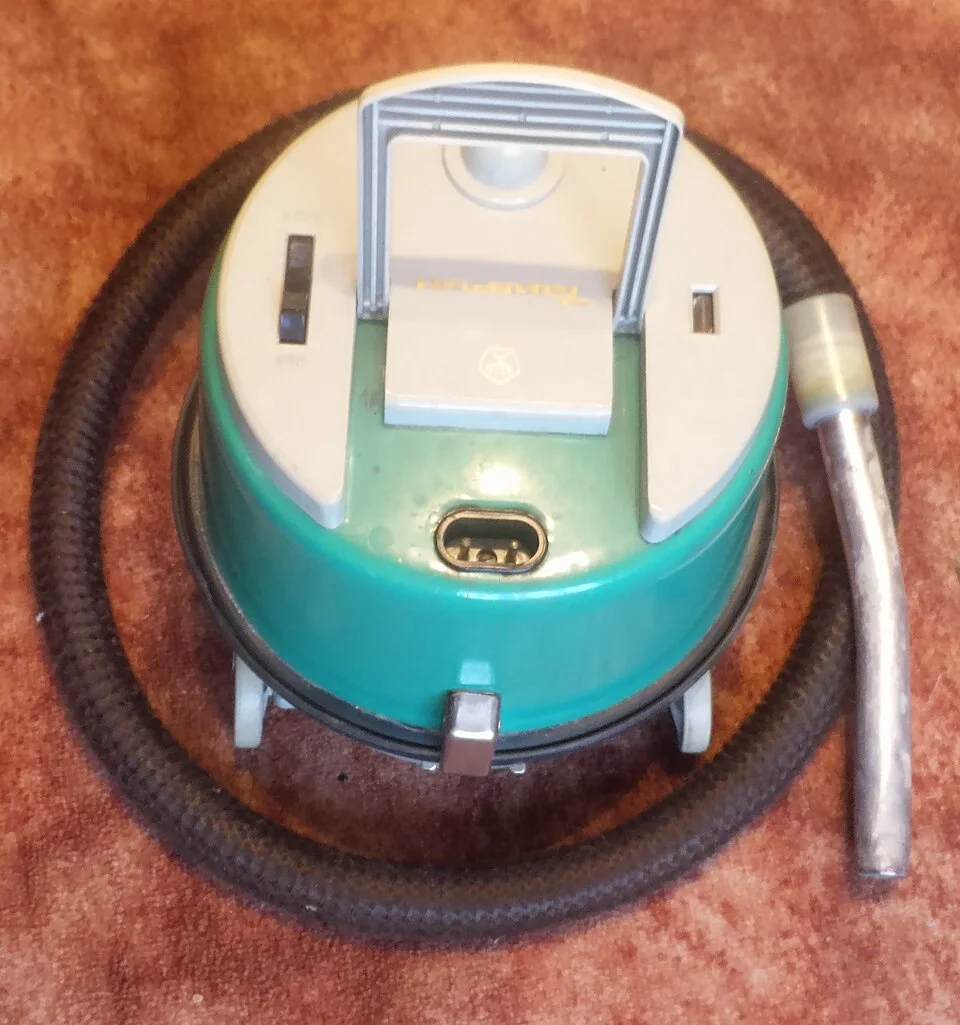
The vacuum’s exterior and hose provide machine-identification context before consulting its filter instructions. No filter is exposed here, so the image establishes neither filter material nor washability. Match the actual model and filter reference to the retained manual before scheduling removal, approved washing or the required return-to-service conditions.
Photo & usage
Wesha · CC BY-SA 4.0 · Source. Display copies resized and encoded as WebP; no instructional details were fabricated or removed.
Dyson: Cleaning Filters directs Dyson owners to select their specific machine for removal and care instructions. That model step is essential. The page's general process does not establish that every filter from every manufacturer can be rinsed. Keep the actual part and method attached to the record.
This article concerns scheduling and completion of an approved user task, rather than a general vacuum-maintenance tutorial. Do not open a motor housing, bypass a filter sensor or operate without required filtration to see whether the machine still works.
Choose a window when the vacuum can remain out of use
Check the next necessary cleaning opportunity before beginning. A washed filter may need a substantial drying interval, and the vacuum should remain unavailable until its instructions are satisfied. If the household needs continuous availability, ask about an approved compatible spare or use another appropriate appliance rather than refitting a damp part.
Dyson V15 Detect owner support gives a minimum 24-hour drying period and complete-dryness requirement for the covered V15 filter. That is a specific example, not a guarantee that every filter dries in exactly one day. Air conditions, retained water and the actual part affect readiness, while the model's stated minimum still applies.
Write the wash-finish time and earliest review time according to the real manual. Keep them separate from a promised return-to-service time. A household calendar reminder should say check readiness, not automatically refit. This small wording difference prevents a timer from overriding a still-damp filter.
Keep washing and drying within the stated method
Isolate the machine as instructed, remove only the identified user part and follow its permitted water, cleaning-agent and handling directions. Do not use detergent, hot water or a mechanical wash process unless the actual instructions permit it. Keep the motor body and electrical components away from water.
Place the part in the approved drying arrangement with suitable airflow and protection from damage. Do not accelerate it in a microwave, tumble dryer, oven or near a flame. Do not place it where children or pets can handle it or where it will collect another layer of dirt. A clean, labelled location makes later identity and readiness checks easier.
Dyson: Cordless vacuum filter care discusses complete drying and airflow for covered cordless filters. Use that guidance with the exact model instructions, not as permission to dry every part in direct heat. Record any deviation or accident honestly. If a part tears, deforms or cannot be cared for as directed, contact the manufacturer about replacement.
Calculate a review time without certifying dryness
This schedule is illustrative and invented. Assume the hypothetical model requires at least 24 hours after washing and complete dryness before refitting. The example does not establish a drying time for any particular room or filter.
| Event | Time | Meaning |
|---|---|---|
| Approved washing ends | Monday 18:00 | Drying interval begins |
| Minimum 24-hour interval reached | Tuesday 18:00 | Earliest readiness review under the assumed instruction |
| Part still damp at review | Tuesday 18:00 | Do not refit; continue appropriate drying |
Monday 18:00 to Tuesday 18:00 is exactly 24 hours. If the next cleaning is Tuesday 09:00, only 15 hours have elapsed, leaving 9 hours before even the assumed minimum. Neither calculation establishes actual dryness. The schedule needs both elapsed-time and physical-readiness checks, not a single automatic completion tick.
Use the manual’s completion criteria
At the review, follow the actual instructions for confirming complete dryness and intact condition. Do not rely only on a dry-looking exposed edge while hidden material remains damp. Do not squeeze, dismantle or probe a part beyond the permitted method to gain confidence. Ask support if the prescribed check is unclear.
Confirm the filter identity before refitting, especially if more than one vacuum or spare part is present. A visually similar part can have different dimensions or compatibility. Keep a removable note beside the drying location with the model and part, not adhesive stuck to the filtering material.
If a replacement is needed, use an approved compatible item and retain the exact part information. Do not adapt an incompatible filter, trim a seal or tape a damaged latch. The scheduling task is still unfinished if the only available part cannot be fitted correctly, regardless of how long it has dried.
Check seating before the next necessary use
Refit according to the actual sequence and confirm the required latch or interlock state. Do not force the part or run the appliance while holding it in place. If the machine reports a filter-sealing or related alert, stop and follow the model's guidance rather than clearing the message repeatedly.
Use the next appropriate necessary cleaning session as a limited operational check. Record whether the machine starts normally, whether the alert returns and whether the part remains correctly fitted. Do not use an empty or filterless run to test airflow. That can damage equipment and does not validate the care task.
If pulsing, shutdown or another symptom persists, consult support with the model, part identity, care method, drying interval and final alert. Do not assume the washed filter must be the only cause. The record should distinguish approved care completed from an unresolved appliance fault.
Finish with the vacuum actually ready for use
Mark completion only when the approved part is fully ready, intact, correctly refitted and the appliance is available under its normal instructions. Keep the wash and refit dates separately if they differ. A care calendar that records only washing can make the household believe the machine is available while its essential part is still on a shelf.
Store any approved spare appropriately and label its compatibility in the accessory record. Do not infer a replacement interval from how quickly a washed part dried. Cleaning frequency, part life and operational symptoms are separate questions governed by the actual instructions and condition.
Completion means the downtime was planned, readiness was checked and refitting did not rely on a timer alone. No claim about measured filtration efficiency, indoor-air safety or restored factory performance follows from ordinary household observation. The useful result is a correctly documented return-to-use decision with a clear support route for anything unresolved.
Make compatibility review part of ordering
Before ordering a spare, compare the complete machine identifier and the manufacturer's part reference, including any generation or regional distinction. Do not buy solely from a photograph of the filter shape or the phrase fits most models. Keep the order record and confirm the delivered part before the original is removed for care.
A spare can make scheduling easier only when it is actually approved, ready and correctly fitted. It does not justify shortening the washed part's required drying period or using a damaged original later. Record both parts clearly so the next household member does not mistake the still-drying one for the ready spare.
THE REFERENCE FILE
Sources & scope
Documentation reviewed 1 Nov 2026. Examples are illustrative; this article does not claim hands-on product testing. Follow the instructions for your actual material, model and location.