Distinguish listed from released
An item photographed for sale still occupies the home. If a decluttering project counts every listing as progress, the spare room can become a warehouse of optimistic prices. Start by identifying the physical space that must be cleared and the date it needs to be usable. Then decide how much of that space can remain committed to sales.
Choose a small sale group whose likely demand, condition and collection requirements you can describe accurately. Keep difficult repairs and uncertain electronics outside the group until you know what they are. An honest listing takes less follow-up than a vague promise that something “should work.”
Give each item a latest collection date and a fallback route. The deadline should precede the date the room is needed, allowing time for a donation or accepted disposal appointment. A buyer expressing interest is not the same as a completed handoff.
Select candidates using effort as well as value
Record dimensions, completeness, visible wear and any known defect. Check that you have the right to sell the item, particularly with borrowed, jointly owned or employer-provided goods. Keep necessary proof of ownership or manuals with the item without exposing private information in photographs.

Face-out books make titles and cover condition easier to record, while the upright row reminds you to identify each included volume. For your own resale group, list editions, completeness and known defects, then estimate photographing and collection effort. This display is an illustration of identifiable objects, not evidence of ownership, resale value or a completed condition assessment.
Estimate the work involved: cleaning appropriate to the material, photographing, answering messages, arranging collection and being present. Set a household threshold for that effort. A low-value bulky object requiring several appointments may be a poor sale candidate even if similar objects sometimes achieve attractive prices.
EPA Ireland's circular economy guidance encourages reuse and repair. A direct handoff or donation can support reuse without a sale. If the primary objective is clearing a room for a project, compare those routes honestly instead of treating maximum resale income as the only successful outcome.
Use comparable evidence carefully
Compare the same type, dimensions and condition where possible. Asking prices show what sellers hope to receive, not necessarily what buyers pay. If the platform provides completed-sale information, distinguish it from active listings. Record uncertainty when the local market offers no convincing comparison.
Choose an initial price and a single planned review point. Avoid daily price changes that create more administrative work than the item warrants. Decide in advance whether an acceptable offer must include collection by the deadline, since a higher price with a much later handoff may not serve the project.
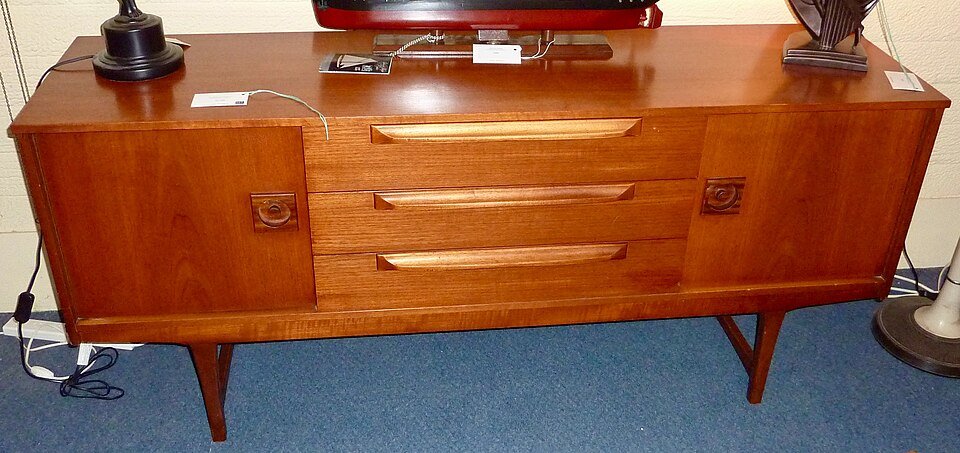
Write the defect description before the attractive description. A photograph of a closed cabinet may conceal a missing shelf or damaged hinge. Show the relevant detail and include dimensions so prospective buyers can assess fit before travelling. Do not describe a repair as simple unless its actual requirements are known.
Calculate the value of a completed sale
Here is an illustrative USD comparison. A small cabinet sells for USD 80. Agreed platform fees total USD 8, and suitable packing materials cost USD 7. The remaining cash is USD 65 before any transport, tax obligations or value assigned to time.
The household spends 30 minutes preparing the listing, 20 minutes messaging and 40 minutes attending collection, for 90 minutes total. USD 65 divided by 1.5 hours is about USD 43.33 per hour of that recorded effort. This is an arithmetic comparison, not wages or a market forecast.
If two failed collection appointments add 60 minutes, the same USD 65 is spread over 2.5 hours, or USD 26 per hour. More importantly, the cabinet remains in the room longer. Use the calculation to choose an effort boundary, while recognising that a different household may value the space or reuse outcome more than the cash.
Make collection instructions complete
State whether the item is assembled, which parts may be removed under its instructions and what the buyer must provide. Give access information without publishing unnecessary security details. Confirm a specific collection window and keep communication within the platform's recommended process where applicable.
Do not promise to lift or dismantle heavy furniture beyond your capability. Arrange suitable help or ask the buyer to provide an appropriate service. A sale agreement should not depend on removing building fittings or forcing an item through a route that has not been assessed.
Choose how you will verify payment using the actual service rather than a message or screenshot alone. Follow the platform and payment provider's guidance for that transaction. Keep the handoff record proportionate, and remove personal papers or stored data from the item before it leaves.
Prepare the fallback while the listing is active
Ask the proposed donation service whether it accepts the exact item in its current condition. Habitat ReStore's FAQ makes clear that acceptance varies locally. Confirm dimensions, photographs, collection availability and any access requirements before the sale deadline passes.
For electronics, plan data removal using the manufacturer's current instructions and confirm an appropriate receiving route. EPA's electronics donation guidance identifies personal information and battery handling as preparation issues. A factory reset may involve model-specific steps; do not claim that deleting a few files is sufficient for every device.
Keep the fallback appointment flexible only if the service allows it, and cancel promptly if the item sells. Do not reserve multiple collections that another household could use. If no reuse route accepts the item, ask the local waste authority about suitable disposal before the room's completion date becomes urgent.
Treat the deadline as a decision
At the review point, assess genuine enquiries, offers and collection feasibility. If the item has attracted no credible interest, either make the planned price adjustment or move to the fallback. Do not extend automatically because the listing has accumulated views or saves.
For an interested buyer who cannot collect in time, explain the actual limit. A shorter holding period or another buyer may be workable, but the decision must respect agreements already made. Keep the item available only under terms you can fulfil.
When a sale fails, record the practical reason: price mismatch, poor access, hidden defect or unavailable collection. That information improves the next selection. It should not trigger another round of speculative listings across every remaining object. The cleared room is still the project's central requirement.
Finish with the empty space and the record
After handoff, remove the listing or mark it completed through the platform. Record the actual proceeds and any costs if you are tracking the project budget. Keep necessary transaction records securely and delete unnecessary copies containing personal details.
Clean and inspect the newly available space using an appropriate method. Decide its next function immediately, such as an assembly area or a clear wall for painting. Leaving it unnamed invites another group of sale items to occupy it.
The resale stage is finished when the objects have left, active listings accurately reflect what remains and the fallback group has a real route out. A modest completed sale can serve the project better than a valuable-looking listing that keeps a room unusable for weeks.
Protect the deadline from incomplete commitments
Keep a short distinction between enquiry, agreed collection and completed handoff. An enquiry needs an answer; an agreed collection needs a date, access arrangement and item identity; completion means the item has actually left and the agreed payment has been verified. These states should not share one vague “sold” mark.
Before a collection window, confirm that the object remains in the described condition and that all included parts are together. If a new defect appears, tell the buyer before they travel and revisit the agreement. Do not rush the handoff merely to protect the decluttering deadline. If the transaction no longer works, return to the prepared fallback and record the revised departure date.
THE REFERENCE FILE
Sources & scope
Documentation reviewed 1 Nov 2026. Examples are illustrative; this article does not claim hands-on product testing. Follow the instructions for your actual material, model and location.