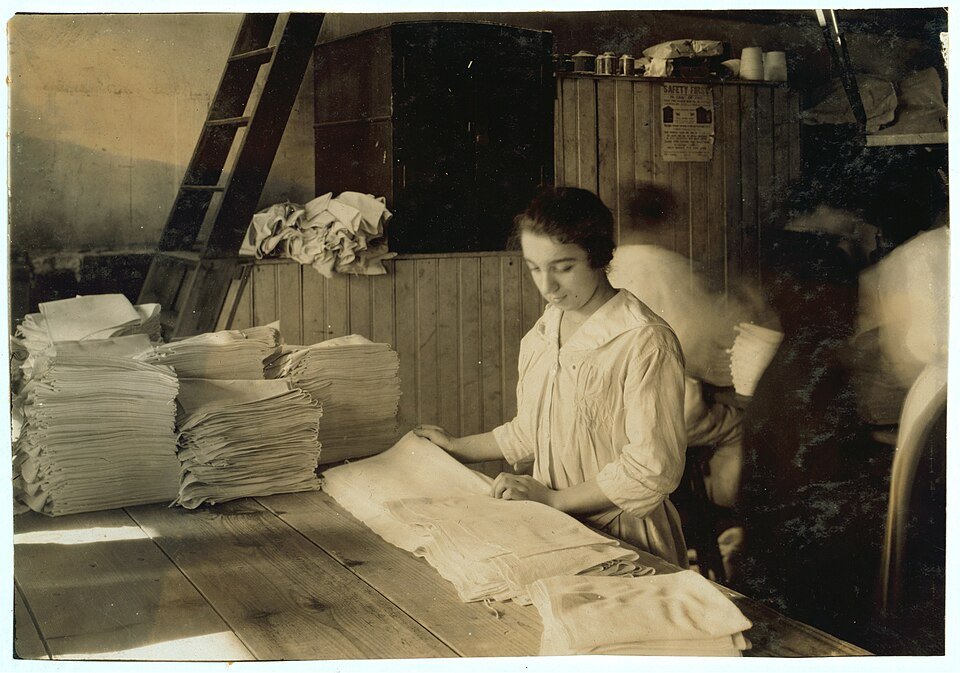
A drawer can seem spacious while half its contents are in the laundry. The problem appears when clean clothes return: the pile no longer fits, the drawer closes only under pressure and the freshly folded items end up on a chair. Plan for that return peak before buying dividers or replacing furniture.
Measure the folded collection in the form you actually maintain. A highly compressed fold used once for a photograph is a poor basis for everyday capacity. The useful size is the one that holds a complete clean rotation and permits an ordinary item to be selected without dismantling the rest.
Count a complete rotation rather than today's drawer
List the categories assigned to the drawer or shelf. Include clothes in the wash, drying, being worn and waiting for repair if they will eventually return to the same place. Separate items that no longer belong in the active wardrobe, but do not discard or reassign another person's possessions without their agreement.
Identify the likely full-return day. This might follow a weekend wash or a seasonal change. You do not need to wash everything simultaneously for the exercise; a category count can establish the complete quantity. Record any uncertain items separately rather than concealing them in a neat total.
Count garments by storage form. A folded knit may need different support from a casual shirt. The Canadian Conservation Institute — Basic Care: Textiles guidance describes the importance of suitable support for textiles. Use care labels and individual garment requirements to choose folding or hanging; a drawer-space problem does not justify distorting a valued or delicate piece.
Measure the fold you can repeat comfortably
Fold several representative items in your normal way. Measure the width, depth and relaxed height without pressing hard on the pile. Include the thickest ordinary examples. If different users fold differently, test both methods or agree a simple shared form before basing a purchase on a precise dimension.
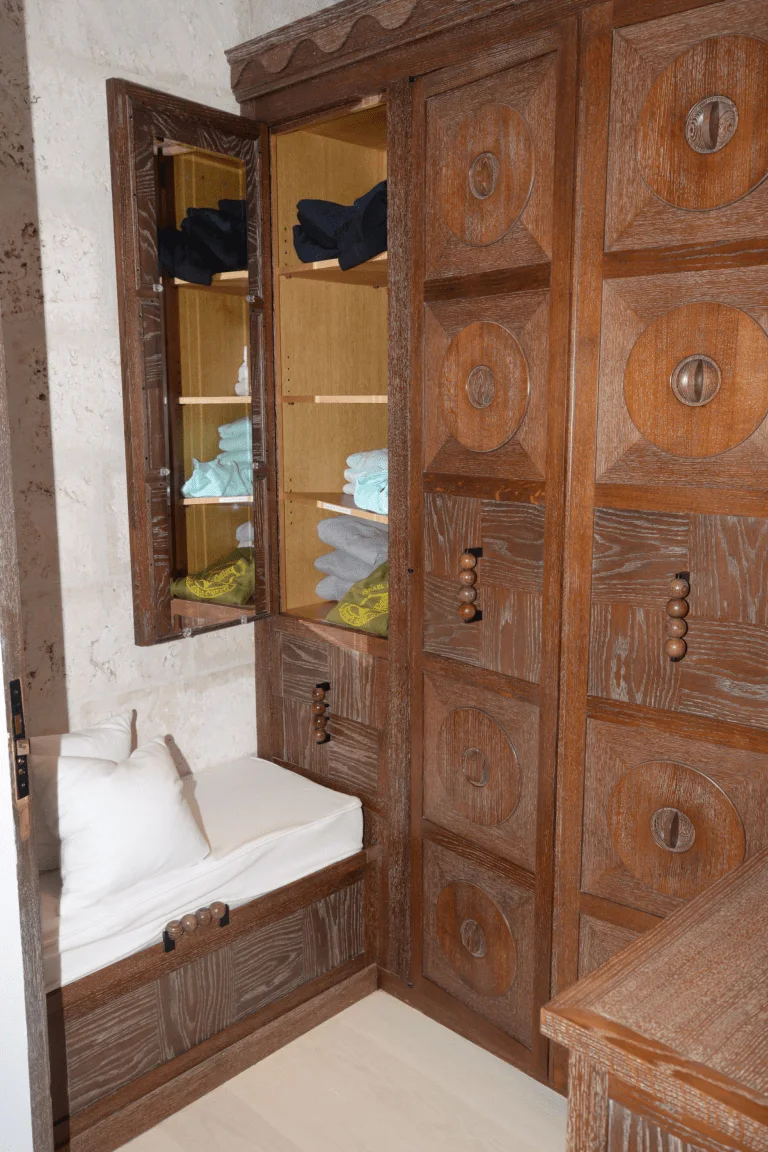
The separate textile stacks leave visible space above their folded surfaces. Fold your own representative clothing comfortably and measure its relaxed width, depth and height, including thicker ordinary items, before assigning drawer capacity. These stored textiles illustrate stack geometry only; their thickness cannot predict clothing categories or establish the cupboard’s dimensions.
Photo & usage
Federal Bureau of Investigation · Public domain · Source. Display copies resized and encoded as WebP; no instructional details were fabricated or removed.
For stacks, observe how the bottom item behaves when removed. For upright rows, check whether garments remain identifiable and supported as the row becomes less full. Neither method is universally superior. The right method depends on the category, drawer dimensions and the person maintaining it.
Avoid treating a small sample as exact. Fabric thickness, hems and fold consistency vary. Keep a modest practical allowance established through the trial rather than rounding the dimensions down to make a divider fit. If the collection needs constant compression to stay within the opening, reduce the assigned quantity or choose another location.
Measure usable internal space and drawer movement
Measure inside the drawer between its actual sides and beneath the lowest obstruction when closed. The front panel height may exceed the clear internal height. Include runners or lips that reduce width, and inspect whether the drawer can open far enough to reveal the back row.
If using containers, measure their external envelope and the space left for fingers. The IKEA — SAMLA Box, Article 701.029.72 page offers one product-specific example of dimensions; nominal capacity is not enough to establish a drawer fit. Do not order several boxes on the assumption that the furniture's advertised width is its internal width.
Check where the user stands or sits while returning clothes. The U.S. Access Board — Operable Parts guide distinguishes unobstructed reach from reaching over something. In a bedroom, a nearby bed can change access to a drawer even when its handle height appears convenient. Plan the laundry-return movement with the room occupied as usual, not with furniture temporarily moved away.
Calculate an illustrative folded-stack capacity
This example is illustrative. A drawer has 54 cm of usable width, 36 cm of depth and 18 cm of clear height. A normal folded shirt occupies 24 by 30 cm and averages 2.5 cm in relaxed stack height. Two stacks fit across the width because 2 × 24 = 48 cm, leaving 6 cm overall.
Seven shirts would create a nominal stack height of 17.5 cm. That leaves only 0.5 cm beneath the 18 cm opening, so it is a poor planning target where folds vary. Six shirts create a 15 cm stack, leaving 3 cm. Two such stacks hold twelve shirts, subject to a real selection and return trial.
If the complete category contains sixteen shirts, four need another suitable destination or a different arrangement. Do not use the apparent theoretical maximum of fourteen as a promise of practical capacity. The height calculation is approximate, and it says nothing about whether the bottom shirt can be retrieved conveniently.
Give overflow an explicit decision
When the full rotation exceeds usable capacity, decide which constraint to change. Options include a smaller active category, a different drawer allocation, a shelf suited to the garments or a less bulky repeatable fold. Keep all items appropriately supported and avoid transferring the problem to an unassigned floor basket.
Make off-season storage a complete category with a destination and return date. A vague bag labeled miscellaneous is difficult to manage when the season changes. Check that contents are clean and dry according to their care needs before storing them, and inspect the destination for moisture or pests.
Do not buy dividers until the category and fold are stable. A divider consumes internal space and can make a borderline arrangement worse. It is useful when it preserves a successful row or separates categories that become confused. It cannot create enough volume for a collection that already exceeds the measured opening.
Test the drawer at both full and partly empty states
Return a representative clean load and close the drawer without forcing it. Then select one item from the front, middle and back. Notice whether the pile collapses, the fabric catches or a hidden row is forgotten. A system that looks orderly only when completely full may fail during the rest of the week.
Repeat with part of the category removed. Upright rows may need an appropriate support when their neighbors disappear, while tall stacks can become less stable after selection. Use a simple permitted organizer if it solves the observed issue, keeping enough space for easy return.
Ask the person who usually handles laundry to perform the return. A method that another household member can execute only with careful coaching is unlikely to remain consistent. Simplify the fold or reduce the category until ordinary maintenance works without a special demonstration every time clean clothes arrive.
Close the plan at the next full return
Use the next ordinary wash cycle as the completion check. Count whether every returning item has its assigned position, and record anything left on a chair or surface. Investigate the reason: missing capacity, uncertain category, damp garment still drying or a fold that differs from the trial.
Keep a short note of the accepted category count and normal fold. Recheck it when new clothes arrive rather than allowing the drawer to absorb additions indefinitely. If a garment leaves the active wardrobe, update the inventory so the record remains useful.
Completion means the clean-return peak fits and daily selection remains straightforward afterward. A small amount of unfilled space can provide working room for hands and variable folds. The aim is a dependable laundry-to-storage cycle, not a drawer packed to its last cubic centimeter.
THE REFERENCE FILE
Sources & scope
Documentation reviewed 1 Nov 2026. Examples are illustrative; this article does not claim hands-on product testing. Follow the instructions for your actual material, model and location.