A W cleaning code can look like a simple green light for water. In practice it describes a category of permitted spot-cleaning methods, with the furniture instructions supplying the detail. It does not establish that a zippered cover can be laundered, that the cushion can be soaked or that any machine marked upholstery is suitable.
For a fresh small spill, the useful sequence is immediate blotting, positive identification, one compatible trial and a fully dry check. Larger spills that have reached padding, extensive old soil and unknown fabrics need a different plan. This guide keeps a small spot from becoming a wet-cushion project while giving you enough evidence to know when household care should stop.
Find the furniture code and its qualifications
Look beneath a loose cushion or at the manufacturer's label without tipping heavy furniture alone. Photograph the code, fabric name and product information. Confirm that W belongs to the affected fabric, particularly on furniture with contrasting panels or trim. A separate decorative cushion can have different care instructions from the sofa beneath it.
La-Z-Boy's W guidance specifies water-based spot products while rejecting saturation and treating extraction or laundering as separate issues. Joybird likewise warns that cushion covers are not machine washable unless specifically stated. Ethan Allen's guide directs owners to their furniture's cleaning label. The consistent lesson is to read the whole instruction rather than using W as an all-purpose machine-cleaning permission.
Blot the spill before adding anything
Use a clean white or undyed absorbent cloth to lift fresh liquid. Press and lift gently, moving to a dry face as it becomes wet. Avoid rubbing sideways, which can spread the spill and alter the fibers. Lift loose solids with a suitable soft edge without scraping the weave or pushing material into seams.
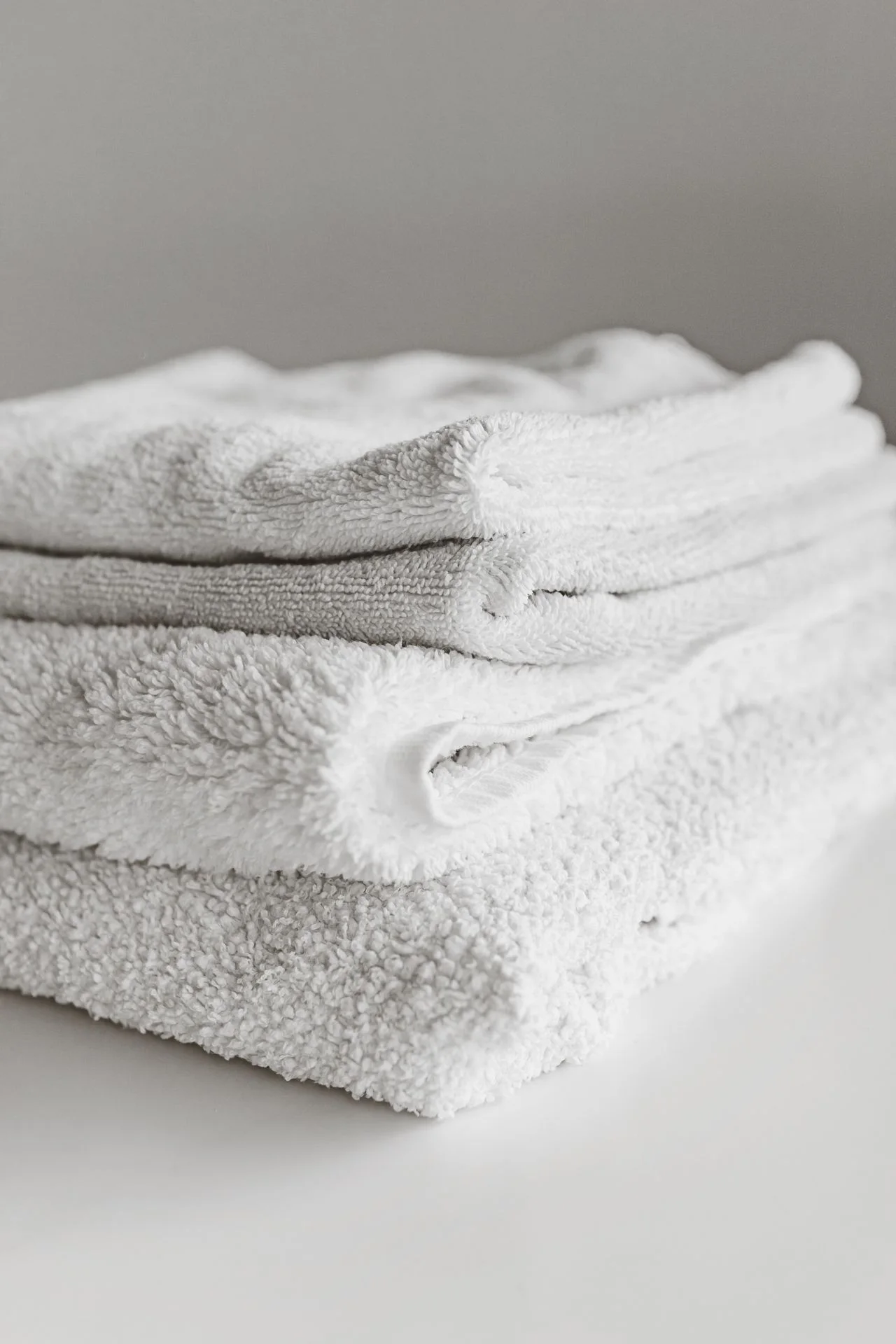
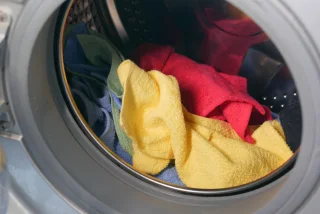
The folded towels show separate pale textile faces that can be kept available as liquid is collected. For your upholstery, choose a clean white or undyed absorbent cloth, press and lift gently, and change to a dry face as it becomes wet. The photograph does not establish these towels’ cleanliness or measured absorbency, identify a W code, or authorise adding water or cleaner to a cushion.
Photo & usage
ROMAN ODINTSOV · Pexels License · Source. Display copies resized and encoded as WebP; no instructional details were fabricated or removed.
Record what spilled and whether it may contain oil or dye. A sugary drink, milk and cosmetic lotion can need different follow-up products even on the same W fabric. Do not add dish detergent, vinegar or a general stain remover while searching for the label. Blotting existing liquid does not require a speculative cleaning mixture. If the spill has visibly soaked through to the filling, contact a qualified upholstery cleaner about the whole cushion assembly.
Remove loose dirt around the spot
Once loose dry debris can be removed safely, use the furniture-approved upholstery tool and suction setting. Inspect the nozzle for rough edges or grit. Keep the tool moving gently and avoid forcing it over tassels, piping or a loose seam. Vacuuming dry surrounding soil first reduces the amount available to migrate into a damp ring.
Do not vacuum wet material with an ordinary dry household vacuum. Follow the appliance instructions and keep the routine tool for dry debris only. A broad dirty armrest can also be a poor candidate for repeated small spot treatments because the cleaned island may differ from the surrounding soil. Where overall cleaning is needed, arrange a professional method compatible with the furniture instead of extending the small-spill procedure across every panel.
Treat the spot with controlled contact
Use the permitted cloth or foam method and work from the outside toward the center where the furniture instructions specify it. Keep each application controlled; the aim is to lift the residue without driving liquid into padding. Change cloth faces so the material removed does not return to the fabric. Avoid a stiff brush unless the maker expressly requires one for that fabric.
Complete residue removal exactly as directed. Some methods call for careful clean-water contact while others specify a different finish; do not invent an extra rinse that saturates the cushion. Keep liquid away from wood legs, metal trims and an electric recliner mechanism. If the spot spreads, color transfers or the fabric feels different, stop and preserve the observations rather than increasing pressure.
Compare the fully dry panel
| After drying | Working meaning | Next action |
|---|---|---|
| Spill outline gone; texture matches | Routine spot care achieved its aim | Resume use after all stated conditions |
| Pale edge around the cleaned area | Residue movement or uneven cleaning is possible | Ask about panel-level treatment |
| Sticky patch remains | Spill or cleaner residue may remain | Review the authorized removal step |
| Color transfers or pile looks abraded | The treatment may be affecting fabric | Stop and consult the maker |
These invented examples are not evidence from a tested sofa. A ring does not prove that the fabric needs more water. It may show that dirt, cleaner or color moved during drying. Take a photograph and report the product, amount prepared and sequence used before attempting a broader treatment.
Plan drying as part of the job
Keep the cleaned panel out of use while it dries under conditions allowed by the maker. Do not cover it with a throw or replace a tightly fitting cushion arrangement while dampness remains. Avoid direct heaters, strong sun and an improvised hot hair-dryer treatment unless the exact fabric instructions authorize a method.
For an illustrative seat with a 60-by-60-centimeter face, the panel area is 3,600 square centimeters. A 6-by-6-centimeter spill occupies 36 square centimeters, or one percent of that face. The calculation describes scale only; it does not establish how far liquid travelled through the filling. A small visible spot can still involve a seam or deeper padding, which is why visible size alone cannot authorize continued wetting.
Keep zippers and machines outside the assumption
A zipper often exists to install the filling during manufacture. It is not a washing symbol. Removing and laundering a cover can change fit, color and the relationship between different panels. Likewise, a water-based code does not approve steam or extraction equipment. Follow explicit furniture permission and any machine requirements together.
If a cover is separately labelled washable, use that complete instruction as a different procedure. Do not combine it with the spot method midway through the job. Where filling is wet, the spill is extensive or a ring persists after safe spot care, request an upholstery specialist. Give them the code and fabric identity so their proposed method can be checked against the furniture maker's requirements.
Confirm a specific endpoint
The panel should be fully dry, free of removable spill and cleaner residue, and consistent in texture with nearby fabric. Check seams for retained dampness and keep a record of any mark that remains. Do not claim sanitizing, allergen removal or complete internal drying from a clean-looking face.
Keep the label photograph and successful method with the household care notes. Future small spills then have a clear response: blot, confirm the fabric, use the documented controlled method and inspect after drying. A clean stable panel is the goal; unrestricted water use was never required to reach it.
THE REFERENCE FILE
Sources & scope
Documentation reviewed 1 Nov 2026. Examples are illustrative; this article does not claim hands-on product testing. Follow the instructions for your actual material, model and location.