Give steam an exit before dinner starts
A kitchen can smell fresher while its cooking moisture stays indoors. The useful question is where the hood sends the air. Once that is clear, arrange the meal so moisture reaches the extractor while it is being produced, rather than waiting for a wet window to announce that it has spread.
This is a practical operating routine for an existing kitchen, not a fan installation project. Have the hood's model number and operating manual, your usual pans and lids, and a timer available. A room humidity meter is optional. Before starting, check that the controls work normally and that the manual identifies the filters and any maintenance due. Leave inaccessible parts alone.
Think in three parts: reduce unnecessary evaporation at the pan, capture the remaining plume, and give extracted air a confirmed route outdoors. A failure at the last part cannot be corrected simply by running a recirculating fan longer.
Identify which kind of hood you actually have
Look up the exact model in the manufacturer's documentation. Some hoods can be installed in either ducted or recirculating mode, so a product description listing both does not establish how yours was fitted. Check installation paperwork or ask the installer, landlord or building manager to confirm the installed arrangement.
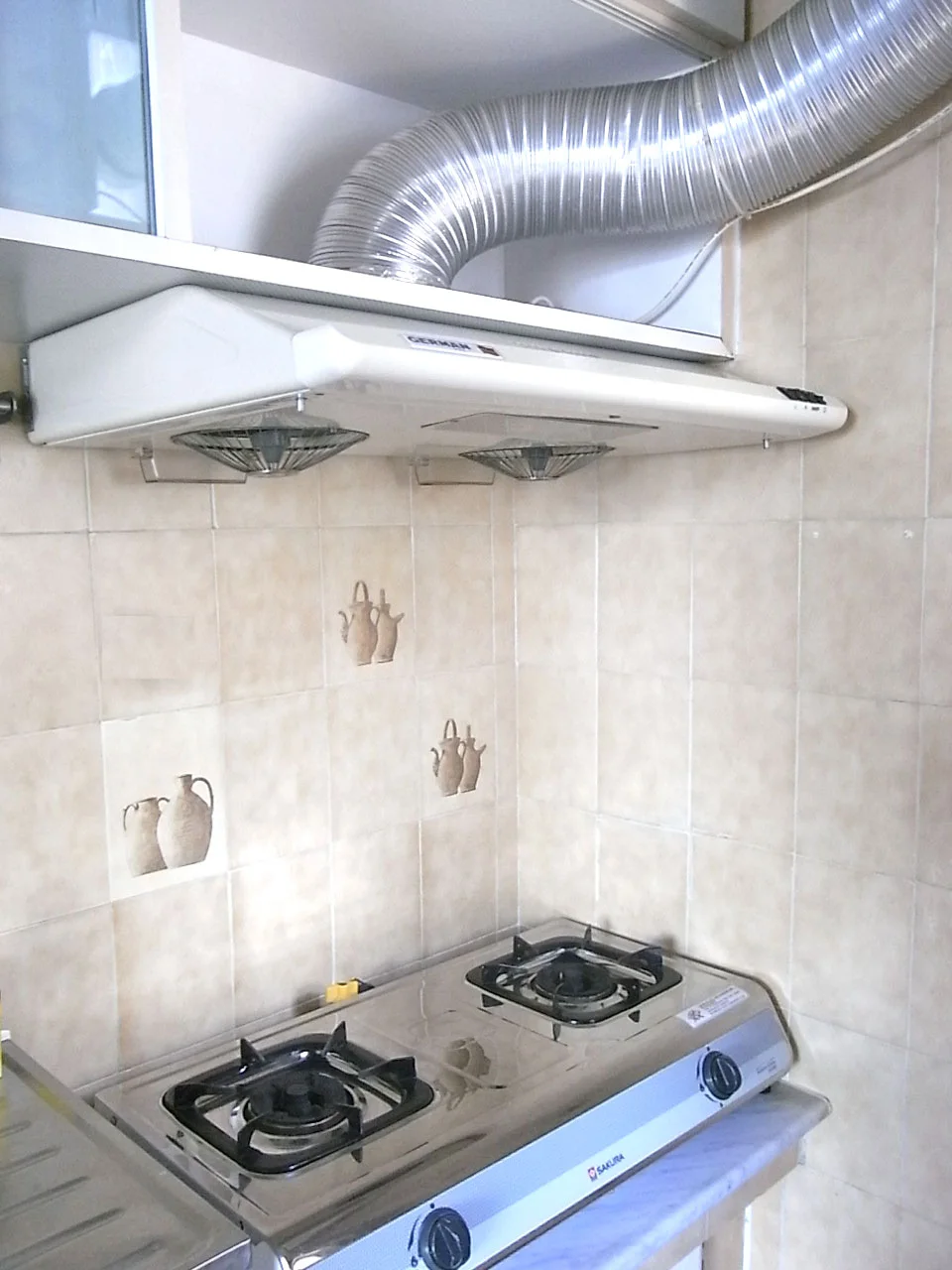
The photograph shows a hood and a visible section of flexible duct above it. Use accessible observations like these alongside the exact model and installation paperwork when establishing your own arrangement. A duct disappearing from view does not prove that it terminates outdoors; ask the installer or property manager to confirm the installed route before treating it as moisture extraction.
Photo & usage
Wu Samkors · CC BY-SA 3.0 · Source. Display copies resized and encoded as WebP; no instructional details were fabricated or removed.
- Ducted to outdoors
- Air leaves the dwelling through an exhaust duct. This is the arrangement to use for removing cooking moisture at its source.
- Recirculating or ductless
- Air passes through filters and returns to the kitchen. Treat this as filtration, not a moisture exit.
- Route unknown
- Keep using the hood as instructed, but request confirmation of the route before assuming it extracts moisture.
The Home Ventilating Institute's ventilation guide explicitly distinguishes recirculation from actual ventilation. A charcoal filter does not establish that air goes outdoors.
A tall decorative chimney is also inconclusive: the PNNL kitchen exhaust retrofit guide shows that chimney-shaped housings can conceal recirculating arrangements. Use accessible records and visible clues; do not remove housings, enter roof spaces or climb outside. If records suggest discharge into an attic or crawlspace, arrange qualified correction rather than treating that space as an acceptable outlet.
Arrange the pans around the extractor
Choose pan positions before heating anything. Put the main steam-producing pan on a suitable rear cooking zone where the pan fits properly and the appliance instructions permit it. Keep handles accessible without reaching across another hot pan. Do not move a full boiling pot merely to improve capture midway through cooking.
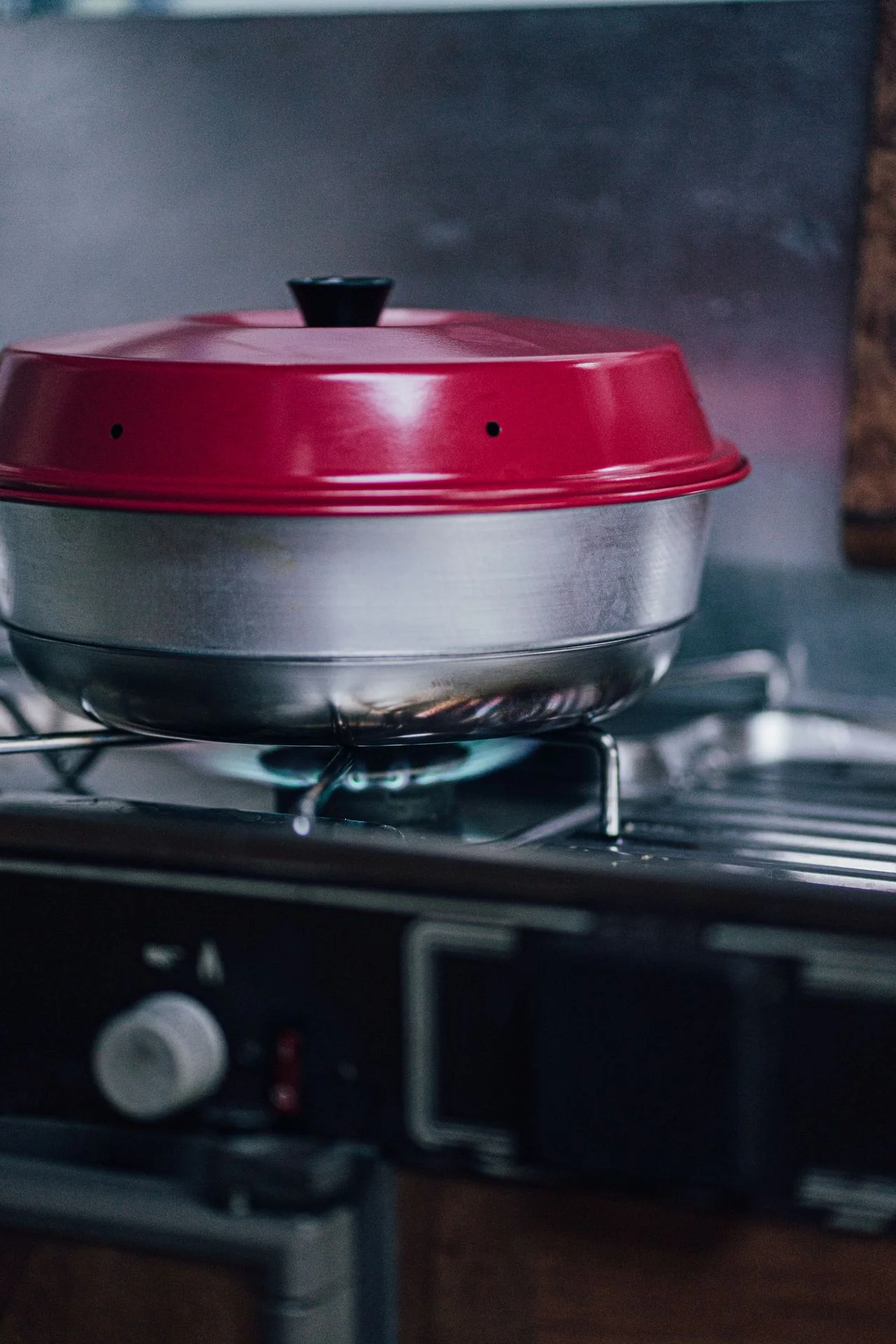
The photograph shows a lidded pan on a hob. Use a suitable lid where the cooking method permits and place the pan as the appliance instructions require. Do not alter food-safety or combustion requirements to run an experiment.
Photo & usage
Clément Proust · Pexels License · Source. Display copies resized and encoded as WebP; no instructional details were fabricated or removed.
The EPA's cooking ventilation guidance recommends rear burners where possible and using the hood whenever cooking. Switch on as you begin the meal, before steam becomes a room-wide problem.
Match the cooking method to the food. When a covered simmer suits the recipe, use a suitable lid and reduce heat once the simmer is established. If sauce must reduce uncovered, plan that as a deliberate moisture-producing stage. Keep the pan within the hood's capture area as far as its layout allows. Do not compromise pan stability or the cooktop's permitted pan sizes.
HVI describes variable speeds as useful for quieter light cooking and stronger extraction when needed. Use the manual's recommended setting, increasing it for more demanding stages. If noise makes the necessary setting intolerable, record that as a usability problem for a service visit; turning the hood off during the wettest part of dinner defeats the routine.
Work through a meal with a planned wet stage
Hypothetical example: dinner involves boiling pasta, simmering sauce and steaming vegetables. The aim is to avoid treating three open, vigorously steaming pans as an unavoidable background condition. This example sets out decisions, not measured moisture savings.
- Before heating, place the pasta pan on a suitable rear zone and check that the sauce and vegetable pans fit without crowding. Turn on the hood.
- Follow the pasta instructions for the boiling stage. Keep the sauce covered where its recipe allows, and use only the heat needed to maintain the intended cooking state.
- If the sauce needs an uncovered reduction, consider doing that before starting the vegetables when the recipe and serving schedule permit. You are changing the sequence, not leaving cooked food waiting indefinitely.
- When lifting a lid or draining pasta, expect a brief release of steam. Arrange the work area beforehand so hot vessels have a stable destination. Do not carry hot water farther or stretch over the stove just to keep steam near the hood.
- After cooking ends, leave the ducted hood running for the EPA's recommended 10–20 minutes. Set a separate reminder if there is no suitable built-in timer.
That final interval is a starting routine, not a promise that every kitchen will be dry. Keep the meal manageable: one well-positioned pan and a fan you actually use are more practical than a complicated sequence nobody follows.
Judge the result at the room's edges
At the end of the run-on period, look at the room-facing window, the sill and accessible nearby cabinet surfaces. Note whether new droplets have stopped forming and whether previously wet areas dry. Dry ordinary condensation promptly with a cloth appropriate to the finish; leaving water in place does not improve the assessment.
The EPA moisture guide advises acting on condensation and keeping indoor relative humidity below 60%, ideally 30–50%. These are general moisture-control references, not a guarantee that every cold window will stay clear.
If you already own a humidity meter, follow its placement instructions and compare readings at the same room location, away from the steam plume. A reading immediately beside a boiling pan answers a different question from a reading in the occupied kitchen.
A useful finish is a repeatable meal routine with less persistent wetting and surfaces that dry afterward. Revisit it during another similar dinner. A clear pane on a warmer evening alone cannot establish that extraction improved, and a humidity reading cannot certify cooking-pollutant removal.
Separate limited extraction from a missing exit
If performance has declined, review the manual's user-maintenance instructions. Deal only with filters designated for owner access, following the specified shutdown, removal, cleaning or replacement procedure. Do not assume all filters are washable or dishwasher-safe. Replace everything correctly before operating the hood again. Internal fan, wiring and duct work belong with qualified service.
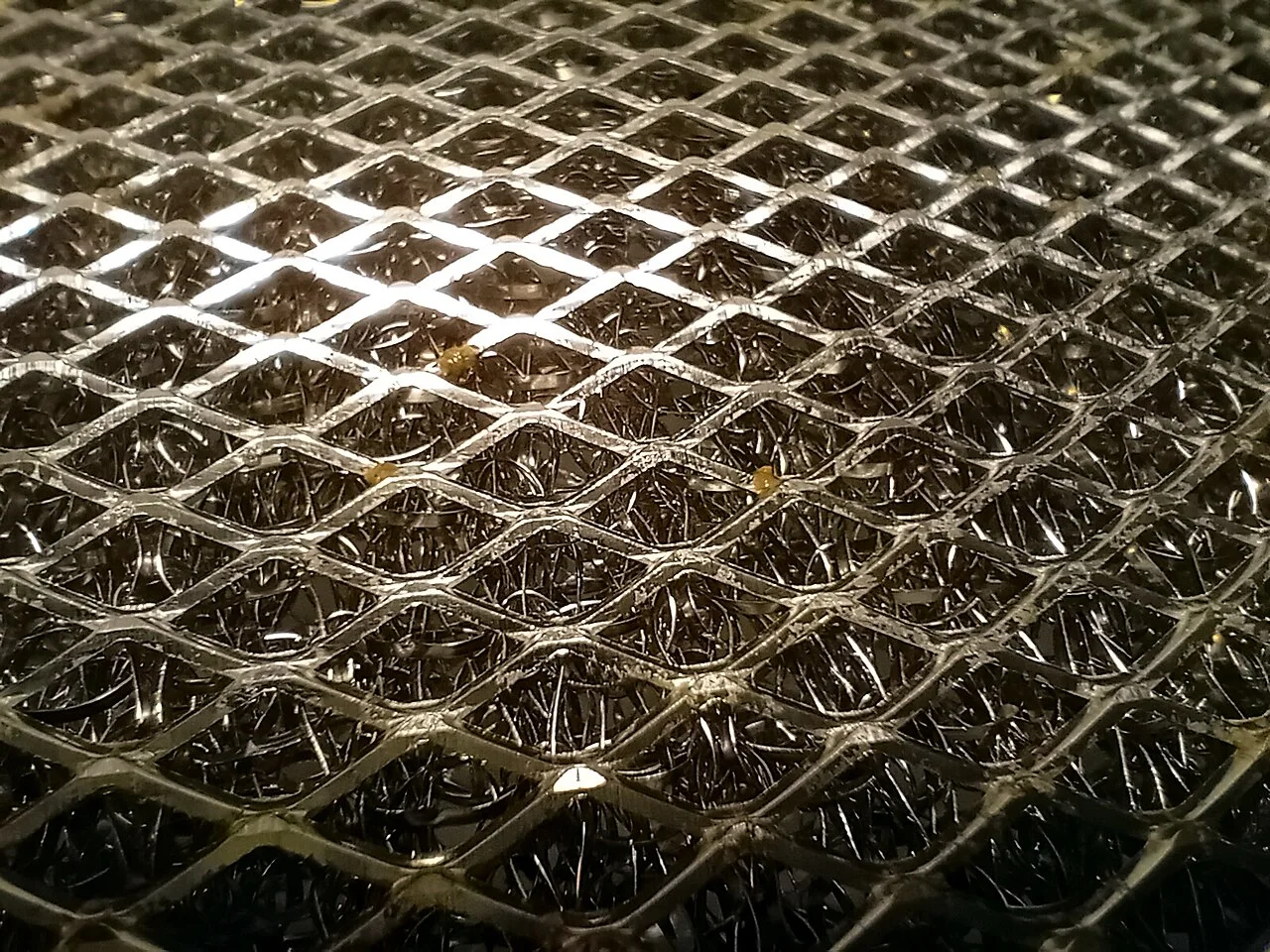
This source photograph shows a cleaned filter. It does not approve dishwasher cleaning for your filter or prove that water vapour reaches outdoors. Follow the exact maintenance permission and investigate persistent room moisture separately.
Photo & usage
Author not named on the source file · CC BY-SA 4.0 · Source. Display copies resized and encoded as WebP; no instructional details were fabricated or removed.
If the kitchen has only recirculation, suitable existing outdoor ventilation becomes especially relevant. The EPA supports opening windows or doors when outdoor air quality, weather and security allow. Use installed kitchen exhaust where available; do not assume a ceiling fan that merely moves room air provides extraction.
Do not solve this by opening the kitchen into every adjoining room and calling the absence of window fog a success. You may simply have changed where the moisture goes. Keep permanent ventilation openings unobstructed and follow the home's ventilation instructions.
If moisture persists despite sensible cooking practices, ask for an assessment of the kitchen's ventilation provision. A dehumidifier may have a separate role in wider humidity control, but it does not verify that a cooking plume is being captured and exhausted.
THE WORKING FILE / ROUTE
Do not confuse a recirculation filter with an outdoor moisture route
A hypothetical meal has three moisture-producing stages: heating a large uncovered pan, simmering a second pan and draining the first. Moving all three to the same short period creates a different room load from staggering the permitted cooking tasks. The example changes timing and pan position, not the recipe’s food-safety instructions.
Before heating
- What to record
- Hood type and permitted pan position
- Question answered
- Is there a confirmed route outdoors?
Two pans active
- What to record
- Lids where suitable; steam escaping capture
- Question answered
- Is the plume reaching the hood?
Draining
- What to record
- Location and brief steam burst
- Question answered
- Does the room still accumulate visible moisture?
After cooking
- What to record
- Window / surface condition and runtime per manual
- Question answered
- Does moisture clear or persist?
Read the result
A different cooking sequence can help capture without proving a particular airflow rate. If the hood recirculates, better grease filtration alone does not establish that water vapour is being exhausted outdoors. Record the air-route question for an installer, together with the hood model and the pattern observed during an ordinary meal. Avoid a purchase justified only by an impressive fan-speed label.
Your route record Blank worksheet
Match the wet stages of a normal meal to a confirmed extraction route.
- Hood model
- ________________________________
- Outdoor exhaust / recirculation / unknown
- ________________________________
- Permitted pan positions
- ________________________________
- Wet cooking stage
- ________________________________
- Capture observation
- ________________________________
- After-cooking runtime
- ________________________________
- Room surface result
- ________________________________
- Installer question
- ________________________________
Before closing the file
- The exhaust route is known or explicitly unresolved.
- Observations use ordinary cooking.
- Persistent room moisture receives a follow-up decision.
Know when the next step needs a specialist
Do not attempt a smoke, flame or improvised pressure test. The EPA's backdrafting guidance explains that exhaust fans can depressurize a home and draw combustion products down a flue. Before increasing extraction capacity in a home with a fireplace or fuel-burning appliance, have a qualified ventilation or heating professional assess replacement air and combustion safety. An open window is not proof that the arrangement is safe.
Stop ordinary troubleshooting if the hood malfunctions, water drips from its housing, or dampness damages surrounding finishes. Report persistent moisture or suspected hidden mould without opening the construction. Renters should notify the property manager promptly.
Give the professional a defined brief: the hood model, confirmed or unknown exhaust destination, the meal stage that overwhelms it, usable fan settings, filter-maintenance history and where water appears. Ask them to assess capture, the duct route, replacement air and installed airflow. PNNL's retrofit guide emphasizes verifying actual flow; a large advertised airflow figure is not a diagnosis.
After service, obtain the operating instructions and repeat an ordinary meal. Close the job when the route is confirmed, the hood works as intended, and recurring wetting has been resolved or assigned a separate repair.
THE REFERENCE FILE
Sources & scope
Documentation reviewed 1 Nov 2026. Examples are illustrative; this article does not claim hands-on product testing. Follow the instructions for your actual material, model and location.
- US EPA: Strategies for Improving Indoor Air Quality While Cooking Infographic
- Home Ventilating Institute: How Much Ventilation Do I Need?
- Pacific Northwest National Laboratory: Kitchen Exhaust Retrofit Duct Guide
- US EPA: A Brief Guide to Mold, Moisture and Your Home
- US EPA: Best Practices for Indoor Air Quality when Remodeling Your Home — Combustion Appliance Backdrafting