A microfiber cloth can come out of a wash looking tidy but covered in lint or carrying a gritty edge. Its next task may then become harder, especially on glass or a polished surface. Build a care route that preserves the working face and keeps cleaning tasks distinguishable. Start with the cloth's instructions, then inspect the result instead of assuming every washed cloth is ready.
Separate material identity from appearance
Find the packaging or maker's care information for each cloth type. “Microfiber” describes a broad material category, not one universal washing and drying instruction. Some cloths include special coatings, stitched pads or different backing materials. Keep unidentified products separate until their care route is established.
Look at the working face, edge binding and any printed labels. A stitched edge can hold grit even when the central pile looks clean. Check for loose threads or trapped fragments before putting the cloth near a scratch-sensitive surface. Set damaged cloths aside for a specific decision rather than returning them to the main stack.
O-Cedar's microfiber guidance is useful for its covered cleaning products, including its warnings about bleach and softener. Do not generalise a brand's temperature or drying instruction to every cloth in the cupboard. Your exact product's instructions govern the wash route.
Keep task history visible during sorting
Sort cloths by both material compatibility and what they cleaned. A cloth used for ordinary dust has a different history from one used around a toilet or to handle an unknown chemical spill. Colour coding can help, but only if the household agrees on the meaning and keeps the categories clear after laundering.
Use labels or separate containers where similar colours make mistakes likely. Do not rely on fragrance to identify a clean cloth or a former task. If a cloth has handled a substance outside the ordinary cleaning route, follow guidance for that substance rather than adding it to a shared wash.
Remove accessible loose debris without shaking cloths over clean laundry. Check pockets in any accompanying cleaning garment for sharp objects. Keep oily workshop rags and heavily contaminated materials out of this routine. This article concerns ordinary reusable household cleaning cloths with known product instructions and an appropriate home-laundry route.
Prevent lint donors from joining the load
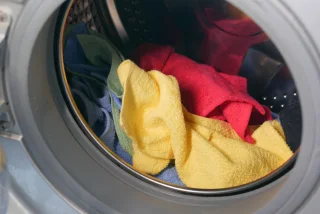
Inspect the proposed wash group for new towels, fuzzy robes and other lint-shedding items. ACI's laundry guidance distinguishes lint donors and lint attractors. For cloths whose working face needs to remain clear, a compatible separate load may be easier to manage than a large mixed load.
Do not combine everything merely because the colours match. Compare permitted temperature, agitation, additives and drying method. A microfiber cloth and a cotton towel can share a colour while needing different care. Keep hook-and-loop items contained as their maker directs so they do not catch the cloth surface.
A small load still needs the washer's appropriate settings and detergent directions. Avoid overfilling to save a cycle if the items cannot move properly. The goal is a manageable route with a useful inspection at the end, not a claim that one particular load arrangement will suit every machine or cloth.
Choose additives from the cloth instructions
Use a compatible laundry detergent and measure its dose for the actual load and soil. Do not add softener by habit. O-Cedar explains that softener can coat microfiber and reduce its effectiveness; its covered products also prohibit bleach. Check other cloth makers directly for their restrictions.
If a cloth has already received an incompatible additive, record what happened. Ask the maker about any supported recovery method rather than inventing a long series of hot washes or vinegar treatments. Some changes may not be recoverable within the product's care limits.
Keep product residues from previous tasks in mind. Do not deliberately mix cleaning chemicals in a laundry container or pretreatment bath. If a cloth carries an unknown product, identify it and its removal instructions before washing. A simple material-care problem should not become a chemical-mixing experiment because the cloths are small.
Compare a lint problem with a residue problem
The table is illustrative and invented; it reports no cloth testing. It compares observations after washing and complete permitted drying. Each finding suggests a different next question, so do not treat every disappointing cloth as merely needing more detergent.
| Observation | Useful history question | Next decision |
|---|---|---|
| Loose pale fibres on dark cloth | Was it washed with lint-shedding towels? | Review sorting and permitted lint removal |
| Unusual slick feel | Was softener or another additive used? | Check maker-supported recovery |
| Hard particle at binding | Was debris removed before washing? | Hold from delicate surfaces |
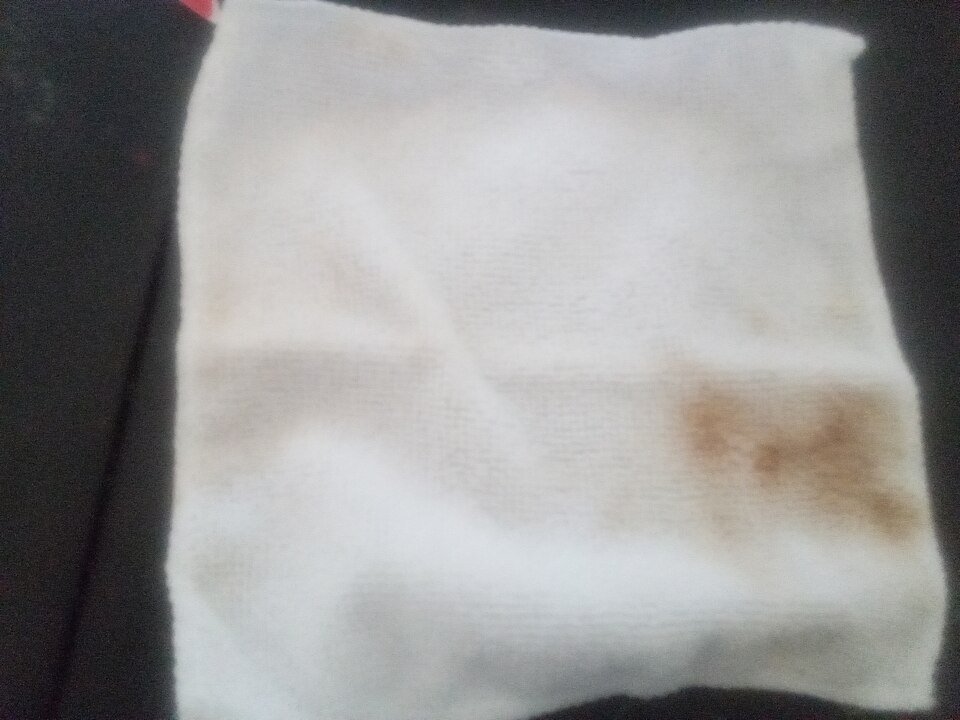
The table does not prove a cause from touch or appearance alone. Use the wash history and product directions to narrow the decision. If a cloth remains gritty or damaged, changing its task may be inappropriate too: it could scratch a different surface. Retire it clearly if safe reuse cannot be established.
Dry and fold without hiding unfinished edges
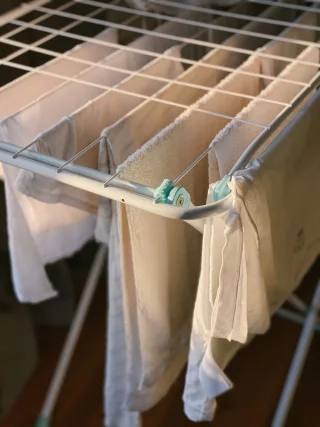
Follow the cloth's permitted drying method, spreading it so binding and corners can dry. Do not assume that a broad dry face means a folded stack is dry throughout. Keep drying cloths distinct from ready ones and avoid storing them compressed while damp.
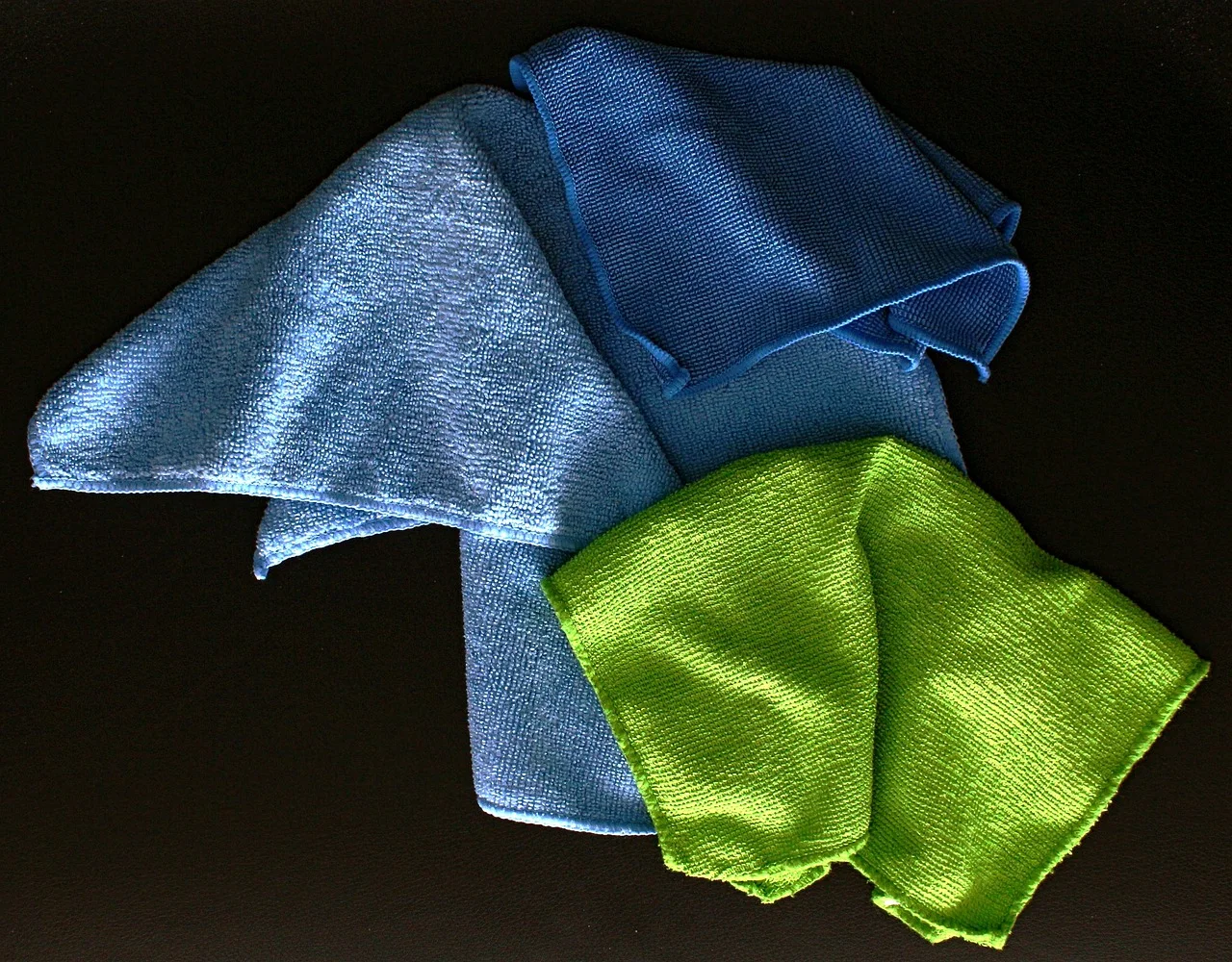
The spread cloths expose stitched hems, corners and looped faces instead of hiding every edge inside a stack. Inspect those areas on your microfiber cloths for hair, lint, grit and loose stitching after the product-permitted drying route. Keep unfinished cloths separate from ready ones, and fold only when completely dry. The pictured colour and texture do not prove cleanliness or that a particular washing additive is permitted.
Photo & usage
bluebudgie · Pixabay Content License · Source. Display copies resized and encoded as WebP; no instructional details were fabricated or removed.
Inspect the face under good light. Check for hair, grit, lint and loose edging. Compare the feel with a known clean, dry cloth of the same type where useful, but do not equate softness with performance. A changed texture after an additive may need advice even when the cloth looks clean.
Fold only fully dry cloths and place them in clean storage by task. Do not rest a fresh stack on the dirty laundry container while clearing a shelf. Wash hands before sorting the ready group and keep the working surfaces used for clean handling separate from the soiled-cloth route.
Inspect the storage shelf before restocking
A clean dry cloth can collect grit from the shelf on which it is folded. Empty the intended storage space and inspect it for dust, spilled product and rough edges before returning the ready stack. Clean the shelf by its own permitted method and let it dry completely.
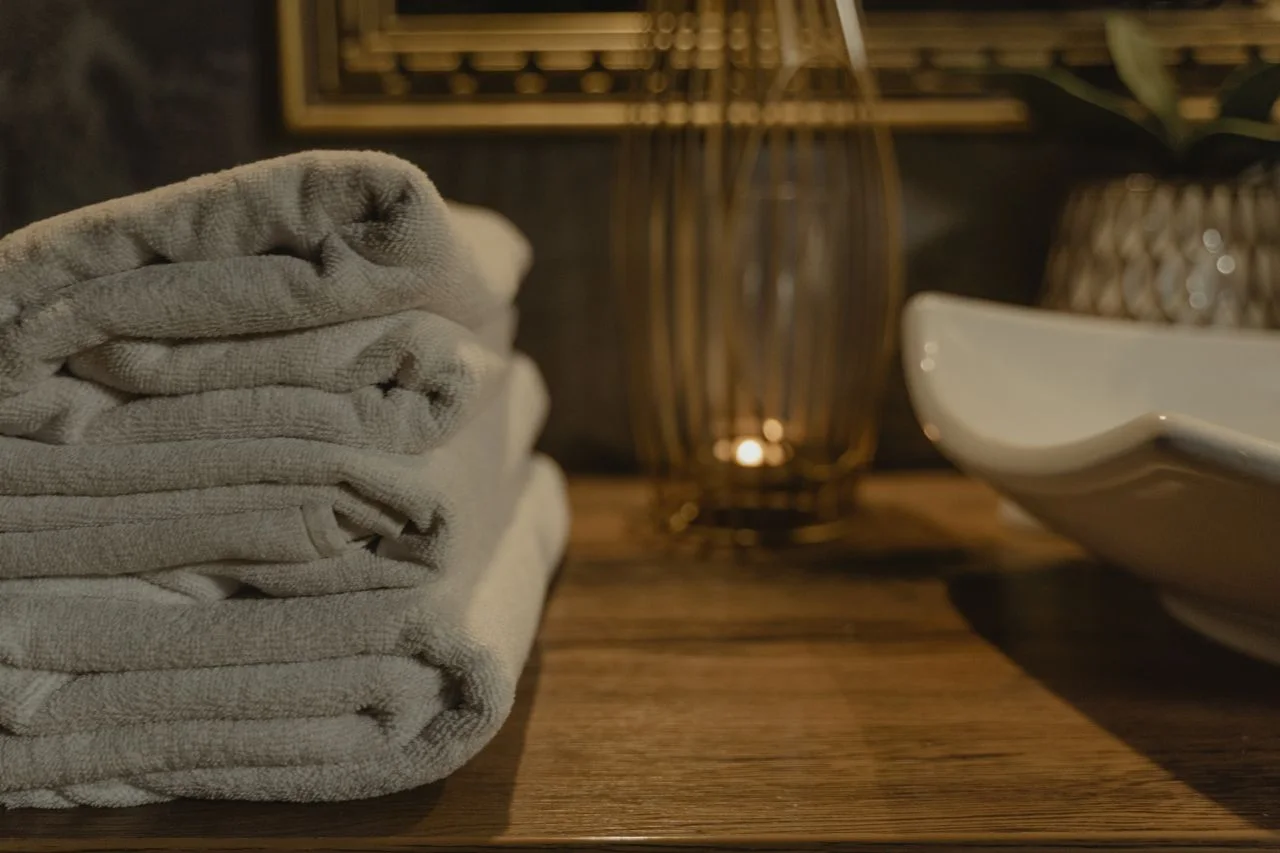
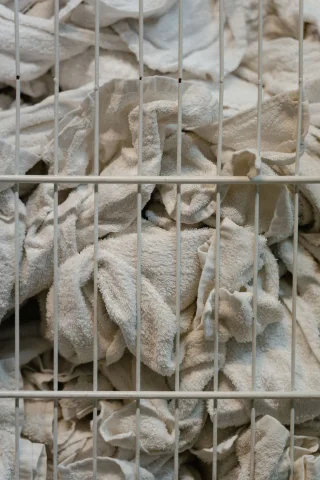
The towel stack shows folded textiles resting directly on a supporting surface, a useful reminder to inspect that surface before restocking. Empty your cloth-storage area, remove dust or spilled product by its permitted method, and let it dry before returning fully dry, inspected cloths. These terry towels illustrate storage only; they are not identified as microfiber, and their appearance does not prove wash history or dryness.
Photo & usage
Tima Miroshnichenko · Pexels License · Source. Display copies resized and encoded as WebP; no instructional details were fabricated or removed.
Keep cloths away from leaking bottles and loose abrasive tools. Do not store a polished-surface cloth beneath a used brush or inside a container that previously held gritty pads without cleaning the container appropriately. If task groups share a shelf, keep their labels visible when the cupboard opens. The next user should not need to unfold several similar cloths to guess which group they belong to. This final storage check preserves the useful result of the wash rather than making clean handling the weakest part of the route.
Return each cloth with a defined purpose
Label any held cloth plainly with the unresolved issue: trapped grit, unknown chemical history or damaged binding. Keep it outside the ready stack. A note tied only to its colour can be lost if the household owns several identical cloths, so use a separate hold container where necessary.
Review the next cleaning task before choosing a cloth. A surface may require a particular material or a manufacturer-approved method even when the cloth itself is clean. Clean microfiber does not authorise dry rubbing on every polished finish or wet wiping of electrical equipment.
The care route is finished when the cloths are fully dry, inspected and assigned to their appropriate group. Keep only the few exceptions that will change the next wash. A small, reliable ready stack is more useful than a large collection whose material instructions and task histories are unclear.
THE REFERENCE FILE
Sources & scope
Documentation reviewed 1 Nov 2026. Examples are illustrative; this article does not claim hands-on product testing. Follow the instructions for your actual material, model and location.