Describe the reflection from the seat where it matters
After dark a window may show a bright duplicate of a table lamp directly in your forward view. From the next chair the same reflection may sit harmlessly above eye level. Assess the glass from occupied seats rather than standing in the middle of the room. The purpose is to make an evening seating arrangement more usable, with no claim about changing the performance of the glazing.
Choose the seat where the image is bothersome and one alternative seat used by the household. Keep the ordinary evening curtains and lights in their usual positions for the first observation. Note the time and whether it is fully dark outside. A reflection checked at twilight can become much more conspicuous as the outside view fades.
Describe what you see: a bare bright point, a recognisable shade, a broad patch or several faint duplicates. Record which pane contains it and whether it interrupts a normal view toward another person, a book or the room. Multiple reflections can occur in glazing; their presence alone does not diagnose damage or identify the glass construction.
Identify the contributing lamp with its switch
From the chosen seat, switch one suspected lamp off using its normal control, then back on. If the image disappears and returns, you have a useful source identification. Repeat for another existing lamp if necessary, restoring the usual state between checks. Keep safe general lighting and leave any lighting needed for movement operating.
If several lamps contribute, label their reflections on a sketch rather than treating the whole window as one glare source. Include lights in adjoining rooms visible through an open doorway. A lamp you barely notice directly may be conspicuous in the glass because its reflected image falls in your normal sight line.
CCOHS explicitly includes night window reflections among potential reflected-glare situations. OSHA provides broader positioning advice for visual tasks. Those sources support checking geometry, but this living-room exercise does not establish a glare index or a workplace compliance result. YourHome provides context for arranging household lighting. Keep the conclusion at the level of the observed seat and scene.
Move the viewpoint before moving furniture
Sit back, sit at the usual forward edge and turn your head as you would during conversation. Notice whether the image moves across the pane or remains in a bothersome part of your forward view. Do not adopt an awkward posture merely to escape it. The point is to identify the normal range that the final arrangement must accommodate.
Try the other existing seat without moving the lamp. Keep a book open at its usual reading angle if reading is part of the room use. A second seat might remove the window image but introduce a direct view of the lamp beneath its shade. Check both paths. A reflection solved by moving into direct glare is not a satisfactory outcome.
Where a chair can safely shift a small distance, mark the candidate position relative to a rug edge or wall on your sketch. Check the full movement of the chair and surrounding route. Do not block a doorway or place a foot where it will catch a lamp cord. Avoid shifting heavy furniture just to conduct this first diagnosis.
Compare permitted lamp and curtain changes
If a portable lamp has a safe alternative position on existing furniture, isolate it as instructed before moving it and route its cord safely. Restore its normal shade and clearances. Then compare the reflection from the original seat. Move one lamp at a time; changing every light makes it difficult to know which change mattered.
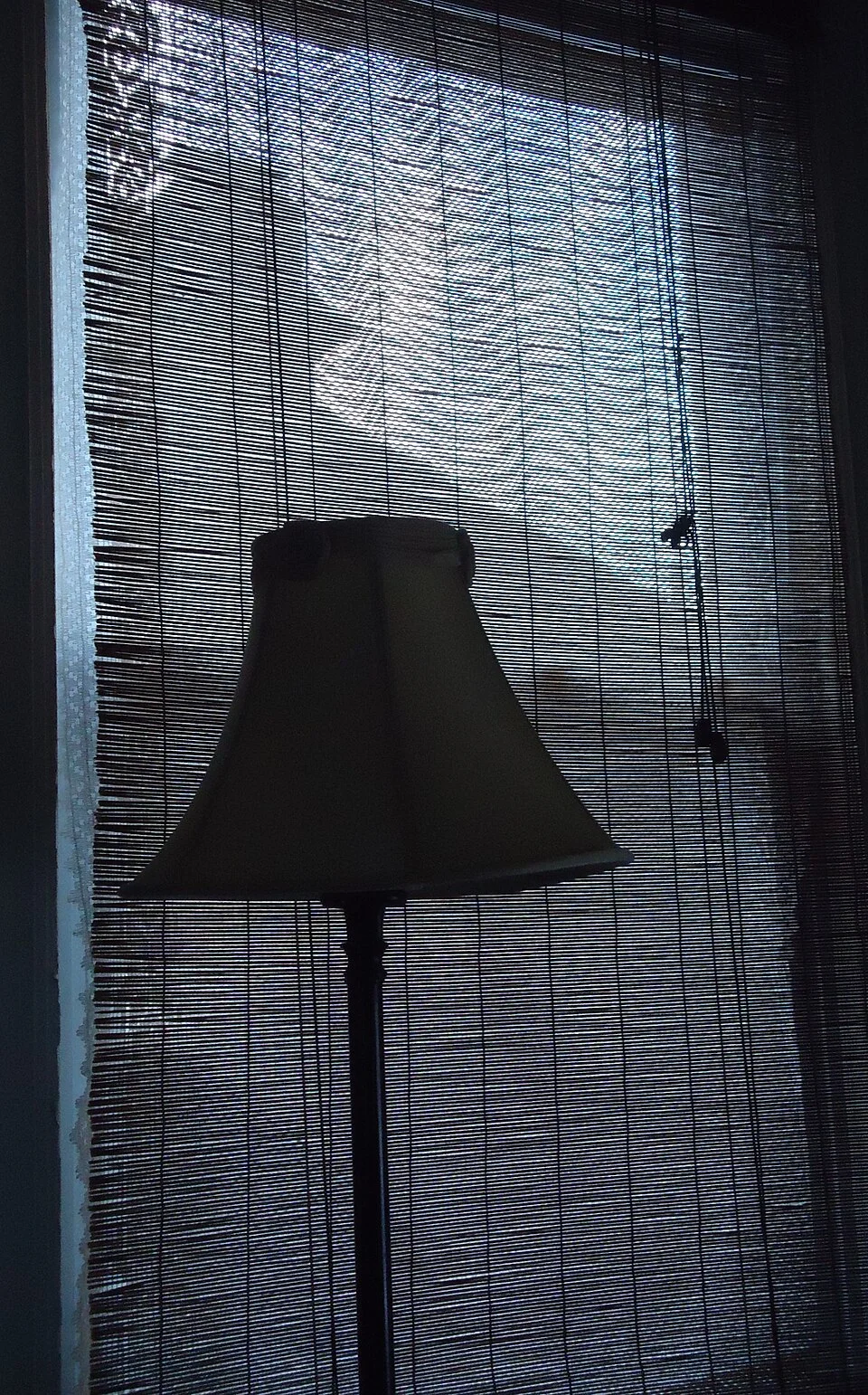
The lamp sits directly in front of the covered window, making their relative positions easy to describe. Compare one permitted lamp or covering change from the original occupied seat, then restore it before the next trial. This daylight photograph does not show an evening glass reflection, prove its source or establish that the lamp can be moved safely in another setting.
Photo & usage
Tomwsulcer · CC0 · Source. Display copies resized and encoded as WebP; no instructional details were fabricated or removed.
Use an existing dimmer only within the fitting and bulb instructions. Note whether the lower setting reduces the intrusive image while still allowing the actual page or nearby objects to be seen. Turning off the only useful reading light may remove its reflection while defeating the room’s purpose. Record that as a tradeoff rather than a successful fix.
Try existing curtains as a separate condition. Fully covering the relevant pane may remove the visible glass image from the scene, although a bright curtain surface can remain. Inspect the overlap and sides from the seat. Keep fabric clear of lamps and heaters. Do not tape a temporary cover to a bulb, shade or hot fitting, and do not alter the window finish.
Read an illustrative reflection comparison
This invented record uses three ordinary viewing postures at each seat: upright, leaned back and turned toward a companion. An intrusive view means the observer reports the bright image interfering with that particular normal view. No brightness measurements or universal glare limits are implied.
| Arrangement | Seat A intrusive views out of three | Seat B intrusive views out of three | Book usable at A |
|---|---|---|---|
| Usual lamp and open curtain | 3 | 1 | Yes |
| Lamp on safe alternative side table | 1 | 2 | Yes |
| Usual lamp and curtain covering pane | 0 | 0 | Yes |
The original arrangement has 3 plus 1 = 4 intrusive views across the two seats. Moving the lamp produces 1 plus 2 = 3, a reduction of one counted view overall, but Seat B becomes worse. The closed-curtain arrangement has 0 plus 0 = 0 in this limited record. These sums compare reported conditions, not units of glare or a percentage change in light.
If both seats are occupied, the moved lamp is not an obvious shared improvement. If the outside view matters, the curtain option also has a cost that the table does not score. The household should decide whether keeping that view or avoiding the image matters more during this particular evening activity.
Check the scene through a normal evening
Leave the promising arrangement in ordinary use long enough to read, talk and stand up from the chair. Return after the outside has become fully dark. Check any other lamp normally switched on later. An arrangement judged with only one light may fail when the adjoining room is lit or somebody opens the curtains.
If you take a photograph, use it as a position record. Camera exposure, flare and reflections from the phone itself can exaggerate or suppress a lamp image. Do not use image brightness as proof of what another seated person will experience. Ask them to view the scene directly from their own normal posture.
Frequent mistakes include inspecting from a standing height, cleaning the window repeatedly when the image is a normal reflection, and increasing lamp output because the room feels dark around the bright duplicate. Check the specific path before changing output. If there is actual glazing damage or unexplained moisture inside sealed panes, seek appropriate assessment separately; this reflection exercise cannot diagnose it.
Finish with a seat-specific setting
Record the chosen lamp surface, switch settings, curtain position and seats checked. A useful instruction might be to cover the left pane for evening reading at both chairs, while leaving the lamp in its ordinary safe place. Another household may prefer a different existing seat. Describe the actual compromise rather than claiming that one universal lamp position removes window glare.
Completion means the source was identified by a reversible switch check, normal sitting postures were compared and page visibility was retained. Confirm that the final lamp position is stable and clear of fabrics and that the route stays clear when people stand. Keep the original sketch so the arrangement can be restored after cleaning or moving a side table.
THE REFERENCE FILE
Sources & scope
Documentation reviewed 1 Nov 2026. Examples are illustrative; this article does not claim hands-on product testing. Follow the instructions for your actual material, model and location.