Choose a door that can be operated normally
A hallway can carry ordinary household sound toward a quiet room. Closing its door may change what is heard, but the effect depends on the source, receiver and other routes. Compare two normal door states before considering any building work. This exercise involves no sealing, hardware changes or improvised soundproofing.
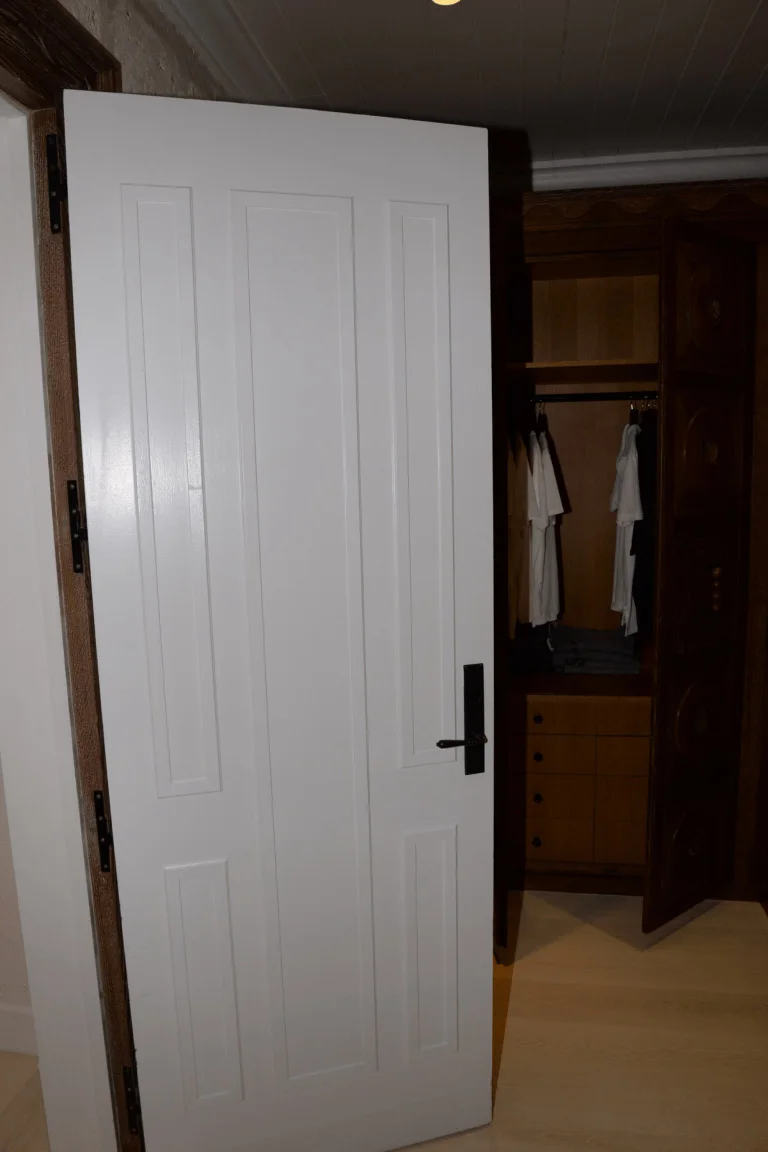
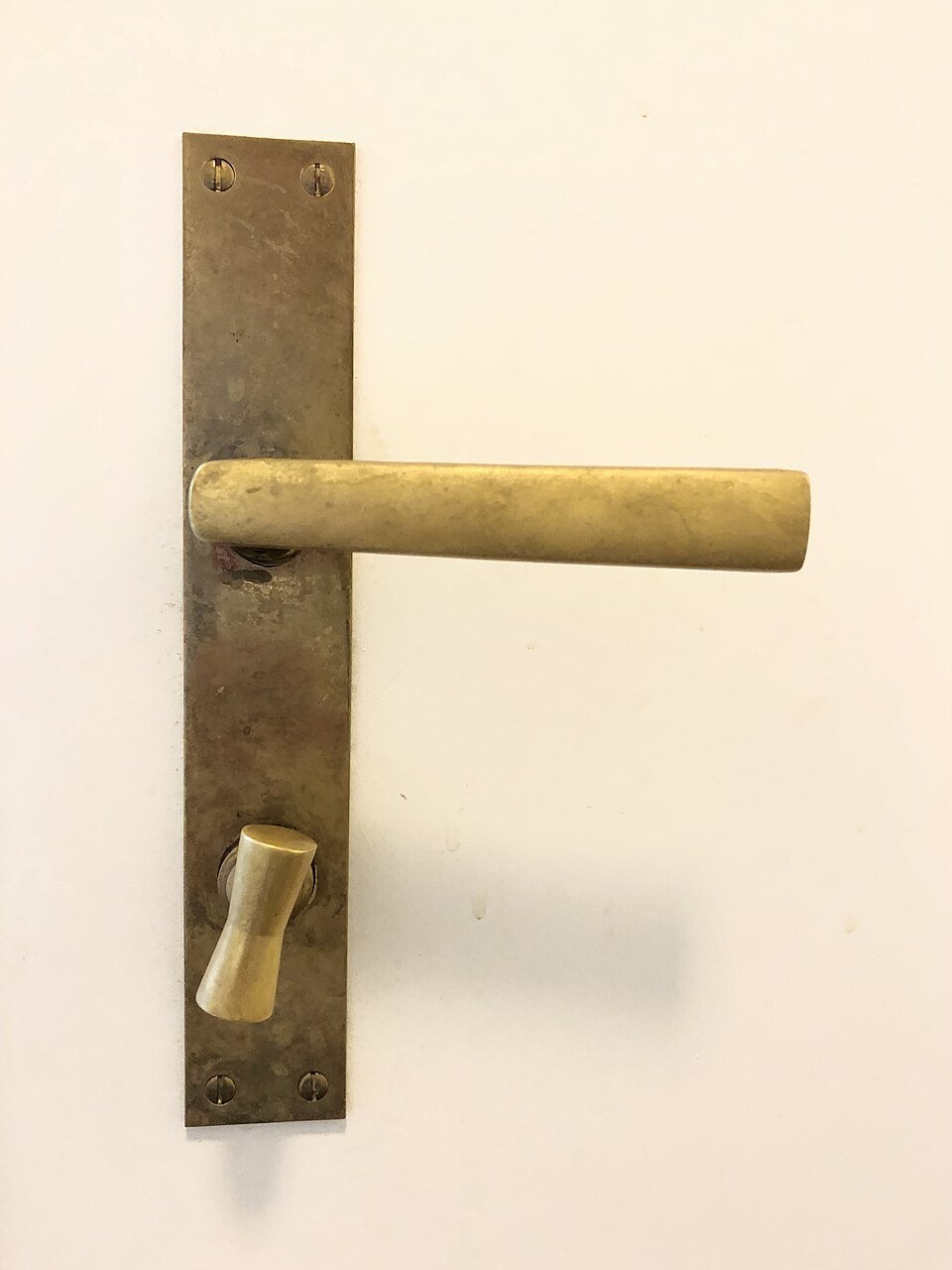
The door, frame, hinges and handle provide a clear reference for naming open and closed states without modifying hardware. Confirm that your actual door is permitted to operate that way before comparing the same household source and listening position. Appearance alone does not identify a fire door, establish an allowed open state or measure sound reduction.
Photo & usage
Federal Bureau of Investigation · Public domain · Source. Display copies resized and encoded as WebP; no instructional details were fabricated or removed.
Select an ordinary internal door that you are permitted to operate and whose open state is allowed. A fire door required to remain closed is unsuitable for an open-door trial; leave it in its required state. Do not disable a closer, wedge a door or alter a latch. If you are unsure of the door’s function, choose another appropriate door or limit the exercise to observing normal closed use.
Inspect the route before starting. The door must move without catching fingers, cords or furniture. Keep required ventilation slots, transfer grilles and designed clearances unobstructed. Those features are not defects to plug for a listening experiment. Keep children and pets clear of the moving leaf and agree the sequence with everyone involved.
Draw the source, receiver and connecting route
Make a simple plan showing the chosen door, the listening seat and the ordinary source location. Include other doors and open connections. A kitchen radio heard in a bedroom might arrive through a hallway, an adjacent open room or a connected construction. The drawing helps you name what the comparison actually changes.
Choose a modest repeatable household source under your control. A helper reading a short neutral paragraph at a normal conversational level works for a qualitative comparison. Another option is a familiar spoken recording played quietly from the same device, at the same fixed volume and location. Do not increase volume to provoke a clear result or use test tones.
Keep the source away from the moving door and do not place a speaker against a shared wall. Choose an ordinary household time and stop if the exercise disturbs anybody. The aim is to compare normal use, not to challenge the separating construction. A vehicle pass or unpredictable neighbour sound is unsuitable as the primary controlled source because it changes between trials.
Fix the listening method before the door moves
Use one normal seated position and leave it unchanged. Decide what to record: clearly present, faintly present or not noticed during the sample. If the source is speech, judge its broad audibility rather than trying to decipher private content. A neutral prepared paragraph avoids that privacy issue and keeps the task consistent.
Give each sample the same practical duration, such as thirty seconds, with enough quiet between samples to move the door safely. Keep windows, other doors, ventilation and room equipment unchanged. Record any background sound that overlaps. A sudden outside event can spoil a sample even if the source is well controlled.
CCOHS discusses source and path controls, while NIOSH and WorkSafe explain related engineering principles. These provide context for looking at the route. They do not rate your domestic door. Avoid importing industrial enclosure figures into the record, and do not treat an ordinary closed door as a tested acoustic barrier merely because the sample becomes less noticeable.
Alternate the permitted states and repeat
Run a short sample with the door in the ordinary permitted open position. Close it normally until its latch engages if that is its usual operation, then repeat. Return to the same open position and repeat again. Use ordinary handles and do not slam the leaf. Keep the source running only during the agreed samples so the door movement itself is not confused with the comparison sound.
If possible conduct several paired samples and reverse the starting state on a later set. The helper should keep their voice ordinary rather than unconsciously projecting more strongly when the door closes. A fixed recording avoids some voice variation, though its output is still not a calibrated source. Record the device setting and do not touch it mid-sequence.
Notice the character of any remaining sound. Speech may become muffled while a low hum remains similar, or an impact may still be apparent through another route. Report those observations without asserting a precise frequency response. Keep listening at the chosen seat rather than pressing an ear against the door, which asks a different question.
Read an illustrative paired door trial
The invented comparison below uses six thirty-second samples in each state, in an alternating sequence. The same spoken recording is played from one ordinary room at a fixed modest setting. Samples are grouped by door state only for the table; no decibel readings are involved.
| Permitted door state | Clearly present | Faintly present | Not noticed | Total samples |
|---|---|---|---|---|
| Open | 5 | 1 | 0 | 6 |
| Closed normally | 1 | 4 | 1 | 6 |
The open row sums to 5 plus 1 plus 0 = 6. The closed row sums to 1 plus 4 plus 1 = 6. Total source time per state is 6 multiplied by 30 = 180 seconds, or three minutes; both states together cover six minutes of source samples. Quiet gaps and door movement are additional session time.
Clearly present samples fall by 5 minus 1 = 4 in this example. That is a change in the listener’s categories, not four decibels or a calculated sound-reduction percentage. Five of the six closed samples still contain noticed sound, because 1 plus 4 = 5. The practical conclusion is reduced prominence for this source at this seat, with sound still arriving.
Interpret remaining sound without plugging gaps
If the change is obvious and repeatable, closing the suitable ordinary door during that activity may be a useful household routine. Check that doing so remains compatible with normal ventilation, access and the needs of other occupants. If the door must stay in a required position, that requirement determines use regardless of the listening preference.
If the sound changes little, do not immediately conclude the door is defective. Another route may dominate, the source may be too variable or the chosen sample may not represent the sound that bothers you. Repeat the disputed pair once under stable conditions. Avoid a long escalating session that gradually increases the source volume.
Common errors include comparing a loud open-door sample with a quieter closed one, changing the receiver seat and including the latch click in the source judgment. The most consequential mistake is stuffing the undercut or covering a grille to improve the result. Leave designed openings and all fire features intact. Building alterations require an appropriate assessment outside this simple comparison.
Finish with a limited household routine
Write the source, device setting or speaking method, receiver seat and permitted door states alongside the result. Add any samples spoiled by outside events rather than quietly discarding them. A useful note can say the closed ordinary study door made the neutral recording less prominent at the desk; the low background hum remained and its route was not established.
Completion means equal sample counts and durations, at least one alternating repeat, stable source and receiver positions, and no altered ventilation or fire features. Restore the room to its appropriate ordinary state and leave door movement clear. If a persistent concern needs repair or acoustic advice, the notes can explain the observed difference without pretending to diagnose the entire building or certify the door’s performance.
THE REFERENCE FILE
Sources & scope
Documentation reviewed 1 Nov 2026. Examples are illustrative; this article does not claim hands-on product testing. Follow the instructions for your actual material, model and location.