Choose eligible food before choosing the zone
A use-first shelf is a reminder to make a decision, not a place to rescue doubtful food. Before assigning priority, check what is known about each candidate: identity, preparation or opening date, package instructions and storage history. Food with an uncertain warm interval needs a food-safety decision before any trial of a new arrangement. Moving it to the front cannot make the missing history known.
Use the FDA cold-storage guidance for safety boundaries and temperature checks. This article assumes the refrigerator is operating dependably; it is not a procedure for diagnosing poor cooling. If cold storage is unreliable, protect food and address that problem before designing a priority shelf.
Start with a few clearly identified, suitable ready-to-eat foods that are likely to be overlooked: a covered cooked dish, an opened product with readable instructions, or a sound ingredient needed for the next meal. Leave an unidentifiable container out of the meal plan until its disposition is decided. Never taste an unknown leftover to establish what it is or whether it can stay.
Choose a position that preserves separation
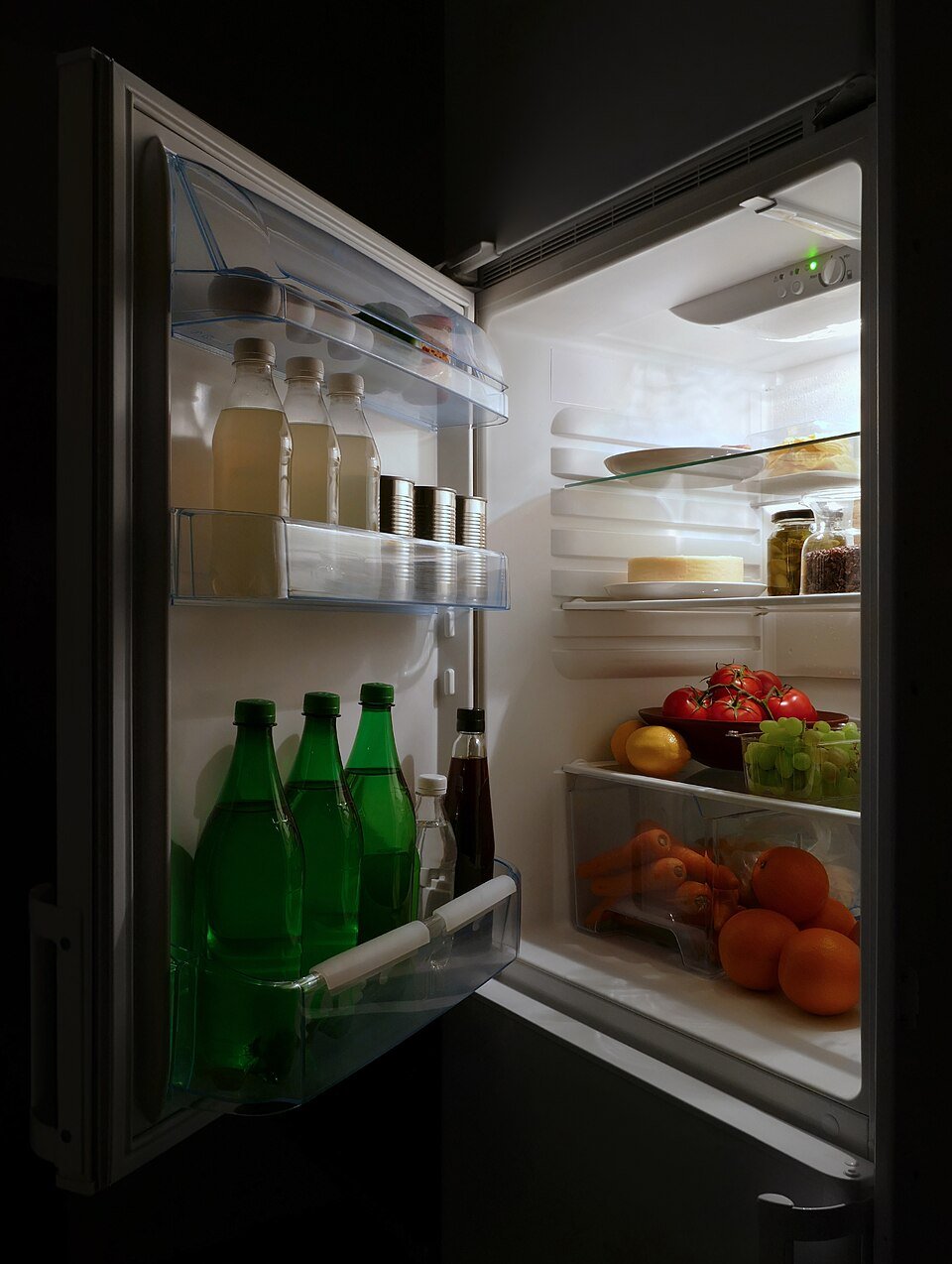
Step 1 is to identify a visible, accessible position within the refrigerator's intended storage layout. Keep ready-to-eat priority food separate from raw meat, poultry and seafood. Raw items need secure containment against leaks and a suitable lower storage position where drips cannot reach ready-to-eat food. Do not put a raw tray above the use-first area merely because that makes both labels easier to see.
A small washable tray may help define the zone if it fits, remains stable and leaves the model's air routes unobstructed. It is optional. An existing shelf area with a clear label can do the same job without adding another container to wash. Consult the model instructions, available for Whirlpool appliances through the official manual finder, before moving shelves or reassigning special compartments.
If a raw ingredient also needs prompt use, give it a separate priority note in its proper contained location. “Use chicken first: lower contained tray” is clearer than moving the chicken into the ready-to-eat zone. One planning list can refer to two physical locations. Food compatibility should determine placement; the label does not overrule it.
Write dates with the event they describe
Step 2 labels each eligible item with a description and a meaningful event. Write “opened 31 October” or “cooked 30 October,” rather than an unexplained “31/10.” Include the year where an ambiguous record could persist. Retain relevant manufacturer instructions, including any conditions that apply after opening. A shopping date alone may not answer how long a cooked dish has been stored.
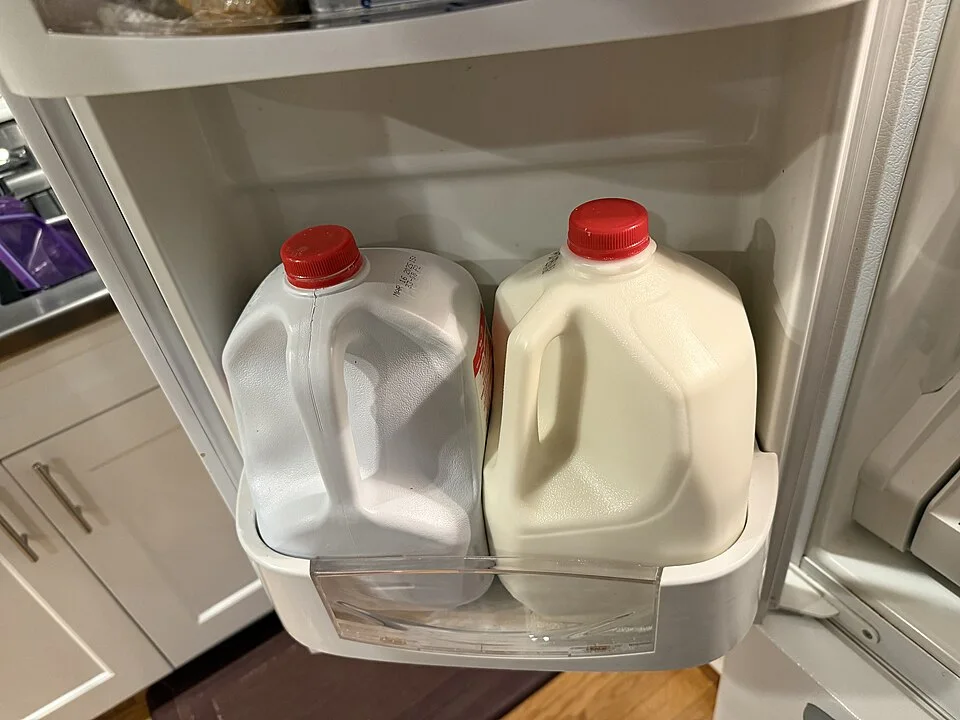
A printed code is visible near the container neck, but this view does not establish the event or storage limit it represents. Preserve the actual manufacturer wording before interpreting a date. Add explicit household event labels where appropriate, and keep a shopping or planning date separate from an opened, cooked or manufacturer-defined deadline.
Photo & usage
ArnoldReinhold · CC BY 4.0 · Source. Display copies resized and encoded as WebP; no instructional details were fabricated or removed.
Use the FoodSafety.gov Cold Food Storage Chart to find the applicable food category; refrigerator limits differ by food and condition. Do not give every item a universal weekly deadline. Record any household planning target separately from a manufacturer's date or an official storage limit. A plan to eat something tomorrow cannot extend a limit that ends today.
The historical best-before photograph in the visual reference is a reading exercise. Notice the wording attached to the date. It does not identify the current food in your refrigerator, provide a present deadline or settle how labels are regulated in your location. Your own record should preserve the actual wording rather than translating every printed date into the same instruction.
Limit the queue to food with a realistic next use
Step 3 connects the zone to meals that will actually happen. Choose a small set you can see without moving a stack. Write the proposed use beside each item on a list outside the door: lunch filling, dinner ingredient or breakfast accompaniment. This avoids repeated openings to remember what the zone contains. Do not leave food on the worktop while deciding a menu.
| Eligible item | Quantity | Planned allocation |
|---|---|---|
| Covered cooked grain dish | 3 household portions | 2 at lunch, 1 at dinner |
| Opened ready-to-eat ingredient | 2 household portions | 2 at dinner |
| Prepared vegetable dish | 1 household portion | 1 at lunch |
The queue holds 3 + 2 + 1 = 6 portions. Lunch uses 2 + 1 = 3; dinner uses 1 + 2 = 3. The allocation balances at six, but the arithmetic says nothing about safe storage. Each item must independently remain suitable through its proposed use. The invented portion sizes are household planning units, not dietary recommendations.
If the meal plan changes, reassess the item before moving its planning target forward. A priority zone that always contains twice as much as the household can use is too large, even if everything fits neatly.
Refresh the contents without resetting the clock
Step 4 is a brief review during ordinary meal preparation. Remove the chosen item, close the refrigerator and update the list outside. If some remains, preserve the original preparation or opening information and note the remaining quantity. Replacing a lid, changing a tray or rewriting a smudged label does not make the contents newly prepared.
Keep incoming groceries from burying the queue. Put new suitable stock in its ordinary position and compare dates before promoting it. Avoid pouring new contents into an older remainder just to save space; that merges histories and makes accurate tracking harder. When a container is emptied, wash it appropriately before reuse rather than putting a fresh label over the old food residue.
Check raw containment as part of normal placement. A damaged tray or leaking package calls for prompt handling and cleaning under food-safety guidance, including assessment of exposed food. The priority system should pause for that decision. Do not merely relocate a spill to a lower shelf and continue to regard everything nearby as cleared.
Finish with a decision for every visible item
Agree on who checks the queue when the usual cook is away. A short written description helps a substitute reader distinguish an instruction from a suggestion. “For Monday lunch, if still within storage instructions” communicates more than a bright sticker. If a planned eater will be absent, revise the meal allocation immediately rather than leaving a portion reserved indefinitely. Keep allergen or dietary information attached where household members rely on it; priority does not make an unsuitable ingredient appropriate for someone who normally avoids it.
Step 5 checks whether the arrangement changes the next choice. During the next routine meal, can the cook identify an eligible priority item without shifting unrelated containers? Can they find raw ingredients through the separate note while keeping them contained? If the tray has become a second forgotten drawer, reduce its contents or change the label position rather than adding a more elaborate coding scheme.
Record outcomes plainly: used, retained within applicable instructions, frozen through an appropriate safe process, or discarded. Freezing is a separate food-handling decision and cannot repair unsafe earlier storage. Do not move doubtful food to the freezer just to clear the zone or improve a waste tally. An honest discarded entry is more useful than a concealed uncertainty.
Completion means ready-to-eat priorities remain visible, raw food stays contained and separated, date events are legible, and each item has a realistic next action. The system succeeds when people understand why an item is first in line and still check whether it is suitable. “Use first” expresses order; the food's actual history and applicable instructions govern the eating decision.
THE REFERENCE FILE
Sources & scope
Documentation reviewed 1 Nov 2026. Examples are illustrative; this article does not claim hands-on product testing. Follow the instructions for your actual material, model and location.