Start where the light is actually seen
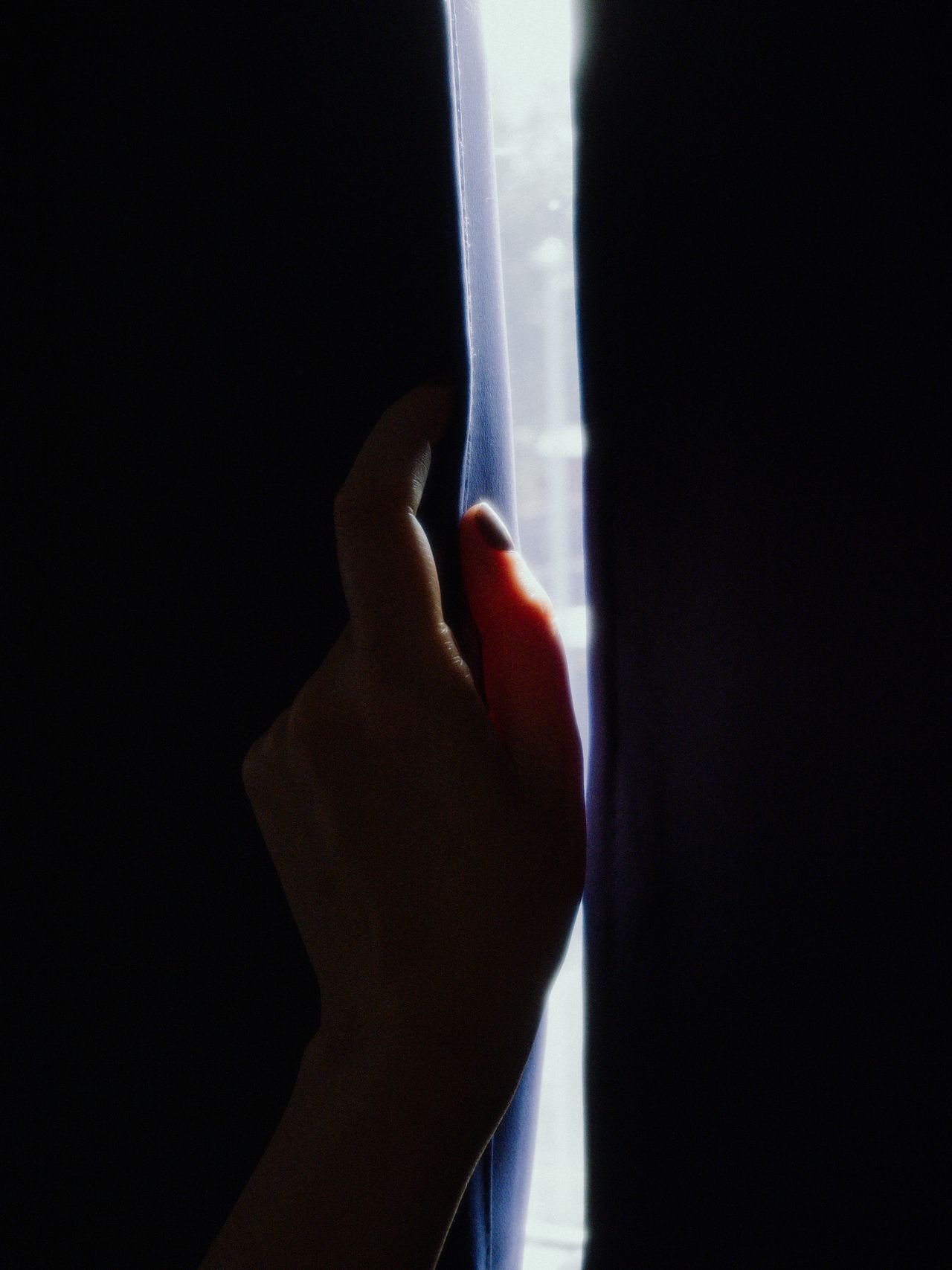
A narrow curtain leak can be conspicuous from one pillow and invisible from the other. Looking at the curtain while standing in the middle of the bedroom often misses that difference. Begin by lying in your normal position with the usual pillow height. Keep the light source and ordinary curtain position unchanged. Describe the visible shape: a vertical centre stripe, a bright side edge, a band above the fabric or a reflected patch on a nearby wall.
Choose one source to investigate. Early daylight, an exterior lamp and light from another indoor room can produce different patterns at the same window. Record the time and whether the source is steady. If the stripe appears only when a vehicle passes, note an intermittent event rather than describing a continuous curtain fault. Do not shine powerful lights into other homes or toward traffic to manufacture a test.
This is a geometry exercise using existing curtain movement. It does not assess sleep quality, blackout ratings or window performance. CCOHS’s lighting survey treats direct glare and reflections as separate observations; here that distinction helps you avoid altering a curtain seam when the troublesome patch comes from a mirror.
Separate a centre gap from an edge path
Draw the window as a rectangle on paper and label the left and right sides as seen from the bed. Mark the centre meeting line, the side edges and the head of the curtain. Put a small dot for each pillow. Give the suspected opening a simple name such as C for centre or R for right edge. Include the normal direction your face points.
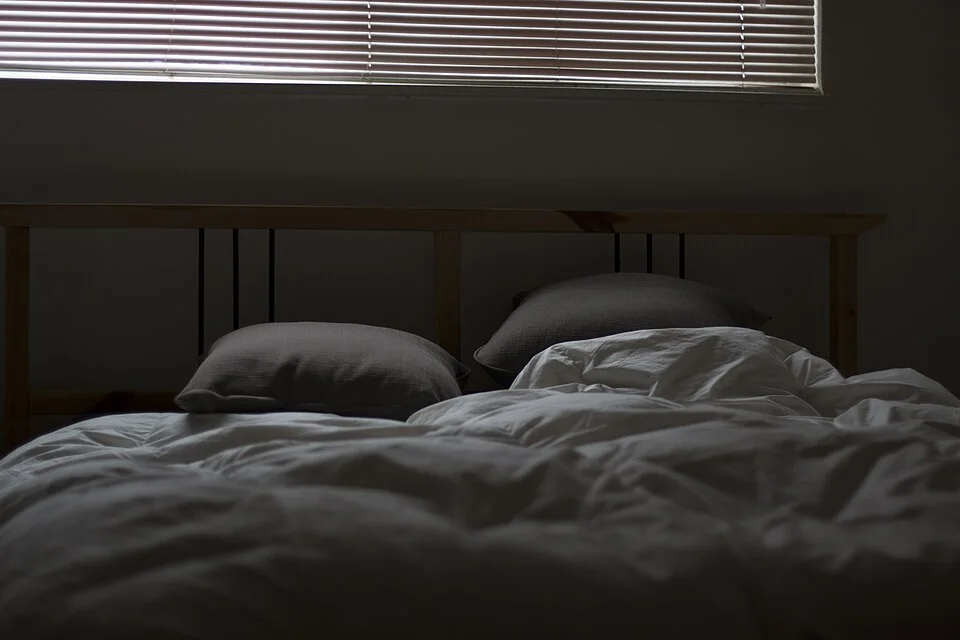
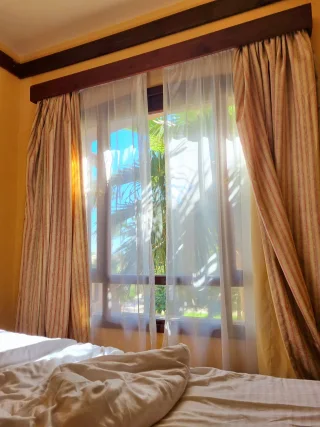
The pillows immediately below the blind make the occupied viewing height clear. From the actual resting position, distinguish light passing through slat gaps from light entering around the covering’s edges and give each opening a simple name. This photograph does not measure darkness, identify the covering’s performance or establish that changing an air gap or exit is appropriate.
Photo & usage
Quin Stevenson qstevenson · CC0 · Source. Display copies resized and encoded as WebP; no instructional details were fabricated or removed.
With a helper if available, move only the existing curtain at the suspected place while the observer remains at the pillow. Use its intended controls and reachable fabric edges. If ordinary overlap briefly removes the stripe, record that association. If the stripe stays, restore the fabric and consider another path. Hands and fabric can block multiple paths at once, so keep the adjustment small and specific.
Work from the floor and leave the glass untouched. Do not attach foil, tape, improvised films or dark coverings to it. Do not reach behind a heater or use furniture as a step. A high or inaccessible gap can be documented from below for a suitable installer without attempting to close it yourself.
Follow the patch without staring at the source
If a bright patch remains after the suspected seam closes, look for an ordinary reflecting surface: a mirror, glossy wardrobe door or pale wall. From the pillow, note whether you see the opening directly or only its reflection. Move your head slightly within your normal pillow area and observe whether the patch shifts or disappears. Keep the head movement modest so the comparison still represents the occupied position.
OSHA’s workstation guidance identifies windows, lamps and reflective surfaces as potential glare sources. That office context does not provide a bedroom brightness threshold, but it supports checking the source and its reflected path separately. A small reflected strip can call for moving a freestanding mirror, while a direct centre gap calls for a curtain adjustment. Do not treat those as interchangeable fixes.
Use a sketch to show the suspected route with a dotted line. Call it a hypothesis until a repeatable adjustment changes the patch. Photographing may document where the strip lands, but phone exposure and night processing can dramatically alter its appearance. Compare position and shape in photographs; use direct observations for the household’s brightness judgement.
Test overlap and side return separately
For a centre leak, close both panels normally, then redistribute the available fabric using the intended track or pole movement. Compare the meeting edges at the top and near pillow height. A twisted fold can leave a narrow opening even when the bottom edges touch. Do not pull against a stuck carrier or dismantle a track as part of this exercise.
For an edge leak, check whether the existing panel can return toward the wall while hanging freely and remaining clear of equipment. Keep the centre overlap as it was while trying the side position. An edge that looks well covered straight on may still expose a narrow sight line from an angled bed. The relevant result is what the pillow observer sees, not how symmetrical the curtains look from the doorway.
Restore the starting state between alternatives. Never pin fabric against a lamp, heater, vent or electrical fitting to hold a promising shape. Do not obstruct an opening needed for access or ventilation. YourHome’s shading discussion provides broader context for adjustable window coverings; this small trial establishes only whether the existing fabric geometry changes the particular light path.
Use an illustrative overlap calculation carefully
Here is an invented example, not a curtain sizing recommendation. Two panels each provide 110 centimetres of usable horizontal coverage in the chosen hanging arrangement. The distance between the outer coverage points is 210 centimetres. Together the panels offer 220 centimetres, leaving 10 centimetres of theoretical centre overlap if all that coverage reaches the middle. Actual pleats and side returns may use some of it.
| Allocation | Total usable coverage | Coverage used at outer edges | Remainder beyond 210 cm span |
|---|---|---|---|
| Centre-priority trial | 220 cm | 0 cm additional return | 10 cm |
| Side-return trial | 220 cm | 6 cm additional return | 4 cm |
The second remainder is 220 minus 210 minus 6, or 4 centimetres. This explains why improving a side path can reopen the centre when fabric coverage is limited. It does not predict light transmission through cloth or prove either arrangement will work. Measure the coverage in its actual hanging state rather than using the flat packaged width as though pleats consume nothing.
Repeat the promising state from both pillows
Once an adjustment looks useful, open and close the curtains using the normal routine and see whether the improvement returns. A configuration that requires ten minutes of sculpting folds every evening may be too fragile for the household. Record the simplest repeatable instruction, such as “close left panel first, then overlap right panel at the centre,” if that matches the intended hardware operation.
Check the second pillow and ordinary turning positions. A strip removed from the first view may become visible when the other person faces the window. Keep each person’s observations separate, especially if they prefer different amounts of light. There is no need to award a combined darkness score that hides one unresolved sight line.
For daylight, repeat at a comparable time and record cloud cover. A darker morning after an adjustment does not prove the fabric position caused the difference. For a steady exterior lamp, record whether the lamp was operating normally during both visits. If the source changes, label the comparison incomplete and retain the useful geometry notes without claiming a brightness result.
Finish with a small, actionable map
The finished record should identify the opening, the affected pillow, the source, the tested curtain state and any reflection. Keep one drawing rather than a folder of unexplained close-up photos. A useful conclusion is “right edge visible from left pillow; ordinary return removes it but opens centre.” That tells you why a simple adjustment is insufficient without pretending the whole window needs replacement.
Keep the adjustment if it repeats, preserves normal operation and meets the occupants’ preferences. Restore it if the curtain strains, blocks something necessary or requires an unstable support. If more fabric or altered hardware appears necessary, provide the map and measured coverage to the person responsible for the fitting. The observation does not authorize drilling or alteration in a rented home.
Completion means you can reproduce the finding and explain its limits. You may end with a confirmed seam path, a reflected path or an unresolved source that needs a better observation time. All three are useful outcomes. Leave the glass, seals and ventilation arrangements intact, and keep the decision tied to the specific pillow view you set out to understand.
THE REFERENCE FILE
Sources & scope
Documentation reviewed 1 Nov 2026. Examples are illustrative; this article does not claim hands-on product testing. Follow the instructions for your actual material, model and location.