Choose three stations that could actually be used
A room can look flooded with daylight while a handwritten shopping list remains difficult to read at its far end. The useful question is where your actual task works, at the times you do it. Build a small map with near, middle and deep positions rather than making a single verdict about the whole room. This is an observation exercise, not an illumination survey or a promise that daylight will replace electric lighting.
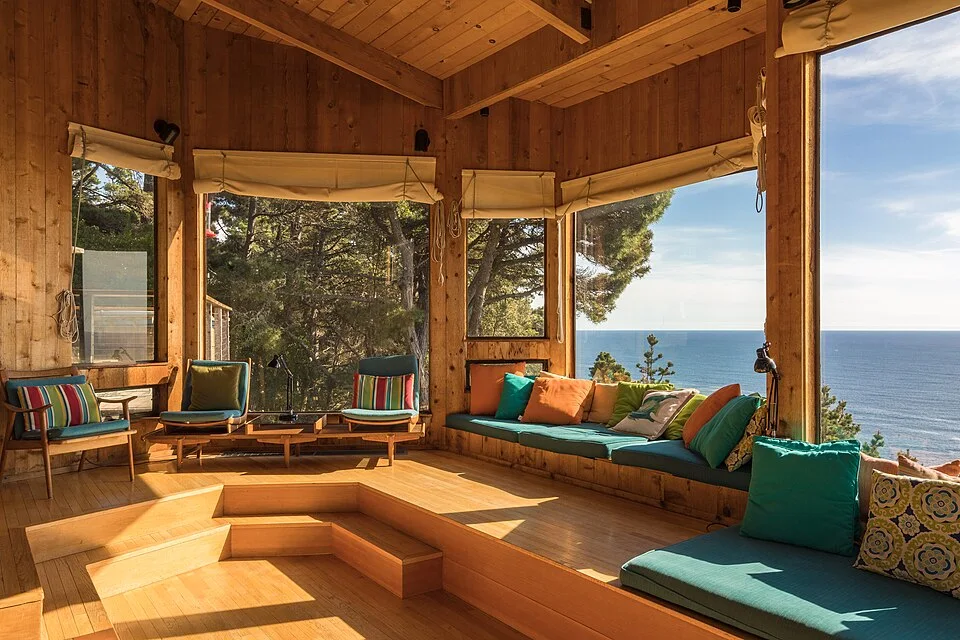
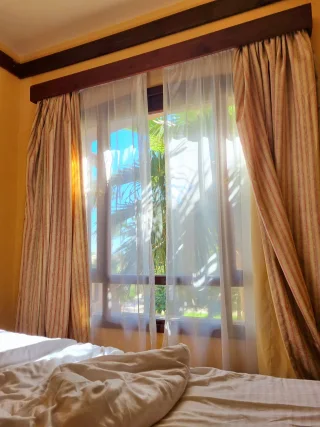
The window-side seating and deeper foreground make distance from the glazing visible. In your own room, choose three repeatable task positions and record the actual activity, occupied direction and covering state at each. No illuminance readings, measured depths or three labelled stations are supplied here; preserve usable routes when choosing the places to compare.
Photo & usage
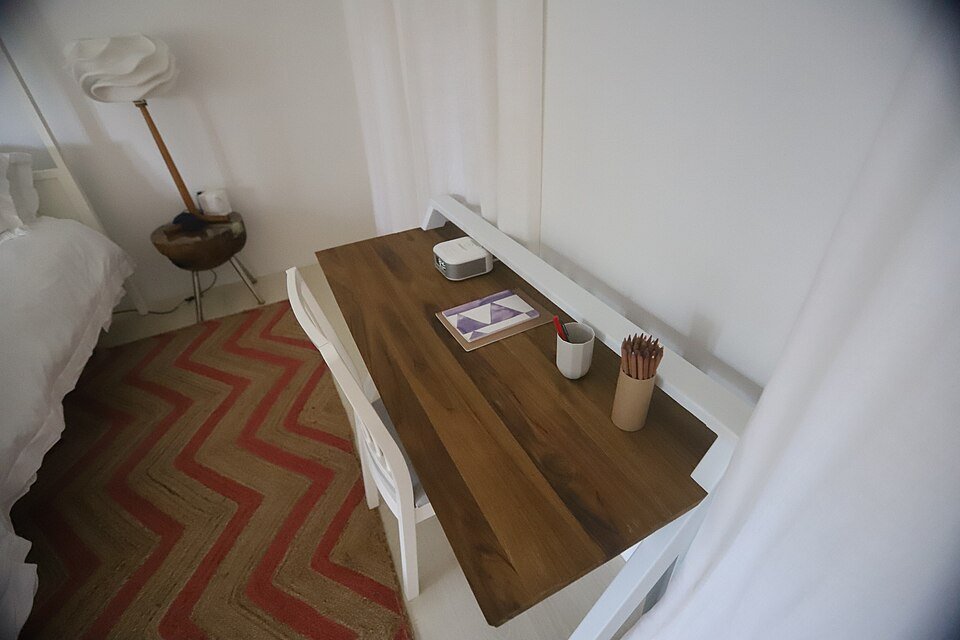
Frank Schulenburg · CC BY-SA 4.0 · Source. Display copies resized and encoded as WebP; no instructional details were fabricated or removed.
Sketch the window wall, fixed furniture and the route through the room. Select three usable surfaces at increasing distances from the main window. Call them N, M and D and record approximate distances from the glass. A shelf nobody can sit at is not a task station. If the only deep position is a sofa, use its normal reading posture and note that its page angle differs from a table.
Gather one ordinary printed page, one pencil note and a small piece of material relevant to your work, such as dark thread on pale cloth. Keep these together. Differences between a large black headline and faint pencil marks are task differences, so repeat the same material at every station.
Hold the room conditions steady
Begin with curtains and blinds in their usual daytime position. Record that position, the date, start time and whether the sky looks clear, broken or overcast. Leave required ventilation as usual. Switch off optional room lights only if doing so leaves movement safe; otherwise leave them on and describe the exercise as a combined-light comparison.
Visit all three stations within a short period. A passing cloud can change the comparison before you finish. If the outdoor brightness changes obviously, stop and repeat the sequence rather than attributing the difference to room depth. On the next round reverse the order, D then M then N. This gives the deep station a chance to be checked first.
Do not use a phone photograph with automatic exposure to rank brightness. A camera may brighten the darkest station or darken the window scene independently. Photos can record station positions and curtain settings, but your actual task observations remain the evidence. A phone light-meter number also needs appropriate instrument context before being treated as a measured illuminance.
Read, write and move in the normal posture
Sit at each station with your usual glasses and working distance. Read a short passage, copy one line of the pencil note and inspect the material. Record specific outcomes: the faint last word was unclear, the thread edge disappeared, or the whole passage stayed readable. Avoid a score called brightness that combines several different problems.
Keep your body in the position in which you would use the surface. At a near-window station, turning your back to the window can shade the page; facing the window can put a bright opening behind the work. Try a quarter turn if furniture allows it, and record the changed orientation as a second configuration. Do not silently replace the first result.
YourHome discusses daylight as part of home lighting design. For this small household map, treat that design context as a reason to observe the entire task setting. You are checking the page, your sight line and the surrounding room together. A visible patch of direct sun is a separate observation from usable light on the full page.
Separate a dark page from an intrusive bright view
A station may have enough light on the paper but still feel difficult because the window or a reflection dominates the view. Look for a pale streak across glossy material, a moving hand shadow and a direct view of the bright sky. Give each its own note. Moving the page slightly is a useful way to see whether a bright patch travels across it.
Try the existing blind or curtain only after the initial circuit. Change one setting and repeat the three stations. A small curtain adjustment may remove direct sun at N while leaving M workable; a full closure may make D much less useful. Record both the gain and the lost task visibility rather than calling the whole setting an improvement.
CCOHS distinguishes several lighting problems, while OSHA addresses glare in workstation arrangements. Those are useful prompts for the map, not household pass marks. Do not copy workplace illumination targets into a personal diary or diagnose a vision problem from a room comparison. If the same print remains unexpectedly difficult in other suitable settings, the room map cannot explain why.
Read an illustrative three-station map
The following invented example uses a five-item checklist: passage, pencil note, thread edge, page corners and comfortable sight line. Each item is marked workable or needing adjustment by one observer. These are task observations, not calibrated readings, visual-acuity scores or universal thresholds.
| Station | Distance from glass | Workable items out of five | Specific limitation |
|---|---|---|---|
| N | 0.8 m | 4 | Bright window in forward view |
| M | 2.0 m | 5 | None during this circuit |
| D | 3.5 m | 2 | Pencil and thread details unclear; one corner shaded |
The station spacing is 2.0 minus 0.8 = 1.2 m between N and M, and 3.5 minus 2.0 = 1.5 m between M and D. M has three more workable checks than D, because 5 minus 2 = 3. Neither calculation means daylight falls by a fixed amount per metre. Room surfaces, window shape, obstructions and orientation make that inference unreliable.
The provisional choice is M for this task in this weather. N might become preferable after a safe seating rotation. D may remain suitable for a large-print book with electric light. The example does not establish an all-day winner or imply that the deep room must be redecorated.
Repeat when the task normally happens
Return around the actual morning and afternoon working times on another day. Keep the three stations, materials and curtain description. Note direct sun separately and record any different result under the relevant time. A useful map can say middle table on cloudy mornings and near station after the sun moves, rather than forcing one permanent answer.
Include a normal movement check. Pull the chair out, turn the page and reach for a notebook. A station that works only with the page held unnaturally upright is a poor practical choice. Check that you have not moved furniture into an exit route, created a cable crossing or made a curtain touch a lamp.
Common errors are comparing different print sizes, visiting the stations hours apart, judging a tabletop while standing and describing a single sunny day as typical. Correct the record by repeating the specific disputed comparison. There is no need to restart every observation if one cloud spoiled only the final station.
Finish with a usable room note
Write a short placement instruction that another household member could follow: use the middle table facing across the window for pencil work before lunch; keep the sheer in its recorded position; add the existing room light when the thread edge stops being clear. This makes the map useful without inventing a numeric cutoff.
Keep the sketch with dates and the circumstances that would require another check, such as winter sun, a new outside obstruction or moved furniture. Completion means all three positions were checked with the same task, at least one repeat was made at a relevant time, and glare, shadow and missing detail were recorded separately. Keep an alternative station available when the weather changes.
THE REFERENCE FILE
Sources & scope
Documentation reviewed 1 Nov 2026. Examples are illustrative; this article does not claim hands-on product testing. Follow the instructions for your actual material, model and location.