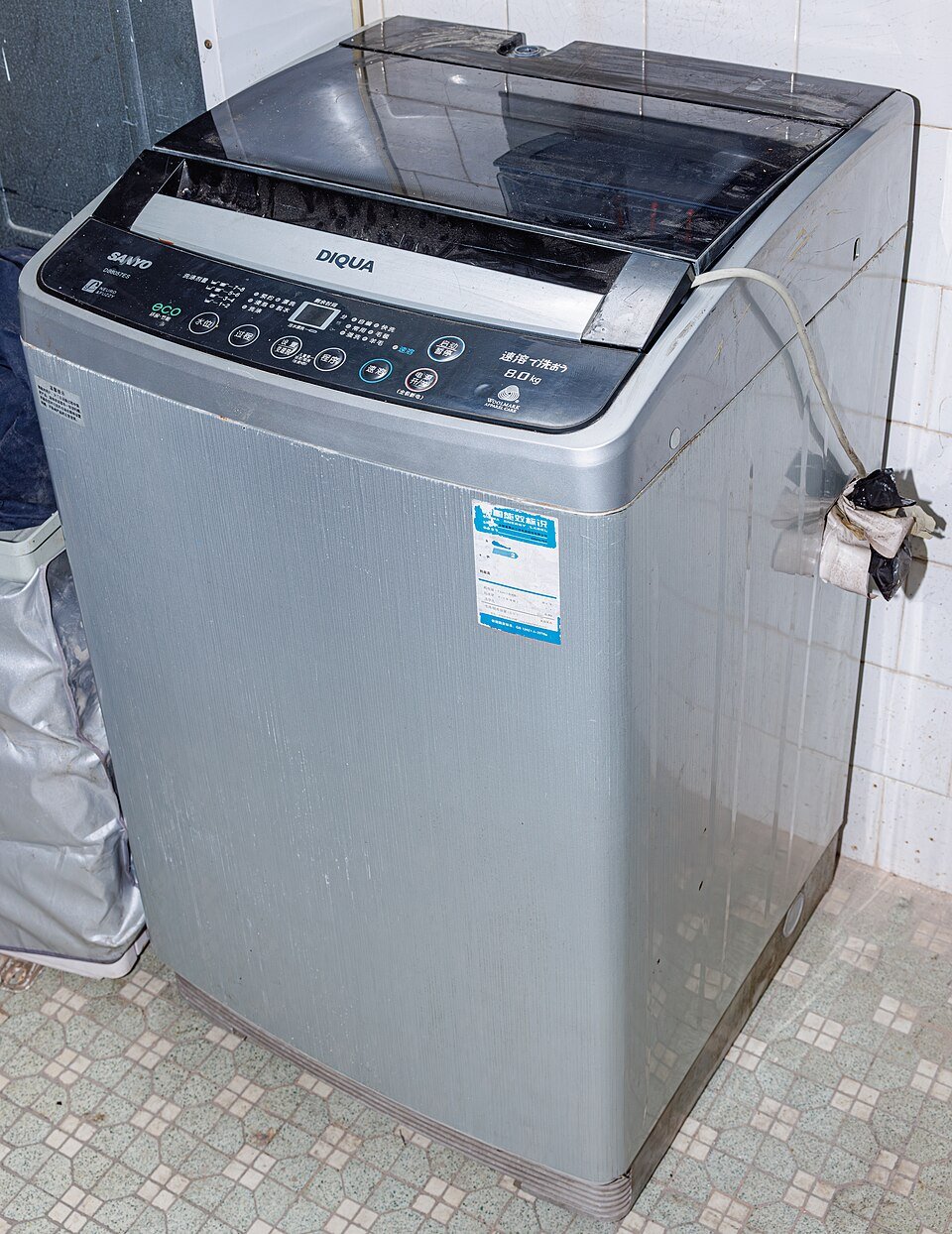
Identify which water figure you are comparing
Washer listings can show capacity, annual water use, gallons per cycle or an integrated water factor. Those figures answer different questions. Before comparing candidates, copy the exact field name, unit and source for each number rather than collecting the smallest water-related value in the advertisement.
Use the complete model identifier, including any relevant variant. ENERGY STAR's washer page provides buying context, while the Department of Energy certification database lists capacity and integrated water factor fields. The database also explains that entries are submitted certification information, not a blanket statement that DOE has independently determined compliance.
This article addresses the water-data purchase record. Ceetv's existing running-cost guide covers a wider appliance comparison. Keep electricity-only comparisons outside this worksheet and avoid treating water efficiency as the sole measure of whether a washer suits the household.
Match the model across evidence sources
Record the retailer reference, manufacturer's full model, market and document date. Compare those with the official dataset entry. A short series name may cover several capacities or configurations, so do not use data from the nearest-looking model.
Check whether a number describes a specific programme, a standardised weighted result or a broad marketing example. Keep unmatched definitions in separate columns. A real household load on a selected cycle is not automatically equivalent to a certification test condition.
Save a dated copy or reference for the relevant data. Product pages and datasets can change. The purchase record should allow the household to understand what information supported the original choice, without claiming the value remains current indefinitely.
Read the factor together with capacity
The DOE database labels integrated water factor in gallons per cycle per cubic foot. It is a normalised indicator, so the capacity used with it matters. A lower factor does not necessarily mean a larger machine uses less water in every actual cycle than a smaller one.
Keep the units visible and do not compare a factor directly with litres per cycle. If you derive a test-context quantity by multiplying factor and capacity, label it as derived from the stated standardised fields. Do not present it as a measured prediction for the household's preferred programme.
Ask the manufacturer for programme-specific information where the decision depends on it. Avoid inferring behaviour such as automatic load sensing or rinse quantity from the factor alone. The actual product manual and technical information remain necessary for operation.
Compare two invented factor-and-capacity pairs
This illustrative comparison gives washer A a capacity of 4.0 cubic feet and an integrated water factor of 3.2. Multiplying the stated fields gives 12.8 US gallons in the corresponding derived test-context expression. Washer B has 5.0 cubic feet and a factor of 2.8, giving 14.0 US gallons.
B has the lower normalised factor, while the derived quantity is 1.2 gallons higher because its capacity is larger. This does not show that A is universally better or that B will use exactly 14 gallons on a household cycle.
If B's capacity allows the household to combine suitable loads that A would need to split, frequency can change the comparison. That requires an actual load plan consistent with garment and appliance instructions, not an assumption that the largest drum is always filled.
Describe the loads the household actually has
Record typical laundry categories and frequency without overloading or changing fabric-care requirements. A household that regularly runs small separate loads may not use a larger capacity in the way a standardised comparison suggests.
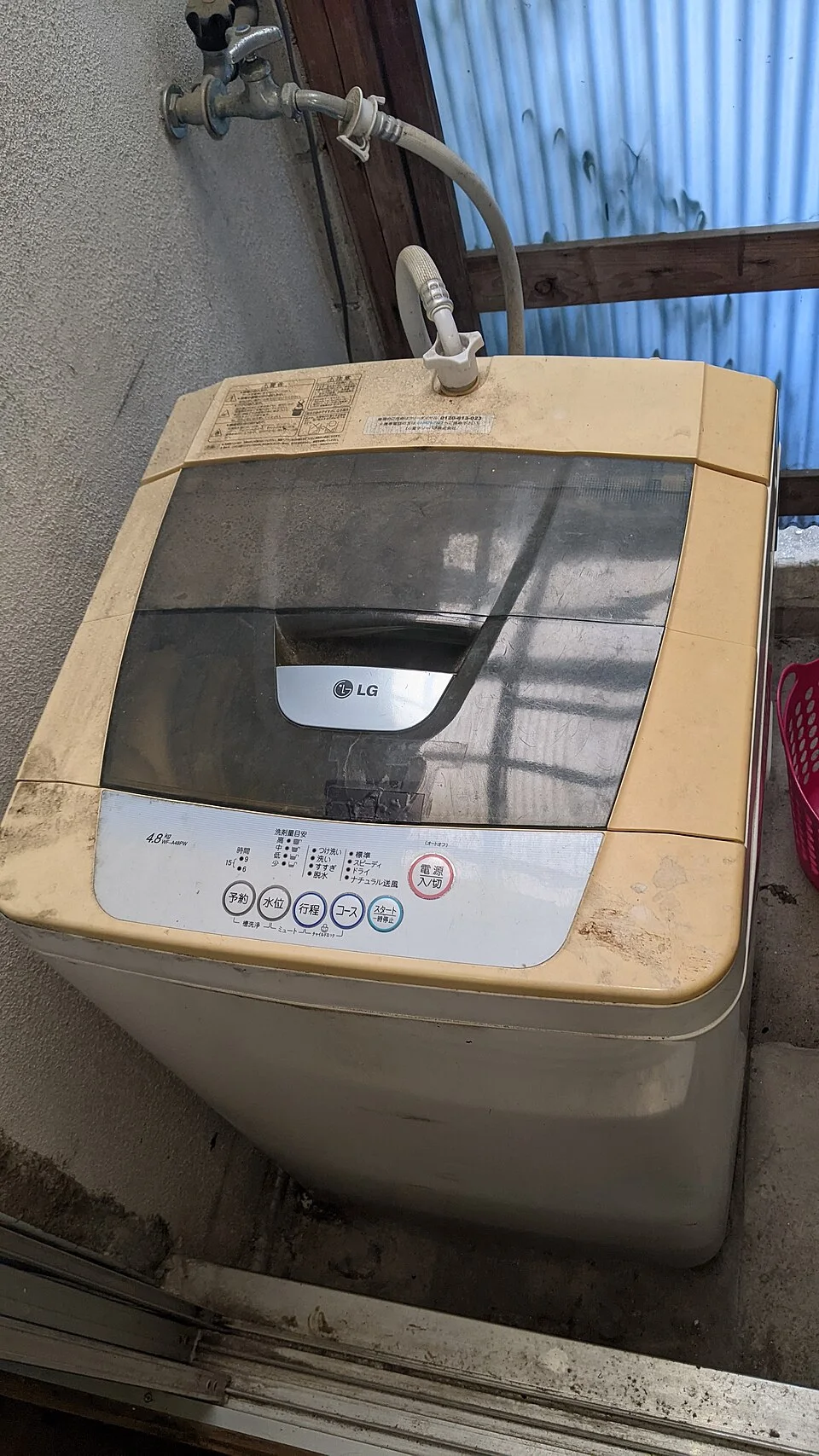
The washer’s loading lid and marked capacity provide physical model context for describing household laundry needs. Check the programme-specific load guidance separately, including bulky and delicate items. The printed headline capacity does not establish every programme’s usable load or promise a particular volume of water per household cycle.
Photo & usage
Mr.ちゅらさん · CC BY-SA 4.0 · Source. Display copies resized and encoded as WebP; no instructional details were fabricated or removed.
Check the selected machine's programme and load guidance. Bulky items, delicate fabrics and sanitising requirements can create different practical constraints. Do not use a single water rating to promise that all programmes will perform identically or consume the same volume.
Keep a realistic frequency range for cost scenarios. If the household runs four to six loads weekly, show both rather than selecting the larger number solely to make an efficient model appear to repay its price faster. Frequency is a scenario input, not a certified appliance characteristic.
Add installation and maintenance boundaries
Confirm the available space, door access, water connections and drainage requirements with the product instructions and appropriate installer. A strong water rating does not make an incompatible installation suitable.
Ask about any required accessories and whether the service includes them. Record the actual order and installation costs separately from operating-volume estimates. Keep model-specific maintenance instructions with the purchase record rather than applying a general cleaning recipe to every washer.
EPA's other-products guide points consumers towards water-efficient appliances beyond WaterSense categories. It does not make a washer a WaterSense-labelled product. Use the appropriate certification and exact model evidence, and avoid combining programme claims from different products into one favourable description.
Use ratings cautiously in a water-cost scenario
Where data definitions support a scenario, state the assumed cycle basis and frequency, then apply the account's eligible variable water and sewer rate. Keep fixed fees and heating energy separate. A derived test-context value may be useful for comparison but is not a promised actual bill.
If programme-specific volumes are unavailable, show that limitation rather than inventing a litre-per-load figure. A wider purchase comparison can still consider price, fit, service access and the official normalised indicator.
Do not repeat generic savings percentages as though they were measured for the household. The useful record distinguishes published programme data, standardised indicators and household observations. That separation allows a later review to see whether different use conditions explain a result.
Close the candidate card before purchase
Check that both candidates use comparable data fields and that all units are explicit. Recalculate any derived values independently. Keep uncertainty beside the number rather than in a distant footnote.
Save the final model, capacity, water indicator, source and chosen household load assumptions. At delivery, compare the supplied model with that record before installation. A substituted variant should be reviewed on its own data.
The rating comparison is complete when the household can explain what the water figure measures and what it does not. It supports a better purchase question without turning a normalised ratio into a guarantee about every future wash.
Test a capacity claim against actual load groups
List the laundry groups that cannot be combined under fabric-care and appliance instructions. If the household has separate delicate, heavily soiled and colour-sensitive loads, a larger drum may not reduce their number. The purchase case should not assume every kilogram can be merged into one cycle.
In an illustrative week, six suitable small loads remain six loads under both candidates because their care requirements differ. A claim that larger capacity halves cycle count would be unsupported. In another household, two compatible loads might genuinely combine within the manufacturer's limit, but that needs a realistic load plan.
Keep those examples separate from the standardised factor calculation. The factor compares a defined test context, while the household plan describes its own use. Neither should silently replace the other.
Check whether the quoted capacity uses the same convention across candidates and markets. Retain the actual model documentation and ask about an ambiguous listing. A nominal capacity figure does not authorise filling a programme beyond its stated load limit.
At the final decision, state whether the water-data difference, useful capacity or another supported feature drove the choice. This prevents a later review from attributing the purchase to a savings calculation that never actually determined it.
THE REFERENCE FILE
Sources & scope
Documentation reviewed 1 Nov 2026. Examples are illustrative; this article does not claim hands-on product testing. Follow the instructions for your actual material, model and location.