Record the delay you actually experience
A household can describe waiting for hot water without opening a heater, tracing hidden pipes or changing controls. Start with the ordinary task that is delayed and the fixture where it occurs. Record the beginning of the normal use and the point at which the household proceeds with the task under its usual safe routine.
Do not create a hotter stream or leave water running longer to test a system limit. CPSC's scald publication explains that hot tap water can cause injury. Keep children and other people away from an observation where the stream could become hot, and stop if the normal routine cannot be observed safely.
The purpose is a service and planning record, not a temperature safety assessment. A person's impression that water is ready does not establish a measured temperature, and a timer cannot certify that the system is safe.
Describe the starting conditions
Note the fixture, date, ordinary control position and approximate time since the previous known hot-water use. Mark that interval unknown if nobody can confirm it. Record whether another fixture was used shortly beforehand or at the same time.
Keep first use after a long idle period separate from a repeated use a few minutes later. Those observations describe different starting states. Do not average them together and call the result the fixture's fixed delivery time.
EPA's hot-water publications discuss distribution design and the water held between source and outlet. Their design and inspection material provides context, but a household wait observation does not reveal the exact pipe route, volume or cause of delay. Avoid converting the log into a hidden-pipe diagnosis.
Define the endpoint without testing with skin
Use the ordinary task's existing safe decision process and record its limitation. Do not put a hand into a potentially hot stream as a test, and do not ask someone to endure uncomfortable water to identify an endpoint. If a suitable observation cannot be made safely, keep only the reported experience and request professional assessment.
If a qualified service has supplied a temperature-measurement procedure, follow its actual instructions and equipment requirements rather than improvising from this article. Keep such readings separate from subjective “ready for use” notes.
Write the endpoint in the record: task began, user stopped waiting or another defined event. A vague “hot after thirty seconds” can imply a temperature measurement that never occurred. Precise wording protects the usefulness of the log.
Estimate volume only with an explicit flow assumption
In this illustrative scenario, an ordinary wait lasts 30 seconds and a separate suitable observation suggests 6 litres per minute at a comparable outlet setting. Assuming the rate stays at 6 litres per minute during the wait, estimated pre-use volume is 6 × 30 ÷ 60 = 3 litres.
A 45-second wait at the same assumed rate gives 4.5 litres. The difference is 1.5 litres. These are invented calculations, not measured hot-stream captures, and the rate may differ with mixer position, system state or other demand.
Do not collect a potentially scalding stream merely to make this estimate more exact. If the rate assumption is weak, report the waiting time without a volume. A bounded record is more useful than a precise-looking number obtained through an unsafe or unsuitable method.
Compare like starting states
Group observations by first use after a defined idle interval and later ordinary uses. Keep the interval convention consistent and note exceptions. A shorter wait immediately after another fixture ran is evidence about that condition, not proof that the system improved permanently.
Use only naturally occurring tasks; do not run repeated hot-water draws solely to populate a table. The household should not increase consumption or exposure to make the log appear scientific. A few well-described observations can support a service conversation.
If the delay changes suddenly, record the change and any visible or audible symptom without attempting a diagnosis. Follow the manufacturer's or building manager's reporting process. An unusual temperature, leak or other safety concern takes priority over completing the observation period.
Keep generation and distribution questions separate
A delay can involve more than water travelling along a pipe. Heater operation, controls, distribution layout and recent use can matter. EPA's guide distinguishes system design considerations; it does not let a resident identify one cause from a stopwatch result.
State the evidence in the service request: which outlet, which starting state, how long the ordinary wait lasted and what changed. Ask the professional what additional information is needed. Do not recommend a pump, heater replacement or thermostat adjustment from the log alone.
Keep energy claims outside the simple volume estimate. Waiting water volume is not the same as heating energy lost, and a proposed modification can affect several parts of the system. Obtain an appropriate design assessment before comparing system-level savings.
Apply only eligible water charges to a scenario
If the volume estimate is useful, multiply it by the account's verified variable water and sewer components under their actual rules. Keep fixed fees separate and label the result conditional. Do not apply an average whole-bill price that includes unrelated charges.
For an illustrative USD scenario, 3 litres per event across 20 comparable events is 60 litres, or 0.06 cubic metre. At an invented eligible variable rate of USD 5 per cubic metre, the water-and-sewer component is USD 0.30. This excludes heating energy and any system changes.
The small calculated charge does not decide whether a service issue matters. Comfort, reliable operation and unresolved faults may justify attention independently. Keep the monetary estimate in proportion to its narrow purpose.
Finish with a service-ready summary
Save the raw timing notes, endpoint definition and any flow assumption. Summarise the range for comparable starting states and list unmatched observations separately. Keep household names and detailed personal schedules out of a shared service file where unnecessary.
After professional work, record the actual service description and any operating instructions. Observe later ordinary use only as appropriate, without changing the agreed controls. A shorter wait is one outcome, not proof that every system requirement has been met.
The log is complete when the experience is described clearly enough for planning or a qualified service discussion. It should make the delay understandable while preserving the boundary between observation and plumbing investigation.
Map outlet observations without guessing the pipe route
Use a simple room sketch to identify the outlets mentioned in the log. Label each by its ordinary function, such as kitchen sink or main bathroom basin. Do not draw hidden pipes as though their route were known from the fixture positions.
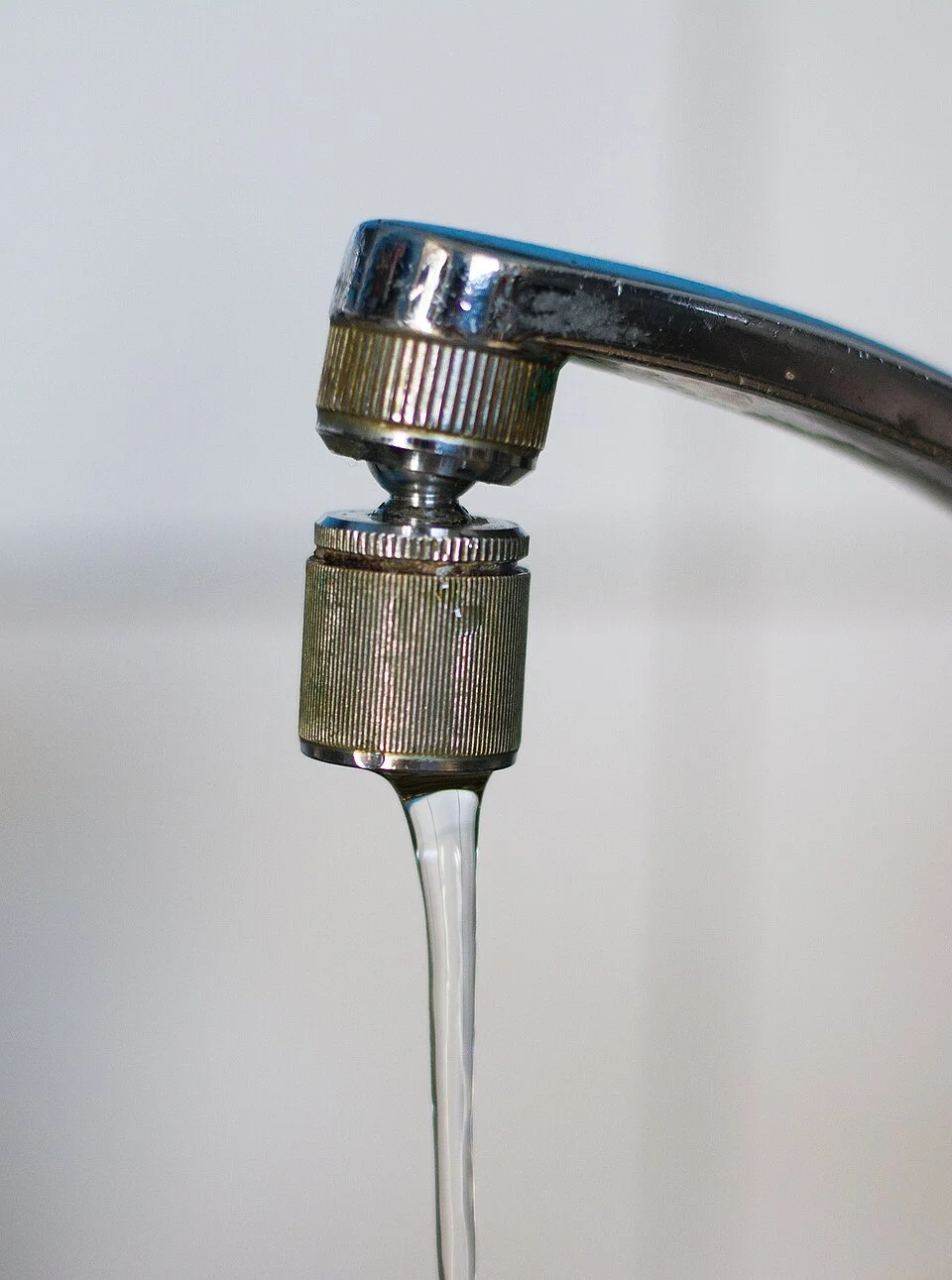
The outlet and attached aerator are visible observations that can be named in an outlet map. Record the actual fixture location and ordinary task beside waiting-time notes. This close view reveals no hidden pipe route, heater connection or delivered temperature, so keep those questions separate for the qualified provider.
Photo & usage
Vien Hoang · CC0 · Source. Display copies resized and encoded as WebP; no instructional details were fabricated or removed.
Keep observations from different outlets separate. Two taps on opposite sides of a wall may not share the same hot-water path or controls. A shorter wait at one outlet is therefore not proof that a nearby outlet should behave identically.
For a service discussion, provide the relative locations as context and ask the qualified provider what system information is relevant. Existing plans or installation records can be added with their source and date. Mark any household recollection as unconfirmed.
After work, retain the provider's description of the affected route or component. Do not generalise a repair at one outlet into confirmation that the entire system was assessed. A narrow completion note might state that the reported kitchen delay was reviewed and a named action performed; other outlets remain outside that visit unless the report says otherwise.
This keeps the household's spatial record useful while preventing a tidy sketch from acquiring the appearance of an as-built plumbing plan.
THE REFERENCE FILE
Sources & scope
Documentation reviewed 1 Nov 2026. Examples are illustrative; this article does not claim hands-on product testing. Follow the instructions for your actual material, model and location.