Start with the seat that actually struggles
A television can look clear from the doorway and mirror a window from the sofa. Choose the seat with the recurring complaint and note the viewing time. Identify whether the problem is a recognisable reflected window, direct sunlight on the display, or a bright surrounding view. Those observations guide different small changes.
Use a familiar piece of content that includes both light and dark scenes. A paused black screen exaggerates reflections compared with some programmes, while a uniformly bright scene can hide a problem that returns during evening drama. Keep the display's ordinary settings unchanged while locating the source. Write down any automatic picture mode that may change brightness.
The source material on lighting and glare supports distinguishing direct brightness from reflection. It does not provide a television-specific performance rating for your room. This exercise tests a household viewing arrangement and its daylight tradeoffs. Do not infer that a particular display coating or product category would behave identically without checking its own information.
Trace the source by changing one opening
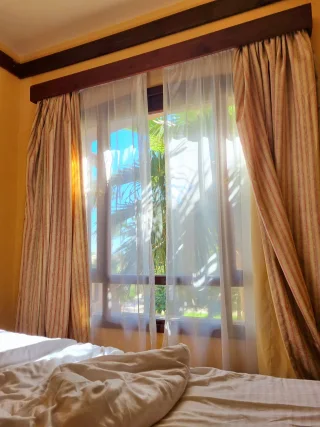
Close or partly close one existing curtain or blind while someone remains in the problem seat. Note whether the reflected shape disappears, moves or simply becomes less distracting. Restore it before trying the next window. This identifies which opening matters, especially in rooms with several bright surfaces.
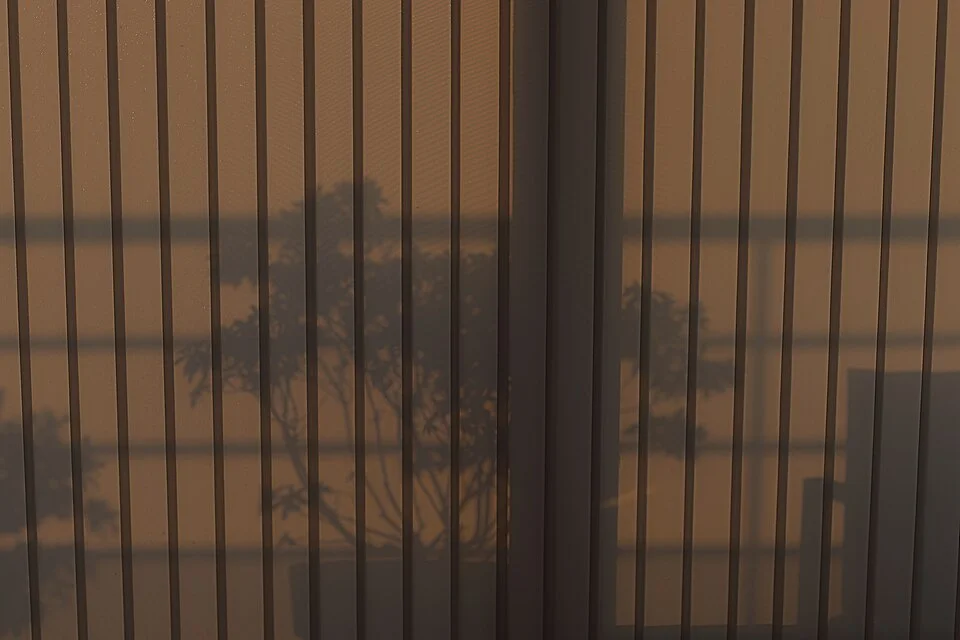
The blind slats intercept a recognisable window-light pattern, making one source-side condition visible. In the television comparison, change only one existing covering while someone remains in the problem seat, then restore it before trying another opening. No television or reflected screen shape is shown here, so the photograph does not establish which source causes the actual reflection.
Photo & usage
Compo · CC BY-SA 4.0 · Source. Display copies resized and encoded as WebP; no instructional details were fabricated or removed.
If the reflection remains when the suspected covering closes, check lamps, glazed pictures and another window behind the viewer. A pale wall can also remain bright. Resist the urge to darken everything at once, because that may produce a clear screen while hiding the specific change needed for everyday use.
Do not cover the television's vents or place fabric around it as a glare remedy. Keep the display stable and use only supported adjustments. If moving a large set requires lifting or altering its mount, stop the small trial at a position sketch and use the appropriate installation help. Seating and covering changes can often be assessed without handling the equipment.
Try the existing seats before moving the screen
From the original seat, shift within a normal comfortable range and observe the reflection path. Then try another existing seat with an acceptable viewing angle and conversation relationship. The aim is not to find one extreme head position where the window disappears; it is to find a seat that supports relaxed ordinary viewing.
Record the tradeoffs of each option. A side chair might remove the reflection but put the person too far from the rest of the household. A sofa shift might help but reduce access to the doorway. Include those failures rather than treating screen clarity as the only outcome. A shared living room must still function between programmes.
If the television's supported stand allows a modest swivel, check it only within the manufacturer's range and cable limits. Recheck every regular seat afterward. Reflections are directional, so an improvement for one viewer may transfer the bright patch to another. Keep the screen in its safe final position before anyone resumes normal use.
Use a consistent illustrative content comparison
In this invented example, two viewers watch the same 12-minute segment at the same general afternoon time on comparable clear days. They record minutes during which a reflected window obscures dark-scene detail. These are informal observations, not a display laboratory test.
| Arrangement | Main sofa seat | Side seat | Daylight consequence |
|---|---|---|---|
| Covering open | 7 troublesome minutes | 2 troublesome minutes | Full ordinary daylight |
| Source curtain partly drawn | 1 troublesome minute | 1 troublesome minute | Reading area remains usable |
| All curtains closed | 0 troublesome minutes | 0 troublesome minutes | Room lamp needed |
The partly drawn source curtain reduces the main seat's troublesome time by six minutes, from seven to one. Six divided by 12 equals half the segment's duration. It does not mean half the reflected light was removed or that the programme became twice as visible.
The remaining minute may be acceptable, or may justify one further small adjustment. The household decides using actual content and daylight needs rather than seeking an absolute zero at any cost.
Preserve a second activity in the room
After finding a clear viewing arrangement, check someone reading, folding laundry or talking nearby. A curtain setting that supports the television but deprives another person of useful daylight needs refinement. YourHome's lighting guidance treats daylight alongside artificial lighting and unwanted sun, which supports checking the entire occupied room.
Try limiting the adjustment to the identified source window. If that leaves the other activity dim, use existing appropriate task lighting without aiming it at the screen. Check the new lamp reflection from both viewing seats. A solution can fail when the light needed for the rest of the room reintroduces a bright reflected patch.
Write separate positions for ordinary daytime use and daytime viewing. The covering need not stay in its viewing position all afternoon. Make reopening part of the routine, tied to turning off the television or leaving the room. That simple completion action prevents a short viewing session from making the room unnecessarily dark for hours.
Avoid confusing picture changes with room changes
Automatic brightness, contrast enhancement and scene transitions can alter the apparent result. Use the same content passage and record the picture mode for comparison. You need not disable functions you prefer permanently, but changing them between layouts makes the trial harder to interpret. Restore the household's chosen settings after any diagnostic experiment.
Do not compare photographs as if they were calibrated visibility measurements. Camera exposure, processing and shooting angle can suppress or exaggerate the reflected window. A photo can show which source appears on the screen; the seated viewing note establishes whether the person can see the programme comfortably in normal use.
Keep direct sunlight on the display separate from a reflection. If the manufacturer warns about sun exposure or placement, follow that guidance regardless of whether the picture seems readable. Nor should an accessible cord or unstable curtain arrangement be accepted just because it reduces a reflection. Normal supported use remains a requirement of the final room arrangement.
Confirm the result with all usual viewers
Repeat the preferred arrangement during the problem time and include both a dark and a light scene. Every regular viewer should try their normal seat, including a natural lean back and small posture changes. Confirm that controls, doors and routes remain accessible and no one has to move the television to begin watching.
Record the source window, the covering position and any agreed seating change. If sunlight moves seasonally, note a review point when the troublesome patch returns rather than creating a rigid year-round rule. A small sketch of the reflected window's origin will help someone reconstruct the reasoning later.
Finish when ordinary viewing works with an acceptable daylight cost and a simple reset to normal room use. If no arrangement serves all seats, retain the comparison as a clear brief for a different layout. The outcome should describe the actual reflection problem and the limits of the existing room, not promise that a generic anti-glare purchase will solve it.
THE REFERENCE FILE
Sources & scope
Documentation reviewed 1 Nov 2026. Examples are illustrative; this article does not claim hands-on product testing. Follow the instructions for your actual material, model and location.